Start your 3-day free trial
Sign up to experience all premium features at no cost.
*Available only to new users. Each user is limited to one trial.
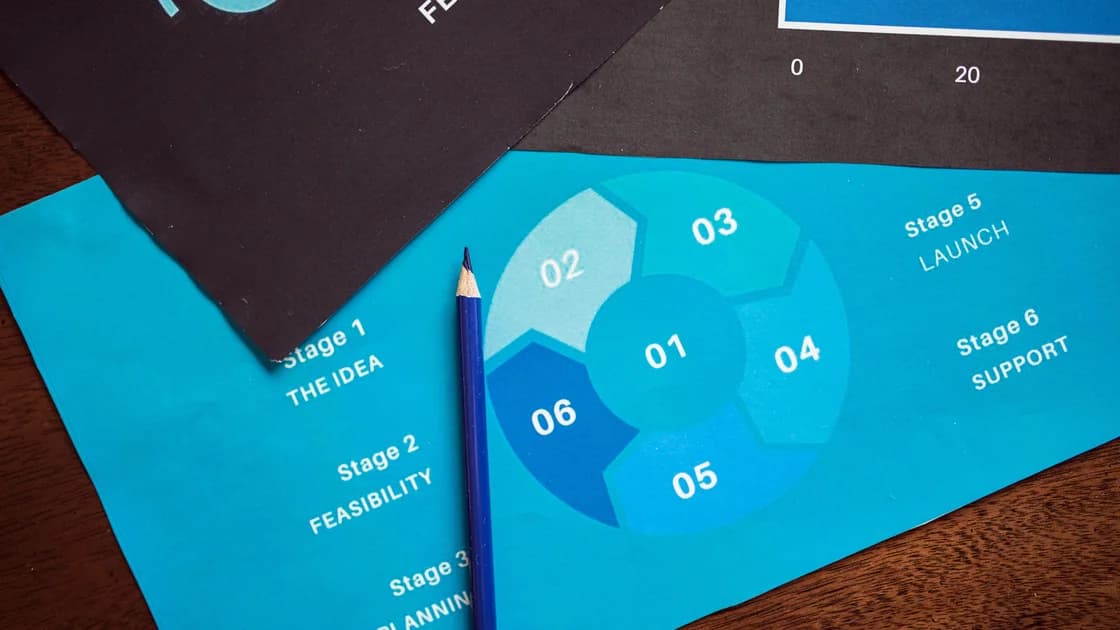

To build a project plan with AI, begin with an approved project brief, not an empty prompt. Ask the model to decompose the agreed outcome into deliverables, milestones, dependencies, owners, risks, and open assumptions. Then have the people who own the work confirm every dependency and estimate before the plan becomes a baseline.
AI is useful at organizing incomplete notes, finding missing fields, and producing alternative structures. It does not know your team’s actual capacity, approval queues, supplier lead times, or hidden technical constraints unless authorized people supply and verify them. PMI’s planning guidance emphasizes mission, scope, stakeholders, resources, milestones, and risks as parts of a coherent plan.[1] NIST warns that generative systems can confidently produce false or inconsistent material.[2] A plausible schedule is therefore a hypothesis, not a commitment.
Key Takeaways
- Start from a signed-off brief with outcome, scope, constraints, and decision owners.
- Break the outcome into verifiable deliverables before listing activities.
- Map dependencies as testable statements with named confirmers.
- Label AI-generated durations, staffing, and sequencing as assumptions.
- Give every deliverable one accountable owner and explicit acceptance criteria.
- Define how scope, schedule, and resource changes are requested and approved.
The general human-reviewed AI workflow still applies. This guide narrows it to a planning artifact: a plan that makes uncertainty visible enough for a team to challenge it.
A project plan cannot repair an ambiguous mandate. Before prompting, prepare a one- or two-page brief with these fields:
Use precise nouns. “Improve onboarding” is not an outcome. “Reduce the steps a new support agent must complete before handling a supervised case, without removing the security review” identifies a workflow and a boundary. It still needs a measurable acceptance criterion, but it gives the planner something real to decompose.
Do not upload contracts, customer records, credentials, HR details, or confidential financials to an unapproved service. Summarize only what the plan needs, keep sensitive mappings in the system that owns them, and apply your organization’s approved data-handling rules.
Activity lists feel productive but often hide the reason work exists. Start with deliverables: reviewable outputs that move the project toward its outcome. A deliverable might be an approved design, migrated dataset, trained operating team, tested integration, or signed policy.
Ask AI to propose a deliverable tree using only the brief:
Decompose the approved outcome into the smallest set of reviewable deliverables. For each, state its purpose, acceptance evidence, likely owner role, and which brief requirement it satisfies. Do not add features or commitments outside scope. Put ambiguous items in an open-questions list. Do not estimate time yet.
Review the tree with the sponsor and subject-matter owners. Look for deliverables that overlap, describe ongoing activity instead of an output, or quietly expand scope. “Weekly coordination” is an activity. “Approved integration decision log” is a deliverable if the project genuinely needs it.
For each deliverable, write acceptance criteria that a reviewer can observe. “Complete training” is vague. Better criteria identify the approved curriculum, target roles, completion record, knowledge check, exception process, and owner who accepts the evidence. The criteria should describe success without dictating unnecessary implementation detail.
Once deliverables are stable, decompose them into work packages and tasks. Each task should have a clear output and belong to exactly one deliverable. If a task supports several deliverables, either define the shared enabling deliverable or make the relationship explicit rather than duplicating hidden work.
A milestone is not every due date. It is a meaningful state change: scope approved, design accepted, critical dependency proven, pilot authorized, migration completed, or operational handoff signed. Good milestones allow a sponsor to ask, “What evidence lets us cross this boundary?”
For each milestone, record:
AI can compare the milestone sequence with the deliverable tree and flag missing gates. It cannot approve a gate or decide that incomplete evidence is acceptable. Avoid milestones such as “Phase 1 done” unless the phase has unambiguous outputs and an acceptance owner.
Keep externally fixed dates separate from calculated dates. A regulatory filing or booked event may be fixed. A model’s suggestion that design takes ten days is an unconfirmed duration. Mixing the two makes a generated schedule look more certain than it is.
Dependencies are sentences, not arrows. Write each one as: “Deliverable B cannot start or finish until condition A is true, because reason R; person P will confirm this by date D.” This format exposes whether the dependency is technical, resource-based, contractual, informational, or merely habitual.
The diagram separates the plan’s flow from its confirmation gate. Deliverables connect through explicit conditions; milestones are evidence points; unverified durations and relationships remain in an assumption register until an owner confirms them.
Ask AI to challenge the first map:
From the deliverable tree and constraints, propose possible dependencies. For each, quote the input that implies it. If the dependency is inferred rather than stated, label it ASSUMPTION and name the role that should verify it. Identify parallel work and circular dependencies. Do not assign dates.
Then interview the people who will do the work. A technical lead may know that two tasks can run in parallel. Procurement may reveal a lead time absent from the brief. Operations may require a rehearsal before launch. Update the plan with the confirmed relationship and preserve the decision source.
Check for three traps. First, a preference disguised as a dependency: “We always finish all copy before design” might be a habit rather than a necessity. Second, a missing external queue: legal, security, procurement, localization, or vendor review. Third, a resource dependency: two parallel tasks require the same specialist, so the calendar still conflicts.
Every deliverable needs one accountable owner, even when many people contribute. A list of five names does not tell the team who resolves ambiguity. Record the owner role, named person when known, contributors, reviewer or approver, and escalation path.
AI may suggest roles from patterns, but it cannot know authority. Use placeholders such as OWNER TO CONFIRM instead of inventing a person or assuming a department accepts responsibility. The proposed owner must agree to the scope and acceptance criteria.
Separate doing from approving. The person who writes a migration plan may not authorize the migration. The engineer who estimates a task may not control the staff allocation. The product manager who wants a feature may not approve a compliance exception. Show these distinctions in the plan.
Meeting records often contain implied assignments. Extract candidate actions with the meeting transcript to action item workflow, but confirm them with the named people. Silence in a meeting is not acceptance of ownership.
Do not ask, “How long will this project take?” Ask for an estimation worksheet that the team can fill. For each work package, include scope basis, estimator, low/likely/high duration, effort, required roles, availability assumptions, external wait time, confidence, and comparable work used.
AI can help normalize units, identify missing estimates, or run arithmetic on confirmed inputs. It can also propose questions: Is review time included? Does the duration assume one person or three? Is vendor response time separate from hands-on effort? These questions are valuable even when the model’s own number is not.
Keep effort, duration, and elapsed wait distinct. Eight hours of work may span five days because of approvals. Adding another person may not halve the duration. A date calculated from unconfirmed availability should remain marked provisional.
For numerical plans, maintain a structured source table and use the spreadsheet analysis workflow to check formulas, filters, units, and missing values. Manually recalculate critical paths and budget totals. Do not let a generated narrative become the only record of the numbers.
A compact project plan should link to three live registers:
Risk register: uncertain event, cause, potential impact, probability and impact rating method, trigger, mitigation, contingency, owner, and review date.
Assumption register: unverified statement, why the plan currently relies on it, evidence needed, confirmer, confirmation date, and impact if false. AI-generated durations and dependencies belong here until verified.
Decision log: decision, options considered, criteria, approver, date, rationale, and affected plan elements. This prevents the model—or a later human editor—from silently reopening settled tradeoffs.
Ask AI to scan for contradictions across the registers and plan. For example, a milestone may depend on a vendor while the risk register omits supplier delay. A scope exclusion may conflict with an acceptance criterion. A resource assumption may contradict a meeting decision. Treat the scan as a question generator and verify every match.
Avoid generic risks such as “project may be delayed.” Name the causal condition and leading indicator: “Security review may start after the reserved window if the data-flow diagram is not accepted by 12 September.” The actual date must come from the authorized schedule, not the model.
A plan is not a promise that nothing will change. It is an agreement about how change becomes visible. Define which changes require formal approval: scope additions, acceptance-criteria changes, milestone movement beyond tolerance, budget changes, new data handling, supplier changes, or removal of controls.
A change request should state the requested change, reason, affected deliverables, schedule and cost impact, risks, alternatives, recommendation, and decision owner. AI can format the request and compare versions. It must not approve the change or rewrite the baseline silently.
Version the plan. Record the baseline date, approving roles, linked evidence, and superseded version. Do not use a conversational transcript as the authoritative plan. Export the approved artifact to the team’s system of record and control who can edit it.
Before approval, hold a plan challenge with delivery, technical, operational, security, finance, or legal representatives as relevant. Ask each reviewer to focus on their boundary. A single general review meeting often produces polite agreement but misses specialist constraints.
The plan is ready to baseline when a reviewer can answer all of these questions from the artifact:
Run a short tabletop scenario: a key owner becomes unavailable, a vendor slips, or a requirement changes. Can the team identify affected deliverables and the decision path without rebuilding the plan? If not, the structure is decorative rather than operational.
When the project later needs a repeatable operating procedure, convert only the observed and approved process using the SOP or checklist workflow. A plan describes coordinated change; an SOP describes how a recurring process is performed. They should not be confused.
Yes. Keep the artifact proportional: a one-page brief, deliverable list, milestone view, owner table, and small risk/assumption log may be enough. Do not add bureaucracy merely because the model can generate it. Preserve the same truth boundaries for estimates, dependencies, and approval.
It can format a Gantt chart from confirmed tasks, dependencies, calendars, and durations. It cannot know those inputs by default. Label generated sequencing and dates provisional until work owners verify them, then recalculate the schedule in the project’s system of record.
Require the model to identify the input that implies each dependency and mark inferences. Review them with the people doing the work and with owners of external queues. Record the confirmer and reason, not just an arrow.
Every deliverable should have one accountable owner. Tasks should also have a clear responsible person or role when execution begins. Contributors and approvers may be multiple, but avoid shared accountability that leaves decisions unresolved.
Update the system of record when approved scope, evidence, estimates, owners, dependencies, risks, or decisions change. Set a review cadence appropriate to the project, but do not let recurring AI summaries overwrite the approved baseline without change control.
Do not provide secrets, credentials, personal records, confidential contracts, restricted financial data, or sensitive customer information unless the tool and use are explicitly authorized. Minimize inputs and preserve detailed source records in controlled systems.
Sources checked 24 August 2026.
Sign up to experience all premium features at no cost.
*Available only to new users. Each user is limited to one trial.