Start your 3-day free trial
Sign up to experience all premium features at no cost.
*Available only to new users. Each user is limited to one trial.


If a balance transfer fee looks wrong, recalculate it from the offer you actually accepted and the principal that actually posted. Do not use a current advertisement or multiply the current balance blindly. The fee may use a percentage, a minimum dollar amount, a fixed amount, or offer-specific rules, and several transfers may create separate fees.
Key Takeaways:
- Save the accepted offer, account agreement, confirmation, and statement.
- Identify every posted transfer principal before calculating the fee.
- Apply the stated percentage and minimum or fixed amount in the stated order.
- Separate transfer fees from interest, cash-advance fees, and annual fees.
- Ask the issuer for its inputs and rounding method if your result differs.
Review this account before travel as part of your international financial preparation, but treat the fee as an issuer ledger question. This guide does not determine whether transferring debt is suitable for you.
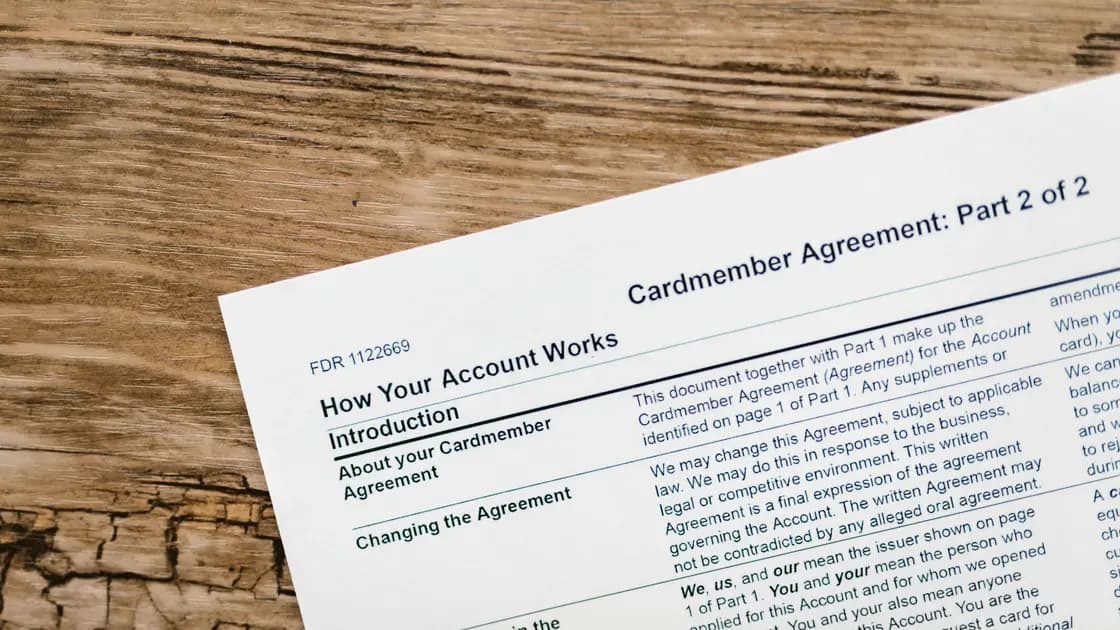
Save the targeted offer, application or transfer screen, acceptance confirmation, account-opening disclosure, current agreement, and first statement containing the transfer. Record the acceptance date, transfer request date, promotional period, transfer deadline, percentage fee, minimum fee, any cap, eligible balance types, and whether the fee changes after a date.
Use the version connected to your transaction. An issuer's public page may now show a different percentage. A mailed convenience check, online transfer, account-opening transfer, and later promotional transfer may also carry different terms on the same card.
The CFPB credit-card plan data dictionary records balance-transfer fee amounts, percentages, minimum amounts, and a calculation field for other formulas.[1] That structure explains why one remembered percentage may be insufficient; your agreement remains the controlling source, including for any offer-specific cap.
Take screenshots or PDFs before a limited offer disappears. Preserve the entire pricing row and its footnotes, not only a highlighted “0%” rate. A promotional APR and a transfer fee are different charges.
List each requested transfer with destination creditor, requested amount, approved amount, posted principal, posting date, status, and associated fee. Use final posted entries, not a pending amount. If the transfer remains unsettled, follow the separate balance transfer pending guide before treating the fee as final.
Check whether the issuer reduced a transfer because of the credit limit, available transfer limit, or inclusion of the fee. Requesting 5,000 does not prove that 5,000 posted. Conversely, the new-account balance may equal principal plus fee; do not use that combined balance as the fee base unless the terms expressly say so.
Separate multiple transfers. Two creditors can produce two minimum fees even if their combined principal would exceed the minimum only once. A reversed or returned transfer may have a fee reversal on a later date. A partial transfer can produce a different fee than the original request suggested.
Build the calculation from statement entries and confirmations. Do not infer the transfer amount from the old creditor's current balance, because payments, interest, and timing can change it.
Write the formula before entering numbers. A common structure is the greater of “principal multiplied by fee percentage” or a stated minimum, but this is only an example. Another offer can use a fixed fee, a different percentage after an introductory window, or a maximum.
For every transfer, calculate the raw percentage amount, compare it with the minimum or cap as directed, and then apply the issuer's stated currency rounding. Keep enough decimal places to show the path. Do not round the percentage or principal prematurely.
Suppose a hypothetical offer states 3% with a 5 minimum. A 100 transfer produces a raw fee of 3, so the minimum would produce 5. A 1,000 transfer produces 30. These examples explain the method; they do not describe your account.
Regulation Z requires applicable account-opening disclosures to state transaction charges such as balance-transfer fees, but the exact charge still comes from the disclosed terms for the account and transaction.[2] If the disclosure uses a formula you cannot reproduce, ask the issuer for the exact principal, rate, minimum, cap, and rounding used.
Read the transaction label and agreement definition. A transaction you intended as a balance transfer may have been processed as a cash advance, convenience check, cash equivalent, purchase, or ordinary payment. Those categories can use different fees, APRs, and grace-period rules.
Do not rely on the merchant description alone. Ask the issuer for the transaction category and pricing provision. If a cash-advance fee appeared, use the unexpected cash advance fee guide to investigate that classification separately.
Check offer timing. Some offers require the transfer to be requested or completed within a certain period. A request near the deadline may raise a question about which event controls. Preserve both dates and ask for the written rule rather than assuming the lower rate applies.
Also separate interest from the transfer fee. A 0% promotional APR can coexist with an upfront fee, and a fee can itself become part of the account balance. Minimum payments, purchase balances, and payment allocation may follow additional rules.
Create a ledger with beginning balance, each transfer principal, each fee, payments, reversals, interest, purchases, and ending balance. Match every line to a date and description. This prevents an annual fee or interest charge from being mistaken for the transfer fee.
Check whether the fee appears once per transfer, whether a duplicate is pending or posted, and whether any correcting credit appears later. A visible current balance is not a calculation statement; use transaction details and the closed statement where possible.
Compare the promotional APR start and end dates, but do not subtract expected interest savings from the fee. They answer different questions. The statement versus current balance guide can help align snapshots without deciding whether the fee is correct.
Record your own result, the issuer's posted result, and the exact difference. A dispute that says “the fee is too high” is harder to trace than one stating which input or formula differs.
Contact the issuer through secure messaging or the number on the card. Provide the transfer dates, principals, fee entries, accepted offer, your calculation, and the specific difference. Ask it to identify the applied offer code or pricing term, percentage, minimum, cap, rounding, and transaction classification.
If the issuer agrees, request the amount and expected date of the fee adjustment and any related interest correction. Save the case number and verify the correction on the account ledger and next statement. A courtesy credit is not necessarily the same as correcting the underlying classification.
If it disagrees, request a written explanation and the agreement provision. Review any billing-error notice method and deadline applicable to your account and jurisdiction. Do not assume a chat complaint preserves statutory rights or timelines.
Keep making required payments while the issue is reviewed unless the issuer or qualified adviser gives applicable written instructions. Do not initiate another transfer to test the fee. Escalate to an applicable consumer authority or legal adviser when the documented process and local rules support it.
To verify a balance transfer fee, start with the accepted offer, identify each final transfer principal, reproduce the stated fee formula, and separate classification, timing, interest, and ledger effects. Ask the issuer for the exact calculation inputs when results differ. A careful calculation can identify the disputed field without turning a general guide into personal debt advice.
Usually it is tied to a transfer principal under the applicable terms, not automatically the entire account balance. Verify the disclosed formula.
A 0% balance transfer can still carry a transaction fee because promotional APR and transfer fees are separate terms. Check each part of the applicable offer.
The minimum may apply per transaction. Check the offer and ask the issuer to identify how it grouped the transfers.
Use the agreement and final transaction record. Ask for the issuer's principal input when a request was only partly approved.
No. They are different classifications and can have different pricing and interest rules.
Not by itself. The promotional rate, minimum payment, balance categories, and offer conditions remain separate.
Do not assume so. Continue to follow applicable payment requirements and obtain account-specific advice where needed.
This material provides general financial information and is not legal, credit, debt, tax, or individualized financial advice. Terms and dispute rights vary by account and jurisdiction.
Sources checked 12 September 2026.
Sign up to experience all premium features at no cost.
*Available only to new users. Each user is limited to one trial.