Start your 3-day free trial
Sign up to experience all premium features at no cost.
*Available only to new users. Each user is limited to one trial.
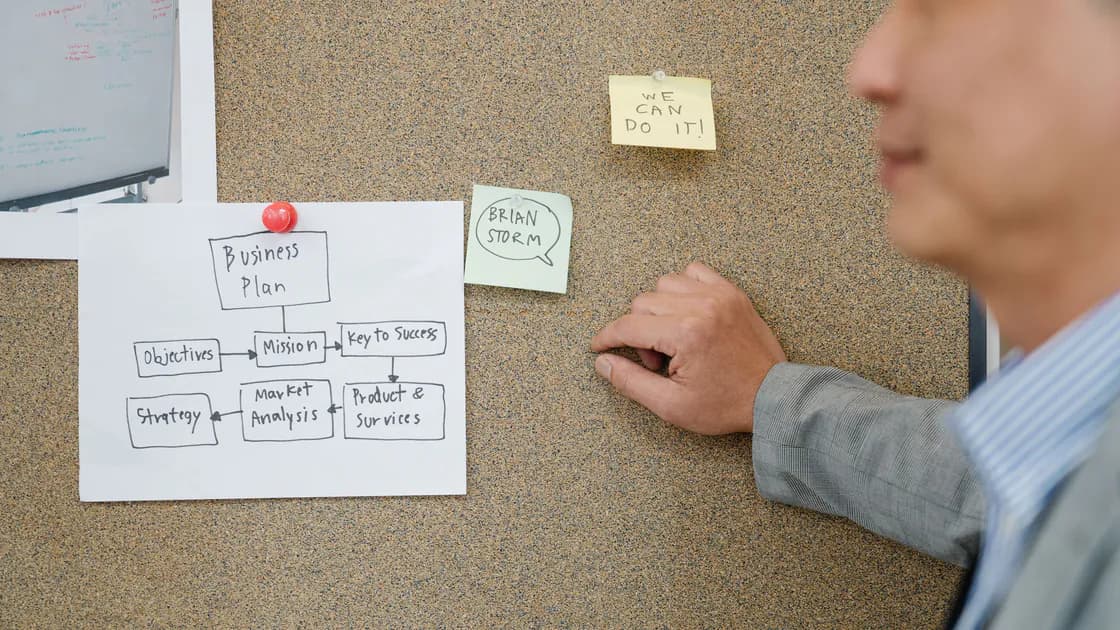

To automate repetitive tasks with AI, choose one frequent, bounded workflow whose inputs and acceptable outputs can be measured. Keep deterministic rules in ordinary code, constrain AI to the judgment step it actually improves, and test the whole path with least privilege and no real side effects. Roll out in shadow mode before allowing controlled execution.
OpenAI's workplace research points to a shift toward using AI to complete practical tasks.[1] Completion, however, is not the same as safe autonomy. The useful unit is a controlled workflow with an owner, schema, test set, monitoring, pause condition, and manual fallback.
Key Takeaways
- Measure the current manual process before selecting a task.
- Prefer high-frequency, stable, reversible, low-cost candidates.
- Separate deterministic transformation from AI judgment.
- Treat all external content as untrusted data.
- Start with read-only dry-runs and shadow comparisons.
- Define pause, rollback, and human takeover before launch.
If you need the conceptual boundary between a model, a tool-using system, and an autonomous loop, read what an AI agent is. This guide stays focused on selecting and validating one real workflow.
Observe the manual process for enough cases to see normal variation. Record trigger, inputs, steps, systems touched, time spent, waiting time, rework, common exceptions, error cost, and the person who resolves ambiguity. Do not start from a tool demo and search for somewhere to deploy it.
Create a candidate scorecard:
| Factor | Better first candidate | Warning sign |
|---|---|---|
| Frequency | Happens often enough to measure | Rare or seasonal |
| Rule stability | Steps and policies change slowly | Judgment changes every case |
| Input boundary | Known fields and sources | Open-ended inbox or web access |
| Error cost | Reversible and cheap to correct | Money, rights, safety, or deletion |
| Evaluation | Clear acceptance criteria | Quality depends on hidden taste |
| Exceptions | Small, labeled set | Exceptions dominate the process |
| Permissions | Read-only or narrow write scope | Broad administrative access |
Good first candidates include classifying already-approved text into a small taxonomy, drafting a response for human review, extracting fields into a queue, or formatting a validated summary. Poor first candidates include issuing refunds, changing account access, deleting records, publishing externally, or making legal or employment decisions.
Use the SOP and checklist workflow if the manual process is not yet stable. Automating an undocumented process often preserves its confusion and removes the conversations that used to catch errors.
Choose a measurement window and collect representative cases according to privacy and records rules. For each case, record completion time, queue time, quality defects, rework, escalation, and outcome. Define which metric matters before running an AI trial.
A baseline might track:
Do not use “the output looks good” as an acceptance test. Write a rubric with required fields, prohibited content, tolerances, and examples of rejection. Preserve a held-out test set so prompt tuning cannot memorize every evaluation case.
Identify the workflow owner. That person decides scope, accepts residual risk, approves changes, and can pause the system. A developer or vendor should not silently become the business owner merely because they built the automation.
Draw the process as small stages. Use ordinary deterministic logic for parsing stable formats, validating required fields, checking allowlists, calculating totals, enforcing permissions, deduplicating exact IDs, and applying explicit business rules. Use AI only where language variation or bounded classification makes it useful.
For example, an inbound-request workflow might be:
This structure makes failure visible. It also lets you replace one model or prompt without rewriting permission enforcement and side-effect handling.
NIST's Generative AI Profile emphasizes risk management across design, development, deployment, and use, including confabulation, privacy, information integrity, and human oversight.[2] A workflow diagram should therefore show controls around the model, not present the model as the control.
Define an input contract with allowed fields, types, maximum sizes, encodings, source identities, and missing-value behavior. Reject or quarantine material outside that contract. Never concatenate untrusted content into a privileged instruction and assume a separator makes it safe.
Define a machine-readable output schema. Prefer enumerated values, explicit nullable fields, evidence references, and an uncertain or requires_review state. Validate the result after parsing; do not execute text that merely resembles JSON.
For every field, specify:
Version both schemas. A prompt or policy change that alters meaning should create a new workflow version and re-run the test set. Do not reuse approval or cached output across incompatible versions.
Give the workflow only the tools required for its current stage. A classifier does not need a payment API. A drafting step does not need permission to send. Use separate credentials and services for proposal and execution where practical.
OWASP's Excessive Agency guidance recommends minimizing extensions, permissions, and autonomy while requiring user approval for high-impact actions and complete mediation of tool calls.[3] Apply those controls in the integration layer, not as a sentence inside the prompt.
Start with:
Log decisions and side-effect requests, but redact secrets and unnecessary personal data. Logs must not become a second uncontrolled copy of sensitive inputs.
Any email, document, web page, ticket, comment, or retrieved record may contain text telling the model to ignore rules or use tools. Treat that text as data. The OWASP Prompt Injection Prevention guidance recommends separating instructions from data, validating outputs, enforcing least privilege, and monitoring for suspicious behavior.[4]
Build tests for:
Do not rely on a blocklist of phrases. Attack wording changes, and ordinary documents may contain the same words. The durable control is that the model cannot expand permissions, bypass validation, or invoke an unmediated side effect.
Use the code-review workflow for automation scripts and integration changes. Generated code should not inherit production credentials or be run outside the same review and testing standards as human-written code.
In dry-run mode, the workflow produces a proposed result and proposed action without changing external state. Capture the input version, workflow version, output, validation result, expected outcome, reviewer decision, latency, and failure reason.
Use three test groups:
Test system failures too: unavailable model, rate limit, malformed response, timeout, expired credential, downstream rejection, duplicate delivery, and partial outage. The safe result should be an explicit stop or review queue, not silent success.
Compare results with the manual baseline and the predefined rubric. Investigate critical errors even when the average score improves. A fast workflow that occasionally sends confidential content to the wrong destination is not acceptable.
Shadow mode processes live-like inputs without controlling the real outcome. The manual workflow remains authoritative. Compare AI proposals with human decisions and record disagreements by category.
Plan the rollout as a project with owners, dependencies, gates, and rollback steps; the AI project-plan guide offers a useful structure. Keep the comparison blind where possible so reviewers do not automatically defer to a confident draft.
Define launch thresholds for quality, critical errors, exception rate, latency, and reviewer workload. Also define stop thresholds. A serious permission error, unexpected destination, missing audit event, or repeated unsafe output should pause the rollout regardless of average performance.
Move from shadow mode to a narrow canary only when the workflow owner accepts the evidence. Limit users, input types, destinations, and action volume. Keep manual fallback staffed and tested.
Monitor input drift, schema failures, override rate, reviewer disagreement, critical errors, action volume, tool denials, injection signals, latency, and cost. Segment metrics by important input class so one easy category cannot hide failure in another.
Every production workflow needs:
Test rollback before launch. If an action is irreversible, require stronger pre-execution approval or exclude it from the automation. For actions needing a formal approval packet, continue with the human-approval workflow.
Compare it with the manual baseline using the same cases and definitions. Measure accepted-without-correction rate, critical errors, total human effort, exception handling, time to recovery, and stakeholder outcome. Savings in drafting time do not count if review and repair grow more.
Review the automation after policy, input, model, prompt, schema, permission, or downstream-system changes. A workflow that passed last month is not automatically valid for a new action or data population.
Choose a frequent, bounded, reversible task with stable rules, known inputs, measurable output, and low error cost. Drafting or classification for human review is usually safer than direct external action.
No. Many useful workflows are pipelines with one bounded AI step and deterministic controls. Add autonomy only when it solves a measured need and the additional risk is controlled.
Only through a trusted mediation layer that validates identity, scope, arguments, permissions, and approval. The model should never be able to grant itself a new tool or destination.
There is no universal number. Cover the real input distribution, important exceptions, adversarial cases, and rare high-impact failures. Continue until predefined quality and safety thresholds are supported by evidence.
The output schema should contain a review state. Route uncertain, invalid, sensitive, or high-impact cases to a person without attempting the side effect.
Treat external text as untrusted data, isolate instructions, restrict tools, validate outputs, mediate every action, and test malicious inputs. Phrase filtering alone is insufficient.
It is a poor first candidate. If it is genuinely necessary, use stronger independent controls, explicit human approval bound to the exact action, and evidence that failure cannot be handled with a safer design.
Pause it when a stop threshold is crossed, permissions or inputs drift, audit evidence is missing, an unexpected action occurs, or the manual fallback cannot absorb failures. Investigate before resuming.
Related articles
Disclaimer: This article provides general technical workflow guidance. Automation can create security, privacy, legal, financial, and operational risk. Use qualified reviewers and your organization's approved controls for consequential systems.
Sources:
Sources checked 24 August 2026.
Sign up to experience all premium features at no cost.
*Available only to new users. Each user is limited to one trial.