Start your 3-day free trial
Sign up to experience all premium features at no cost.
*Available only to new users. Each user is limited to one trial.
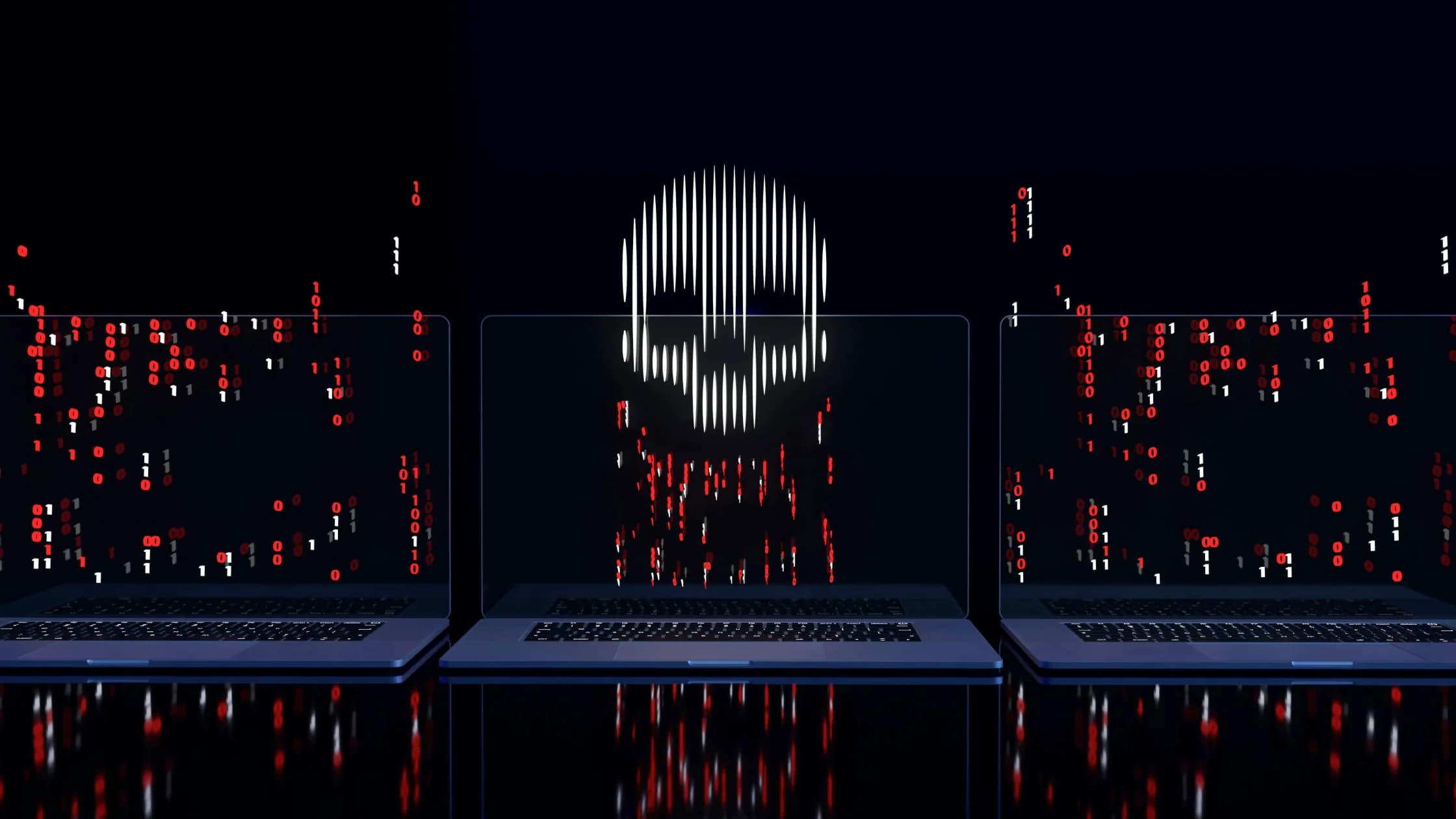

What is a virus signature? Think of it as a known fingerprint for malware. A security engine compares stable traits in a file, script, or memory fragment against its signature database. When there is a match, the sample can be blocked or marked as high risk. Microsoft Defender and ClamAV documentation both reflect this model: identify known sample traits, then act through real-time protection.[1][2]
Do not translate that into "a virus database makes you fully safe." Signatures are strong against known threats. They are much weaker on their own against new, obfuscated, or freshly modified samples.
Use the digital privacy guide as the wider checklist: it connects this issue to accounts, devices, identifiers, and data-broker exposure.
For the bigger security picture, see How does antivirus software work?.
Key Takeaways
- A virus signature is essentially a known fingerprint for malware.[1][2]
- It is fast, accurate, and relatively efficient.
- Its biggest weakness is slower response to brand-new or heavily obfuscated samples.
- Modern security tools usually combine signatures with heuristics and behavior monitoring.[1][3]
- "Signature detection" does not mean a product only scans file names or extensions.
It is not a universal label in one fixed format. It is a stable detection point extracted by security teams from a class of malicious samples.
Those points may come from:
The practical idea is: when this combination appears, it strongly resembles a known threat family.
Because it still works well against known threats.
| Dimension | Signature detection performance |
|---|---|
| Known malware identification | Strong |
| False-positive control | Usually stable |
| Scan speed | Usually fast |
| Standalone response to new threats | Weak |
That matters for everyday device security. Many real attacks still reuse old families, payloads, and delivery methods, so signature databases remain valuable.[1][2]
The most common gaps are:
That is why modern products put more emphasis on real-time protection, behavior monitoring, and cloud-based verdicts.
If you want to clarify whether a virus and malware are the same thing, read Virus vs malware.
For a user-level view of what security software is actually protecting, see What is antivirus software?.
One is closer to recognizing a person. The other is closer to watching actions.
| Method | Core question | Best at |
|---|---|---|
| Signature detection | Are you a known bad sample? | Fast identification of known threats |
| Heuristic analysis | Do you resemble malware? | Blocking suspicious variants |
| Behavior detection | Are you doing something dangerous now? | Finding runtime anomalies |
Modern antivirus software usually does not bet on one layer. A product that only compares files mechanically against a local signature database is not a complete defense in 2026.[1][3]
Because signature value depends heavily on freshness.
Attack samples keep changing. If your database is stale, your fingerprint list starts to look like an expired watchlist.
Microsoft's real-time protection guidance and CISA malware prevention resources both emphasize ongoing updates as a baseline, not an optional optimization.[1][3]
Remember these three points:
To place this back into a full device protection chain, read What is antivirus software?.
If you are rebuilding your basic defenses, the pillar page The complete digital privacy guide is a useful companion.
Close enough for most users. A virus database contains many signatures or detection rules used to identify known threats.[1][2]
New samples, variants, and social engineering may not be stopped quickly by signatures alone.[1][3]
It is a classic method, but not obsolete. It is now a foundation layer in a modern detection stack rather than the only layer.
Yes, though false positives are often easier to control than with aggressive heuristics.
The newer the signature database, the faster it can recognize known threats. Without updates, detection quality drops.[1][3]
Do not get stuck on terminology. Make sure your system and security software are updated and real-time protection is enabled.
Disclaimer
This article is for general cybersecurity education. Signature strategies, cloud verdicts, and naming conventions can vary significantly across security vendors.
As the publisher, AethoVPN notes that virus signature remains outside what a VPN can fix.
Sources
Sources checked 8 May 2026.
Related Articles:
Sign up to experience all premium features at no cost.
*Available only to new users. Each user is limited to one trial.