Start your 3-day free trial
Sign up to experience all premium features at no cost.
*Available only to new users. Each user is limited to one trial.
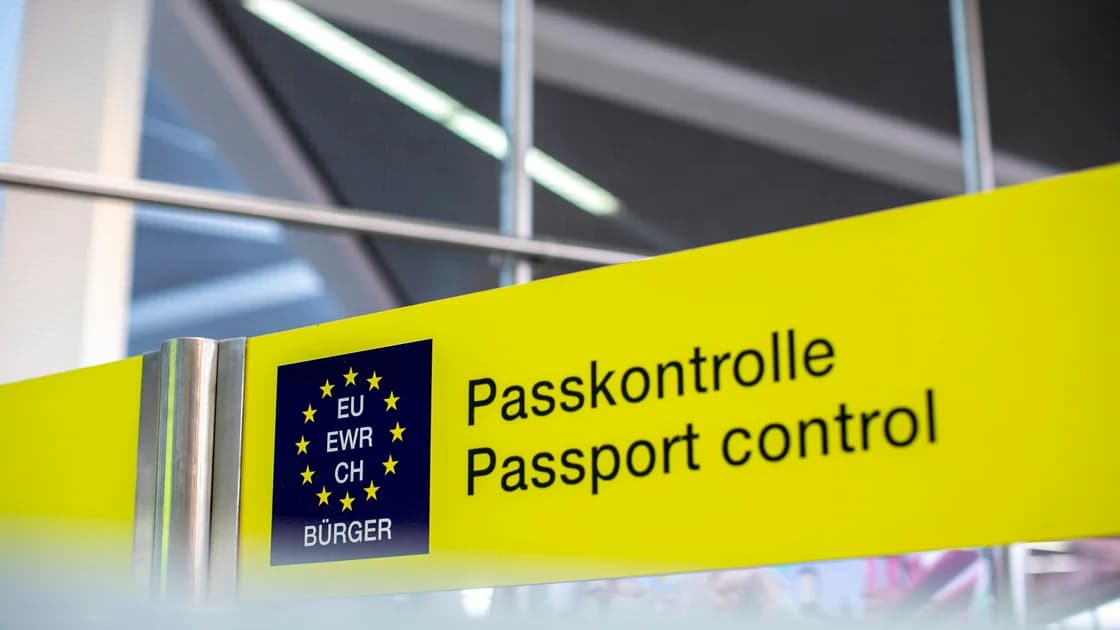

Airport biometrics privacy depends on the exact process, traveler, country, and data controller. A face check at airline bag drop, security, boarding, or border control may look similar, but the legal basis, purpose, retention, alternatives, and complaint route can be different.
Key Takeaways:
- Identify the stage and organization before deciding what a face camera means.
- Ask whether participation is mandatory for your traveler category and what alternative exists.
- Do not generalize US or European Union rules to another country or airport.
- Record the date, location, operator, and notice when requesting access, correction, or redress.
Include document and contact preparation in your international travel plan; a network-security tool cannot control how a border authority processes biometrics.
The same trip can include several independent systems.
| Stage | Possible operator | Typical task | Question to ask |
|---|---|---|---|
| Airline enrollment or bag drop | Airline or contractor | Link passenger and booking | Is this optional and reusable beyond this trip? |
| Security checkpoint | Security authority or airport partner | Verify identity for screening | Which authority and traveler categories are covered? |
| Boarding | Airline, airport, or border partner | Match traveler to boarding record | What alternative document check is available? |
| Exit or entry border control | Government border authority | Record or verify border movement | What law, retention period, and rights apply? |
| Lounge or access service | Airline or private operator | Grant commercial access | Is the biometric template shared with other services? |
Do not infer the operator from the camera casing or airport logo. Read the notice and ask which organization is the controller or responsible authority. If the answer is vague, record the location and process before sharing more data.
Separate at least five facts:
A statement that one party deletes a live image quickly does not describe every copy, comparison source, audit record, or partner system. Retention may also differ between a failed match, completed journey, immigration record, investigation hold, and user-created airline profile.
Ask for the privacy notice that applies to the exact checkpoint. Useful questions include the legal or consent basis, required and optional fields, recipients, cross-border transfers, retention, automated-decision role, access and correction route, and consequence of declining where declining is allowed.
Shared terminals deserve separate caution. The public-computer guide explains why an airport kiosk session and a government biometric record should not be treated as the same data problem.
US Customs and Border Protection describes biometric comparison environments across parts of the traveler journey, including entry, exit, and other travel contexts.[1] That is a US government program description, not a rule for every airport or every country.
Whether a person can request an alternative, what documents are checked, and how information is retained can depend on citizenship, immigration status, program, location, and current procedure. Ask the officer or operator before capture if you want to know whether another identity check is available for your category.
For certain US travel-screening and border-information problems, DHS TRIP provides a redress route, such as repeated screening difficulties or incorrect records described in its eligibility guidance.[3] It is not a universal appeal system for airline privacy disputes or other countries.
The European Union's Entry/Exit System is a government border system with its own scope, data fields, retention rules, and rights framework. The official EES material explains the data held and describes rights such as requesting access, correction, or deletion of unlawfully processed data, subject to applicable conditions.[2]
EES rules do not automatically govern an airline's voluntary facial-boarding program, a non-EU airport, or a different European database. Determine whether the process is EES border registration, a carrier service, or another national system.
The EU provides national contact details for EES data-protection matters.[4] The appropriate authority depends on where and how the data was processed. Keep your border-crossing date, location, travel document details, and correspondence so a request can be matched to the correct system.
For an overview of visa, ETIAS, and EES as separate decisions, see the Europe entry-systems guide.
Ask before entering the capture position when practical, without obstructing the queue or ignoring an officer's lawful instruction.
An alternative that exists for one traveler category may not exist for another. Staff language, signage, and operational practice can also differ, so do not present a past experience as a permanent right.
If the system fails to match you, remain calm and ask for the standard manual or secondary process. A failed automated comparison is not, by itself, proof of wrongdoing or a final border decision.
Write down the airport, terminal, checkpoint, date, local time, flight, operator name, notice wording, and what happened. Preserve your boarding pass and relevant travel references, but do not publish another traveler's image or an officer's personal details.
Direct the issue to the organization responsible for the specific stage. An airline privacy request, airport complaint, security redress case, and border-data-rights request may go to different bodies. Use an offline travel document backup so the request does not depend on a lost phone.
Ask for a case or receipt number and preserve the submitted text. If the problem concerns legal rights, immigration status, discrimination, or a consequential automated decision, obtain qualified advice in the relevant jurisdiction.
No. Airlines, airports, contractors, security bodies, and border authorities may run different systems. The responsible organization must be identified for the specific checkpoint.
No universal answer exists. The choice can depend on country, citizenship or status, age, program, airport, and whether the process is commercial or a legal border requirement.
There is no single airport-wide retention period. Ask which organization holds the live image, template, comparison source, transaction record, and audit log, because each may follow a different rule.
Not necessarily. It may lead to a manual document check or secondary procedure, while the authorized officer makes any formal decision under the applicable process.
Some systems provide access, correction, deletion, complaint, or redress rights, but the route and conditions differ. Identify the system and controller before submitting a request.
No. A VPN can affect a network connection you control, but it cannot govern the camera, comparison database, border record, retention policy, or authority decision.
Disclaimer: This article provides general privacy and travel information, not legal or immigration advice. Biometric requirements, alternatives, rights, and retention vary by system and can change.
Sources checked 27 August 2026.
Source freshness: the CBP page was last modified on 24 September 2025 and displayed a notice that its information might not be current; the EES pages did not display a reliable update date. Check the applicable official pages again before travel.
Sign up to experience all premium features at no cost.
*Available only to new users. Each user is limited to one trial.