Start your 3-day free trial
Sign up to experience all premium features at no cost.
*Available only to new users. Each user is limited to one trial.
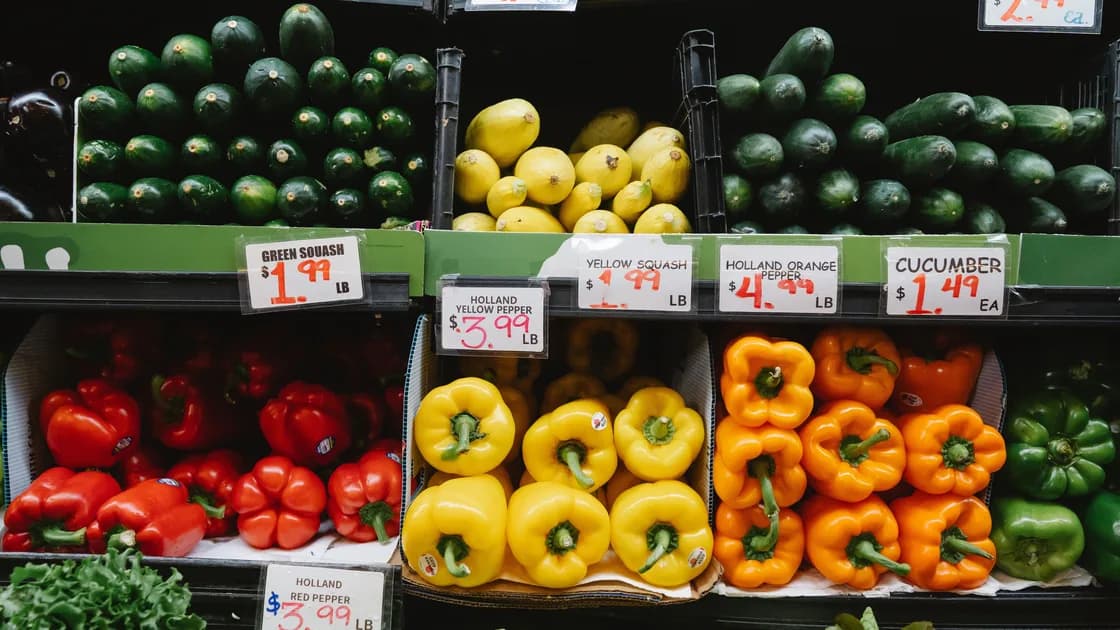

To build a product taxonomy with AI, define stable merchandise concepts and business rules before asking a model for labels or placements. Then test the taxonomy with ordinary, near-boundary, multi-fit, insufficient-information, novel, and locale-specific products. Merchandising and data-governance owners must adjudicate ambiguity and approve every production change.
The responsible AI workflow helps keep candidate structures separate from approved truth. This guide is about a customer-facing or operational merchandise catalog. It does not classify documents, procurement spend, database fields, or organizational teams, and it does not authorize an AI tool to remap a live catalog.
Key Takeaways
- Define concepts, not just attractive labels.
- Give every node a stable ID, scope note, inclusion rule, and exclusion rule.
- Model product type, attributes, variants, uses, audiences, and regulated status separately.
- Preserve multi-fit and unknown outcomes when one forced label would be misleading.
- Stress-test boundaries with labeled examples and independent human adjudication.
- Version the taxonomy, mappings, tests, and migration decisions together.
A product taxonomy is a governed set of product concepts and relationships used to organize items consistently. The visible navigation label is only one representation. The durable unit is a concept with a stable identity, definition, scope, relationships, and decision rules.
W3C's SKOS model distinguishes concepts from their labels and supports preferred labels, alternative labels, definitions, notes, and broader or narrower relationships.[1] GS1's Global Product Classification similarly uses a structured hierarchy and attributes to group products according to common characteristics.[2] These sources offer useful design principles, but your catalog should adopt an external standard only when its scope and governance fit the business.
Use a concept record like this:
| Field | Purpose |
|---|---|
| Taxonomy version | Identifies the approved structure |
| Concept ID | Stable key independent of wording |
| Preferred label and locale | Customer or operator-facing name |
| Synonyms and deprecated labels | Supports search and migration |
| Definition | States what the concept means |
| Inclusion rule | Describes qualifying products |
| Exclusion rule | Separates close neighbors |
| Parent and child IDs | Encodes hierarchy without label matching |
| Required attributes | Evidence needed for assignment |
| Variant rule | Keeps size, color, pack, and model separate from type |
| Examples and counterexamples | Makes boundaries testable |
| Owner, status, and revision | Preserves governance |
State what the taxonomy must support: browsing, search facets, reporting, marketplace feeds, content governance, fulfillment rules, or another approved purpose. One taxonomy may not serve every job. A shopper-oriented hierarchy can differ from an accounting or warehouse classification without either being wrong.
Name the taxonomy owner, category owners, product-data stewards, localization reviewers, regulated-product specialists, and production deployment owner. AI can propose a structure, but it cannot decide commercial strategy, legal classification, safety restrictions, or customer language.
Freeze the input inventory and current taxonomy version. Keep item identity, source attributes, existing assignments, locale, sales channel, and relevant policy state. Remove customer, seller, contract, and confidential commercial data that is unnecessary for concept design.
Many weak taxonomies mix different questions in one tree. “Running shoes,” “red,” “women,” “sale,” “waterproof,” and “brand X” may all appear as siblings even though they represent product type, color, audience, promotion, feature, and brand.
Create a dimension map before designing nodes:
Keep a property as an attribute when users need to filter across several product types. Create a category only when it represents a coherent product concept with stable boundaries. This reduces duplicate branches and makes ambiguous assignments easier to explain.
Start with a small set of high-value concepts derived from the catalog and user tasks. For each concept, write a plain-language definition, inclusion and exclusion rules, examples, counterexamples, required evidence, and relationship to broader or narrower concepts.
GS1 explains that GPC classifies products through levels such as segment, family, class, and brick, with attributes attached at the appropriate level.[2] Its getting-started materials also provide schemas and standards-maintenance resources.[3] Use this as evidence that hierarchy and attributes require governance, not as a requirement to copy GS1 labels into every catalog.
Avoid making labels carry the entire rule. “Accessories” is usually too vague without a defined parent and exclusions. “Other” should be a monitored temporary outcome, not a permanent bin that hides concept gaps.
Provide concept records, approved dimensions, a minimized product sample, allowed relationships, and an explicit output schema. Ask for candidate concepts, mappings, conflicts, and questions rather than a finished production tree.
Use only the supplied product facts and taxonomy fields.
Preserve product IDs, concept IDs, locale, units, and missing values.
Propose mappings with cited input attributes and a confidence reason.
AI must not infer composition, compatibility, audience, regulated status, or intended use.
Return MULTI_FIT, INSUFFICIENT_INFO, NOVEL_CONCEPT, and RULE_CONFLICT explicitly.
Do not edit the approved taxonomy or production catalog.
NIST's generative AI profile highlights confabulation, information integrity, privacy, and human-AI configuration risks.[5] A strict schema and human review reduce those risks, but they do not make model confidence a factual property of the product.
Create a representative set of synthetic or approved product records. Product-data and category specialists should assign expected outcomes using the written rules. When reviewers disagree, preserve the disagreement and resolve the rule before treating the row as a gold example.
Include at least these test families:
The document-classification guide uses related testing ideas, but the labels, evidence, and error costs differ. A product taxonomy must preserve merchandise concepts and variant semantics rather than document topics.
Run every test against a fixed taxonomy version, prompt or mapping logic, and model configuration. Save the proposed concept, evidence fields used, alternative concept, uncertainty state, and reviewer decision.
Use an ambiguity table:
| Product case | Expected outcome | Failure to watch |
|---|---|---|
| Hybrid desk-and-travel charger | Approved multi-fit or primary rule | Forced single label |
| Replacement strap without device model | Insufficient information | Invented compatibility |
| Children's-looking design with no age field | Unknown audience | Inferred age group |
| Bundle containing unrelated product types | Bundle policy | Category chosen from first noun |
| New material not in allowed values | Novel attribute | Silent synonym substitution |
| Same concept under two locale labels | One concept, localized labels | Duplicate concepts |
Measure coverage, exact-match agreement where one label is required, multi-fit recall, unknown detection, rule-conflict rate, and error distribution by concept. A single average accuracy can hide a category that fails every boundary case.
Classify each error as missing product data, unclear definition, overlapping concepts, wrong dimension, missing concept, synonym or locale issue, model transformation error, or reviewer disagreement. The remedy depends on the cause.
Use a data dictionary to define source fields and allowed values, and a data validation checklist to catch incomplete units, identifiers, and enumerations. Do not reorganize the taxonomy to compensate for a broken product feed.
If two concepts overlap, clarify inclusion, exclusion, priority, and multi-fit rules. If a new concept is needed, estimate affected items and navigation consequences. If reviewers disagree, update the decision guide and re-adjudicate affected examples rather than letting majority vote silently redefine the concept.
Prepare a versioned change set containing added, changed, merged, split, moved, and deprecated concepts; old-to-new mappings; affected item counts; locale label changes; redirect or navigation effects; rollback limits; and approval records.
Never let AI write directly to the production catalog. Run the new taxonomy against a frozen copy, review changed mappings, test downstream feeds and facets, and use a staged deployment owned by the catalog platform team. Preserve stable concept IDs when only a label changes.
Google Merchant Center documents its product category attribute and the difference between values supplied by merchants and categories that Google may assign automatically.[4] External channels can have their own schemas and decisions. Map your approved taxonomy to each channel explicitly rather than treating one external category as the internal truth.
Monitor unknown volume, multi-fit cases, override rates, search exits, zero-result queries, support feedback, category imbalance, and external-schema changes. Review examples from the error queue, not only high-volume successful assignments.
Keep a repeatable evaluation set using the prompt benchmarking workflow. When the taxonomy, prompt, model, field mapping, locale rules, or product feed changes, rerun the same holdout set and compare results by category.
Do not overwrite historical test labels when governance changes. Version the expected result and explain why. This lets teams distinguish a better model from a changed business rule.
No. A navigation menu is one presentation of selected concepts. The taxonomy also supports stable identities, definitions, relationships, localized labels, mappings, and governance outside the visible menu.
It can suggest candidates, but titles are often incomplete or promotional. Material, function, compatibility, bundle contents, units, and policy fields may be necessary, and missing facts must remain unknown.
That depends on the approved business rule. Some systems require one primary type, while discovery interfaces may support multiple paths or facets. Define the rule and test it rather than forcing a universal answer.
It is a product whose supplied facts support several concepts, conflict with a rule, lack required evidence, or expose an overlap in definitions. Ambiguity is a review state, not permission to guess.
Size it to cover important concepts, common products, rare but costly errors, and every designed boundary. Report coverage and uncertainty; a large sample concentrated in one easy category is weak evidence.
Not by itself. Calibrate confidence against adjudicated examples and combine it with rule checks, category risk, novelty, missing fields, and change impact. Some high-confidence errors are still harmful.
Add one when a durable product type or user task is not represented and the governance owner approves its scope. A temporary trend, missing attribute, or one badly written title is not enough.
Keep concept identity separate from localized labels. Have locale specialists review preferred and alternative labels, preserve deprecated terms for migration, and test whether one concept was accidentally duplicated by translation.
Disclaimer: This article provides general catalog-governance and AI-risk information. It does not determine legal product classification, safety obligations, regulated status, marketplace compliance, or commercial strategy.
Sources checked 6 September 2026.
Sign up to experience all premium features at no cost.
*Available only to new users. Each user is limited to one trial.