Start your 3-day free trial
Sign up to experience all premium features at no cost.
*Available only to new users. Each user is limited to one trial.
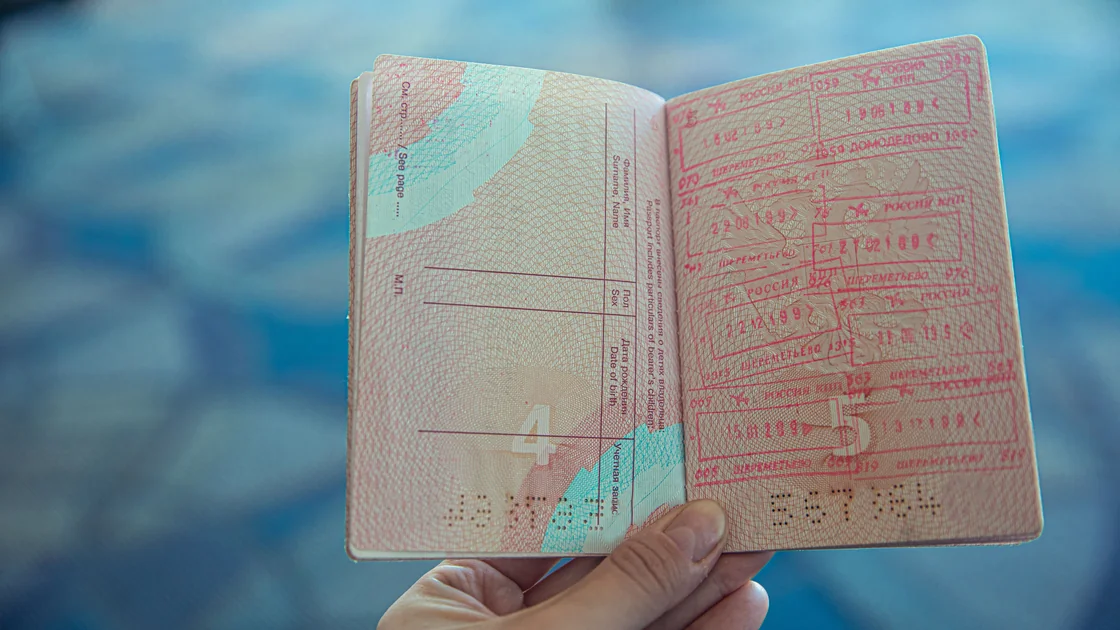

Is there a way to check your China entry and exit record online? The NIA government-service platform lists an entry-exit record query in its citizen document-information area, but it publishes no equivalent self-service query for foreign nationals: its foreigner-service area lists different functions, and an older official FAQ expressly says foreigners could not directly use the border-inspection record-query route. Identify the exact record and purpose, then ask the competent exit-entry or border-inspection authority for the current foreign-national procedure.[1][2]
Key Takeaways
- First decide whether you need a formal official record or only to reconstruct travel dates.
- Do not register in a Chinese-citizen service with inaccurate identity information.
- Ask which authority owns the period, port, and purpose of your request.
- Treat older port self-service or embassy-assisted guidance as a lead to confirm, not a current guarantee.
- Use passport stamps, tickets, and accommodation records only as supporting evidence.
- Minimize passport and movement data when contacting an authority or third party.
The China travel pillar covers general preparation. This guide focuses on obtaining or reconstructing your own movement history; it does not determine tax residence, immigration status, visa eligibility, or another person’s travel record.
“Entry record” can describe several different things. Ask the requesting organization what it will accept before collecting documents.
| Need | Possible evidence | Key limitation |
|---|---|---|
| Confirm one recent movement | Passport stamp, boarding record, ticket, or port printout where currently offered | May omit other movements or lack formal certification |
| Obtain an official movement history | Record issued through the competent government procedure | Availability, period, identity check, format, and requester eligibility vary |
| Support a visa or residence application | Official record plus passport and application documents | The receiving authority decides what evidence is sufficient |
| Correct an apparent error | Official query result and source documents | Personal notes cannot amend the government record |
| Reconstruct dates for personal use | Passport, airline, railway, accommodation, calendar, and payment records | It is not an official immigration record |
| Support a tax or legal analysis | Official movement evidence reviewed with the applicable rules | Days present alone may not determine status |
If a bank, employer, school, court, tax adviser, embassy, or immigration office requested the record, obtain its written requirement. Record period, issuing authority, paper or electronic format, seal or signature, translation, certification, and deadline can all matter.
The NIA government-service portal currently shows an entry-exit record query under the general document-information query area. On the same page, the foreigner-service section lists procedure guidance, appointments, application status, document query, permanent-residence card query, arrival card, and accommodation registration; it does not present the same movement-record query as a foreigner self-service item.[1]
An NIA FAQ published in 2017 says it could not provide foreigners with an entry-exit record query and that border inspection stations handled applications from Chinese citizens, including residents of China Hong Kong, China Macao, and China Taiwan. That page remains online, but its age means it should not be treated as proof that no foreign-national route exists anywhere today. It does prove that the citizen procedure cannot safely be assumed to apply.[2]
Do not enter a false national identity number, choose a resident category that does not describe you, or use another person’s account to force access. A technical form submission would not create a valid official record and may expose sensitive identity and movement data.
Start with the purpose and geographic scope:
Prepare one precise question: “I am a foreign national requesting my own mainland China entry and exit movements from date A through date B for purpose C. Which authority currently accepts this request, what original identity document is required, and what format can it issue?”
The 12367 immigration service guide explains how to record jurisdiction, timeline, and the answer without assuming that the hotline itself issues the document.
An older official NIA consultation response stated that foreigners could use available self-service equipment at a relevant port to print the latest entry-exit record. It also described a formal request made to NIA through the foreign national’s own country’s embassy in China.[3]
Because that response is from 2020 and describes operational availability rather than a permanent nationwide entitlement, verify all of the following before traveling to a port:
Do not buy a flight or cross a secure boundary solely to reach a machine unless the port has confirmed access and suitability. A printout of the latest event may not satisfy a request for a complete multi-year record.
There is no current universal foreigner self-service workflow published on the main NIA portal that this guide can promise. Use a verification-first process:
If NIA confirms an embassy-assisted path, ask whether your own country’s embassy in China accepts the request, what role it performs, and how the final record will be delivered. The old NIA response is not enough to assume that every foreign embassy in China offers the service today.[3]
The deciding authority must provide the current list, but a useful preparation set includes:
Do not send this full set in an initial public message. Begin with non-sensitive facts sufficient to identify the procedure. Provide passport numbers, scans, signatures, addresses, and movement history only after verifying the official channel and its need for each field.
Build a private chronology without presenting it as an official record.
Supporting records can reveal a missing passport, a name variant, or the likely port needed for a follow-up. They cannot replace a formally issued record when the recipient requires one.
Check identity before dates. A record for a similarly named person is more serious than a single date typo.
| Field | What to compare | Possible follow-up evidence |
|---|---|---|
| Name and nationality | Current and historical passports | Identity pages and name-change document |
| Passport number | Each document used in the period | Old passport or official replacement record |
| Direction | Entry versus exit | Ticket and boarding evidence |
| Date and port | Travel chronology | Boarding pass, carrier record, passport stamp |
| Requested period | First and last requested dates | Copy of the submitted request |
| Issuer and authenticity | Official seal, signature, electronic verification, or stated validation method | Issuing authority’s confirmation route |
If a movement seems missing, do not add it by editing the PDF or paper. Contact the issuer with the document reference and concise evidence. Keep the unaltered original, the correction request, and the response as separate records.
An entry-exit history reveals identity, location, timing, and travel patterns. Store it as a sensitive identity record.
If a recipient asks for far more movement history than its stated purpose requires, ask whether a shorter official period or redacted copy is acceptable. Do not alter official fields; request a suitable issuance format or provide a separate explanatory note.
| Problem | Likely reason | Next step |
|---|---|---|
| Citizen app will not verify identity | Service is not the foreigner route | Stop retrying with inaccurate identity; ask the authority |
| Port machine shows no result | Passport, biometrics, service scope, or availability differs | Use staffed assistance and confirm the supported period |
| Old passport movements are missing | Record search used only the current number | Ask whether prior passport numbers can be linked |
| Recipient rejects a self-made timeline | It requires an official record | Obtain the specified government-issued format |
| Embassy does not offer the expected process | Older guidance or jurisdiction differs | Ask NIA/12367 for the current competent office |
| Dates conflict with your evidence | Time, port, direction, or identity record needs review | Preserve originals and request correction from the issuer |
| Third party asks for an account password | It is not a legitimate evidence requirement | Stop and use a verified official channel |
Do not assume that the citizen-facing query supports a foreign passport. The current portal does not show the same movement-record function in its foreigner-service section; ask NIA for the current foreign-national route.
Chinese citizens can use the entry-exit record query in the citizen document-information area of the NIA government-service platform and follow the steps it displays. The 2017 NIA FAQ also said border inspection stations accepted these applications from Chinese citizens, including residents of China Hong Kong, China Macao, and China Taiwan.[1][2] This guide covers the foreign-national route, so confirm required documents in the platform’s or receiving office’s current instructions.
This guide covers your own record. Access to another person’s data requires a lawful basis and whatever identity, authority, or representation the competent agency requires.
Not necessarily. E-gate movements, illegible stamps, document changes, or other processing can make a passport incomplete. Stamps are supporting evidence, not a guaranteed complete official history.
Older official guidance mentioned latest-record self-service printing where available. Confirm the exact port, access, passport support, date range, and legal status of the printout before traveling there.
An older NIA response described a request to NIA through the foreign national’s own country’s embassy in China. Ask NIA whether that route remains available and then confirm whether your embassy in China accepts the request; do not assume a Chinese mission abroad handles it.
No. It can provide movement evidence, but tax residence may depend on different day-count rules, residence, domicile, treaties, income, and other facts. Obtain qualified advice for that separate question.
Tell the competent authority and provide both document numbers through its verified channel. Ask whether the records can be linked and whether name or nationality changes require additional proof.
Keep the issued result unaltered and contact the issuer with the record reference, disputed movement, and original supporting evidence. Follow the authority’s correction or review procedure.
Disclaimer: This article provides general record-request and privacy information, not legal or tax advice or a guarantee that a portal, port, office, or embassy will issue a particular record. Procedures can change; confirm the current route with the competent authority.
Sources checked 4 October 2026.
Sign up to experience all premium features at no cost.
*Available only to new users. Each user is limited to one trial.