Start your 3-day free trial
Sign up to experience all premium features at no cost.
*Available only to new users. Each user is limited to one trial.
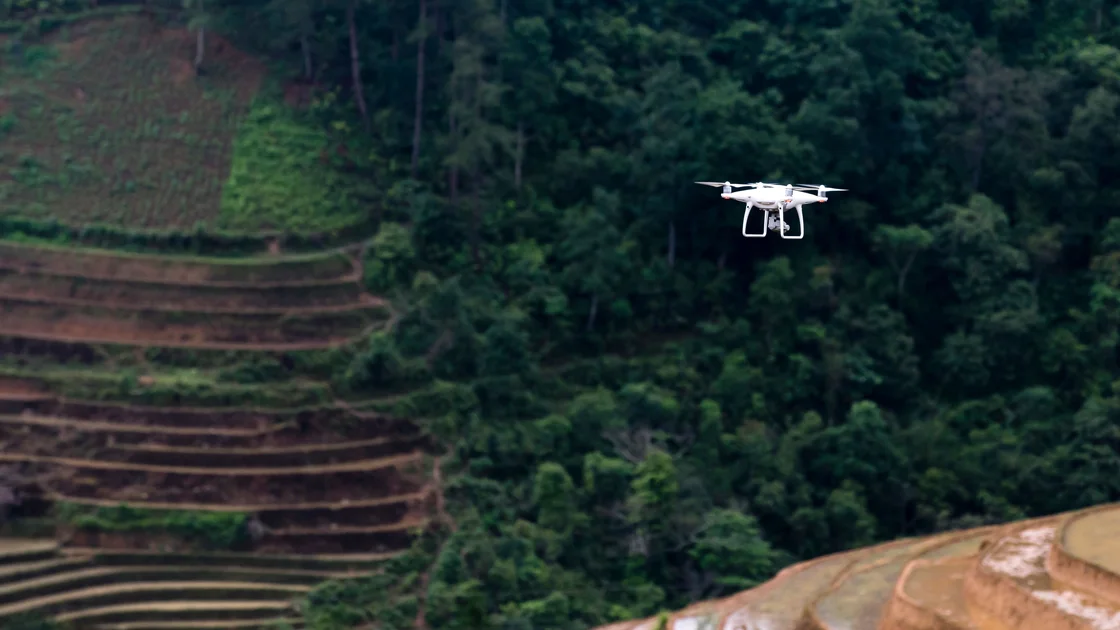

An international visitor may fly a drone in China only when every applicable registration, activation, operation-identification, operator, airspace, flight-application, local-site, and safety requirement is satisfied. A foreign passport and a small recreational drone do not create an automatic permission; if a required official step cannot be completed, do not fly.[1][2][3][6]
Key Takeaways
- Classify the aircraft and the intended activity before planning a launch.
- Complete any required real-name registration and activation through the current official route.
- Verify the required operation-identification transmission function, firmware, or compliant retrofit module.[6]
- Use the official UOM platform to check airspace and application requirements for the exact place and time.[4]
- Airport, military, government, border, event, nature-reserve, scenic-site, and local controls may be stricter.
- Never bypass geofencing, fly under another person's identity, or treat missing platform support as permission.
- Keep the operation recreational; surveying and other specialist work can trigger separate restrictions.
The China travel pillar explains connectivity separately. This guide is a legal and operational go/no-go workflow, not a photography tutorial.
China's Interim Regulations create a national framework for unmanned aircraft registration, operator responsibilities, airspace, flight activities, supervision, and penalties.[1] The aircraft, operator, purpose, location, time, altitude, and surrounding activity all affect the answer.
| Gate | Question | Stop condition |
|---|---|---|
| Aircraft | What category, weight, capability, and registration status apply? | You cannot classify or register it as required |
| Operation identification | Does the aircraft have the required active transmission function, firmware, or compliant module? | The function is absent or the current transition requirements are not met |
| Operator | Does the operator need training, qualification, or identity verification? | Required qualification or verification is missing |
| Platform | Can the official system accept your current identity and aircraft data? | A required submission cannot be completed lawfully |
| Airspace | Is the exact location and altitude suitable at the planned time? | UOM or the authority shows controlled or prohibited conditions |
| Flight | Is advance application or approval required? | Approval is required but not granted |
| Site | Does the landowner, attraction, park, event, or local authority allow launch and recovery? | The site prohibits it or permission is absent |
| Safety | Can you maintain control, separation, weather margins, and privacy? | People, traffic, weather, interference, or visibility makes it unsafe |
Passing one gate does not pass the others. A map shown in a manufacturer's app cannot replace official airspace information, and landowner permission cannot replace aviation authorization.
China's mandatory registration-and-activation standard took effect on 1 May 2026. Newly produced civil drones must meet it from that date; drones sold and already in use before then have a 12-month transition period, with the requirements applying from the thirteenth month. Scope and exemptions still matter, so verify the aircraft's status instead of inferring compliance from its age or weight alone.[2]
Use the current CAAC real-name registration procedure and official platform instructions. The 2026 procedure defines the registration process and required aircraft information, but the interface and accepted identity-document route can change.[3] Do not promise that every foreign passport, overseas phone number, or imported aircraft can complete the workflow.
Prepare the aircraft manufacturer, model, serial number, category, owner or controller details, and the identity document required by the official service. If you encounter an identity-document mismatch, follow the principles in the Chinese app real-name verification guide: use your real data, do not borrow an account, and escalate through the named authority.
Registration is not a flight approval. Activation in a manufacturer's system is also not evidence that the planned airspace and activity are lawful.
CAAC's mandatory operation-identification standard also took effect on 1 May 2026. An in-scope civil drone without an operation-identification transmission function should not operate. Until 1 November 2026, an aircraft that already has broadcast or network identification but does not yet meet specified parts of the standard may continue under the published transition; aircraft using retrofit identification modules have a 36-month path to full compliance measured from 1 May 2026, not from an individual's installation date. Check the manufacturer's official firmware, hardware, or module plan and current CAAC instructions for the exact model. A manufacturer geofence or a favorable UOM airspace result does not prove that this technical requirement is met.[6]
CAAC identifies UOM as the civil unmanned-aircraft integrated management platform for suitable-airspace queries, flight applications, and related regulatory services.[4] Check the exact coordinates, date, time, altitude, route, and activity rather than relying on an old screenshot or a generic city-level answer.
Save offline location references through the China maps and navigation guide, but treat map pins as navigation aids rather than aviation authority.
Recreational photography is not a blanket exemption. Flights around airports, borders, military or government facilities, major events, dense crowds, emergency scenes, critical infrastructure, or temporary controlled areas can be prohibited or tightly controlled.
Article 35 expressly prohibits foreign unmanned aircraft, or aircraft controlled by foreign persons, from conducting surveying, radio-parameter testing, and related flight activities in China.[1] This is not simply a request for extra flight approval. Do not undertake those prohibited activities. For other work such as research, paid production, infrastructure inspection, or data collection beyond ordinary personal imagery, obtain specialist advice from the competent authority before bringing or operating the aircraft; do not assume a recreational registration covers the work.
Respect privacy, personal information, portrait rights, property rules, and requests from site staff. Do not fly over people merely because the aircraft is small.
Technical failure does not relax a legal requirement. Dynamic flight data and other reporting duties use official services and technical routes defined by CAAC; applicable obligations still exist when a consumer app is inconvenient.[5]
| Problem | Unsafe response | Correct response |
|---|---|---|
| Foreign document is not accepted | Use another person's identity | Contact the official service; do not fly if registration is required |
| Manufacturer geofence blocks takeoff | Disable or bypass it | Verify official airspace and use the manufacturer's lawful support route |
| UOM information is unclear | Trust an old online map | Ask the competent authority and postpone the flight |
| Approval has not arrived | Launch briefly to test | Wait for a valid decision |
| Site staff say no | Move a few meters and launch | Leave the site or obtain valid permission elsewhere |
| Signal or weather deteriorates | Continue for the shot | Land safely and stop |
Prepare the required accounts and contact routes before arrival using the mainland China phone checklist, but do not use network tools to evade platform or regulatory controls.
Bringing an aircraft and operating it are separate questions. Customs, transport, battery, registration, activation, and flight requirements can all apply; possession does not authorize a launch.
Use the current official registration route to find out. Do not assume universal support, and never use another person's identity if your document is not accepted.
No. Weight can affect classification, but airspace, site, operator, privacy, temporary-control, and safety rules can still apply.
No. Use UOM and responsible-authority information for regulatory airspace, then separately check the manufacturer's safety controls and the launch site's rules.[4]
Only if aviation requirements and the site's current rules both allow it. Ask the site operator before arrival because launch, recovery, photography, and commercial-use rules may differ.
No. Resolve the discrepancy with the official authority and manufacturer. Do not disable safety controls or use an unofficial workaround.
Do not treat that as ordinary tourism. Article 35 prohibits surveying and radio-parameter-testing flights by foreign aircraft or aircraft controlled by foreign persons in China. Paid filming and other specialist work need a separate assessment of applicable permissions and sector rules; an ordinary flight approval does not override a prohibition.[1]
Land safely as directed, keep the aircraft powered down, and cooperate. Registration or an earlier approval does not remove lawful on-site authority.
Disclaimer: This guide provides general information, not aviation, legal, customs, privacy, surveying, or site authorization. Rules and temporary controls can change; verify the current decision of CAAC, UOM, local authorities, the site operator, and other competent bodies.
Sources checked 4 October 2026.
Sign up to experience all premium features at no cost.
*Available only to new users. Each user is limited to one trial.