Start your 3-day free trial
Sign up to experience all premium features at no cost.
*Available only to new users. Each user is limited to one trial.

Xiaohongshu's official rules are easy to find once you know the domains: the Community Convention sits in a help center at pgy.xiaohongshu.com, and the User Service Agreement (document ZXXY20220331001) at agree.xiaohongshu.com[2][3]. For a China trip, the app is a strong discovery tool because local users share neighborhood walks, restaurant experiences, and practical details that English guides may miss, but it is not an official timetable, map, booking system, or safety notice. The useful habit is a five-part loop: choose precise search terms, check freshness, understand who posted and whether a commercial relationship exists, identify the exact branch, and confirm the decision through an official source.
Key Takeaways
- Install the official app and treat language options and menus as version-dependent.
- Combine a place name with Chinese category, neighborhood, and practical-intent keywords.
- Use notes to discover candidates, not to establish opening hours, price, availability, or policy.
- Check the publication date, author context, commercial signals, comments, and exact branch.
- Verify important details with a map listing, merchant, booking channel, venue, or government source.
- A VPN cannot make a restricted account eligible or turn a community claim into an official fact.
For network preparation before using Xiaohongshu, see the Best VPN for China guide. Connectivity does not verify a post, place, price, or account.
Use the current official developer distribution page to identify the app rather than following a download link in a post or message. The App Store page identifies the developer and current distribution information[1]. On other platforms, compare the developer name, package source, privacy information, and update history. Avoid modified packages that promise extra language, login, or download functions.
Choose an interface language if your installed build offers one, but expect some note text, place names, menus, and embedded images to remain Chinese. Availability can differ by operating system, region, account, and version. This guide does not assume that a particular language toggle or menu path will always be present.
Define one task before opening the feed: find two breakfast places near a station, compare three camera shops, identify a rainy-day museum, or learn the best exit for a venue. A narrow purpose prevents an attractive recommendation feed from becoming an unverified itinerary. Create a short note outside the app with fields for candidate, exact location, date checked, official confirmation, and reason to keep or reject it.
If the app requests login or verification, use only the official flow and truthful details. Browsing, posting, saving, messaging, and commercial functions may have different requirements. Do not borrow an account, rent an account, or ask a stranger to “unlock” one. The user agreement and community rules govern account and content behavior, and their current versions should be checked in the official service[2][3].
Start with the official Chinese place name whenever possible. Copy it from the venue, hotel, map, or government page. Add the city or district when a name is common. Then add a category or practical intent: 咖啡 for coffee, 早餐 for breakfast, 亲子 for family-friendly, 雨天 for rainy day, 预约 for reservation, 排队 for queue, 入口 for entrance, 行李寄存 for luggage storage, or 避雷 to find criticism and cautions.
Use several query shapes rather than one long sentence. For example, search the venue name alone, then venue plus 交通, venue plus 预约, venue plus the current month, and venue plus a nearby station. English can work for globally known brands, but a mixed English-and-Chinese query often separates the correct China location from overseas posts.
Search the neighborhood as well as the landmark. A post titled around a larger district may contain the practical entrance, alley, or branch you need. Conversely, a beautiful note about “Shanghai” may be far outside your actual route. Extract the Chinese place name and compare it with a map before saving.
Hashtags and suggested terms are discovery aids, not classifications. Popular wording may group different cities, branches, seasons, and services. Keep the original query visible in your notes so you can explain why a result was relevant rather than saving it only because the feed recommended it.
Check the publication date and whether the author says when the visit occurred. An old note can still be useful for atmosphere or layout, but it should not establish current hours, price, ticket rules, or availability. Look for recent comments that report a move, closure, renovation, queue change, or price change, then verify that claim elsewhere.
Identify the author's relationship to the subject. A normal visitor report, invited experience, merchant account, travel agency, affiliate-style post, and paid promotion carry different incentives. Look for disclosures, campaign tags, discount codes, repeated promotional phrasing, and an account that posts nearly identical recommendations across many places. Lack of an obvious disclosure does not prove independence.
Separate observation from conclusion. “I entered through the east gate at 10:00” is an observation from one time. “The east gate is always the only entrance” is a broader claim that needs official confirmation. “The noodles were spicy” is subjective; “contains peanuts” is a safety claim that must be checked with the restaurant.
Compare multiple posts that differ in author, date, and angle. Agreement across copied captions is not independent confirmation. Prefer notes with identifiable place details, original context, and practical limits. The community convention is a useful reminder that platform content remains subject to community rules and moderation rather than being an official registry[2].
Commercial content is not automatically useless. A merchant post may be the best source for a current product launch or reservation link. The key is to label it correctly and not treat marketing language as an independent review. Record whether the source is the merchant, an invited creator, or an apparently independent visitor.
Watch for urgency and certainty: “must buy,” “secret place,” “never queues,” “permanent price,” or “guaranteed entry.” Compare the claim with the current date and official terms. A screenshot of a price or menu proves only what was displayed when captured; it may refer to a weekday, member price, limited offer, or different branch.
Seasonality matters. Flowering, foliage, weather, river levels, school holidays, exhibition schedules, and sunset times can change the experience. Search the current month and year, but do not assume a freshly reposted note reflects a fresh visit. Read the body and comments for the actual date.
Treat comments carefully. They can surface valuable corrections, but they can also contain promotion, disputes, jokes, or reports from another branch. Use them to generate verification questions: Is booking now required? Which entrance is open? Has the shop moved? Then take those questions to the responsible venue or merchant.
Copy the Chinese name and address into a map app. Compare district, street, building, floor, nearby transit, phone, and photos. If several branches use the same English name, assign each candidate a branch identifier such as mall name, road, or station. Never navigate using a Xiaohongshu nickname alone.
Verify current opening status and hours through the merchant's official account, booking page, phone, mini program, ticket system, or venue website. For museums, parks, transport, hospitals, public services, and regulated activities, prefer the responsible institution or government source. A map listing is useful cross-checking but can also be stale.
Confirm the action, not just the location. A restaurant may be open but require a queue number; an attraction may be open but sold out; a shop may exist but not stock the featured product; a viewpoint may be accessible only from another entrance. Ask a specific question with date, time, number of people, and branch.
For safety, accessibility, allergy, medical, legal, or payment decisions, do not rely on a community translation. Keep the original Chinese text and ask the responsible provider to confirm. If the answer changes your health, money, or travel eligibility, obtain it through a channel that leaves a clear official record.
Save only candidates that pass a basic check. In your trip note, record the Chinese name, exact branch, map link, reason for interest, latest official check, booking requirement, expected travel time, and fallback. This is more useful than hundreds of unlabeled bookmarks.
Group places by geography and time rather than feed theme. Two “must visit” places may be on opposite sides of a city. Use a map to compare real routes, last-entry times, and closing days. Leave slack for queues and transport changes.
Keep subjective discoveries separate from fixed commitments. A café can remain an optional nearby choice; a timed train or ticketed attraction needs official confirmation. Mark any detail taken only from community posts as unverified and decide when it must be rechecked.
Before the day of the visit, repeat the final two steps of the loop: exact branch and official confirmation. Recheck weather-dependent venues, temporary exhibitions, reservation windows, and businesses with recent move or renovation reports.
Share the minimum profile information needed for your purpose. Avoid posting a live hotel location, full itinerary, boarding pass, passport, phone number, order code, or a photograph that reveals another person's identity without consent. Remove location metadata where appropriate and delay public travel posts until you have left a sensitive location.
Be cautious with direct messages offering reservations, tickets, account recovery, refunds, or “internal” access. Move to the venue's verified official channel before sharing contact or payment information. Do not send passwords, SMS codes, payment credentials, or identity documents to an unofficial contact.
If a function disappears, first update the official app, confirm the account and network state, and check whether the action is limited by content type, region, age, or account status. Use the in-app help or agreement-linked support route. This article does not provide creator appeals, account-unblocking tactics, or ways around platform controls.
The service agreement describes the relationship between the user and platform and may change over time[3]. Preserve the notice and account record if you need support. Changing networks can restore access to a reachable service, but it cannot establish account eligibility or reverse a moderation decision.
Xiaohongshu is most valuable as a discovery layer. Search with Chinese context, check date and author incentives, identify the exact branch, and confirm the decision through the responsible merchant, venue, map, booking service, or government source. Keep a small evidence-based shortlist instead of an unreviewed collection. Community experience adds context; it does not replace official facts.
The Community Convention cited in this guide is published in the help center at pgy.xiaohongshu.com[2], and the User Service Agreement, document ID ZXXY20220331001, is at agree.xiaohongshu.com[3]. Type the domain yourself instead of opening a link from a note, comment, or message, because look-alike pages can imitate support. Both pages are in Chinese, may need JavaScript to load, and can be revised, so check the current version before relying on a clause.
Some builds and accounts may offer language choices, while much user content remains Chinese. Check the current official app rather than relying on an old menu guide. Chinese place names and mixed-language search terms remain useful.
No. Popularity alone does not establish a commercial relationship. Check disclosures, merchant identity, discount codes, campaign language, and the author's posting pattern, then label the source honestly.
It depends on the claim. Scenery context can age slowly; opening hours, prices, entrances, queues, tickets, and transport can change quickly. Verify action-critical facts on the day or booking window that matters.
Use it as a lead. Copy the Chinese name into a map, identify the branch, compare the structured address, and confirm with the venue or merchant before traveling.
Combine the Chinese neighborhood or landmark with cuisine, meal, queue, reservation, and a recent month. Then check branch, opening status, allergy information, and price through the restaurant or current merchant channel.
Not unless you can verify it as the responsible provider's official channel. Search independently for the venue or merchant, compare the domain or mini program, and never send payment or identity data to an unverified contact.
No. It may affect network reachability, but account status, posting rights, verification, and moderation are platform decisions handled through official support. AethoVPN does not change those Xiaohongshu account or moderation decisions.
Sources checked 4 October 2026.
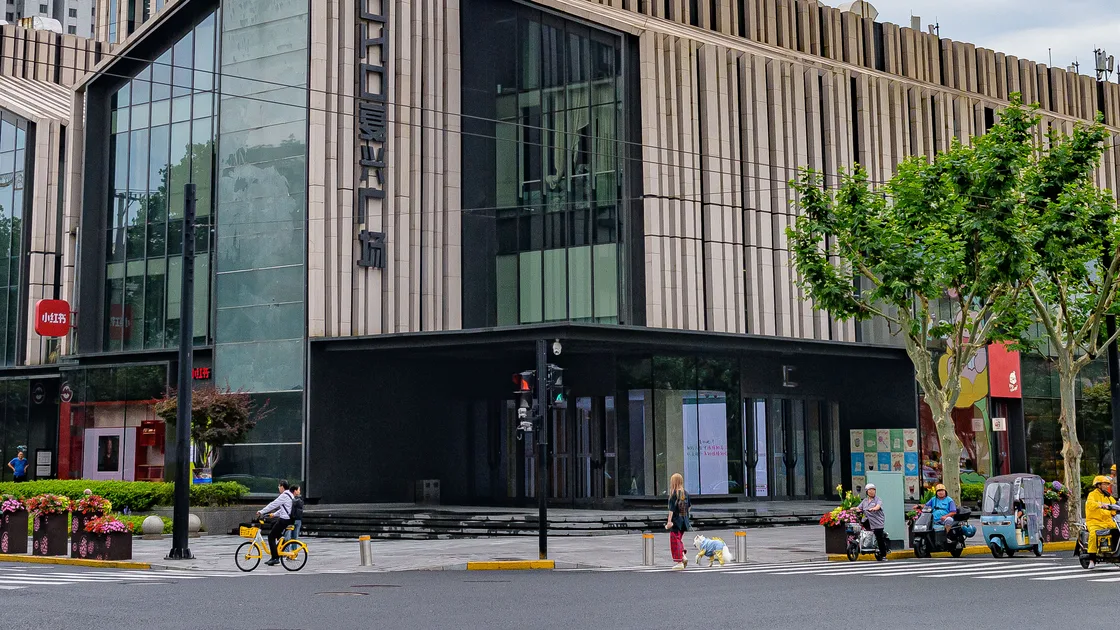
Cover credit: SOHO Fuxing Plaza, home to Xiaohongshu headquarters by N509FZ, CC BY-SA 4.0. Cropped to 16:9 and redistributed under the same license.
Sign up to experience all premium features at no cost.
*Available only to new users. Each user is limited to one trial.