Start your 3-day free trial
Sign up to experience all premium features at no cost.
*Available only to new users. Each user is limited to one trial.
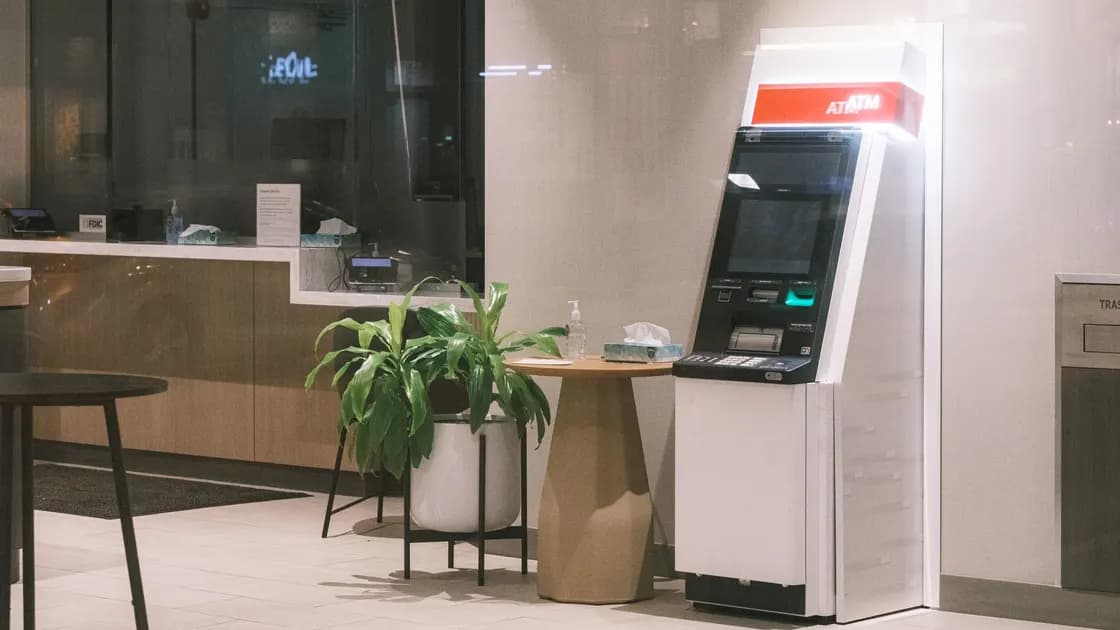

When a crypto card cash withdrawal is declined, stop repeated attempts and identify whether the refusal came from the ATM, network, issuer, card balance, or a program limit. Check the card's authenticated activity first, because a decline can coexist with a temporary authorization or fee hold.
Key Takeaways
- An ATM cash decline is not the same as a card purchase decline or exchange withdrawal failure.
- Check ATM compatibility, card status, PIN, available card balance, and limits in that order.
- Do not assume the wallet's crypto balance equals the amount available to the card.
- Preserve the ATM location, time, requested amount, receipt, and issuer activity before escalating.
If the card or account shows unfamiliar activity, begin with the online security guide and freeze the card through its official controls. Do not call a number displayed in an unexpected text message or hand a stranger your unlocked phone.
The screen often says only “declined,” but several systems made separate decisions. The ATM operator checks its own card policy, denomination inventory, per-transaction limit, and technical state. The card network routes the request. The issuer or program manager checks card status, PIN data, available balance, regional controls, and limits.
Coinbase's card guidance gives a named example: some ATMs do not accept prepaid debit cards, the terminal may be outside the supported Visa network, the selected spending wallet may lack funds, or a daily limit may have been exceeded.[1] Visa's locator can help identify participating ATMs, but inclusion does not guarantee that a particular terminal, card program, amount, or transaction will be approved.[2]
| Signal | Likely boundary | First check |
|---|---|---|
| Card rejected before PIN | Terminal reader, card state, or unsupported card | Try chip orientation and inspect card status |
| “Incorrect PIN” or attempts warning | PIN validation | Stop and verify the official PIN process |
| Decline after amount entry | Balance, fee, issuer limit, ATM limit, or risk control | Compare available balance and limits |
| ATM unavailable or cannot dispense amount | Operator, denomination, or cash inventory | Choose another eligible terminal or amount |
| Card activity shows pending cash authorization | Issuer ledger | Do not repeat; preserve and monitor the hold |
| Cash missing but activity says completed | Dispense dispute | Keep receipt and contact issuer/operator promptly |
A completed debit without cash is not merely a decline and needs a cash-dispense dispute. This article focuses on a refused withdrawal, but it includes the checks needed to recognize when the case has crossed into a different dispute.
Do not make several identical attempts. Repeated PIN failures can trigger additional controls, while repeated amount requests may create multiple authorizations. Photograph or note the terminal's operator name, address, terminal ID, displayed message, local time, amount, and currency; keep any receipt.
Open the card provider from a trusted bookmark or its official app. If the card appears lost, compromised, or used by someone else, freeze it immediately. If the only event is your own declined attempt and the provider gives no security warning, preserve the record before deciding whether another controlled attempt is appropriate.
Read the rules for your exact card, country, tier, and status. A card that works for purchases may have ATM access disabled, unavailable in a region, or limited to the physical card. A newly issued, replacement, virtual, frozen, expired, or not-yet-activated card can have different capabilities.
Do not generalize from another user's card. Crypto.com, for example, publishes ATM limits and fees that vary across named U.S. card tiers, alongside frequency and broader transfer limits.[3] Those figures are an illustration of program-specific rules, not limits for your card.
Check that the terminal displays a supported network mark and accepts the card type. An operator may exclude prepaid cards even when it participates in the broader network. Prefer a bank-operated terminal in a well-lit, controlled location; inspect the slot and keypad for obvious tampering before inserting the card.
If the issuer suggests another network ATM, use its official locator or the network's official locator. Do not follow a map link sent by an unsolicited support account. A different terminal can isolate an operator-specific problem, but it should not be used to bypass a clear issuer restriction.
Use only the PIN set or displayed through the issuer's authorized process. A card-app passcode, exchange password, wallet PIN, and card cash-withdrawal PIN may be different. Stop after an incorrect-PIN warning rather than guessing.
Shield the keypad and decline help from bystanders. If the ATM retains the card, follow the terminal operator's posted procedure and freeze the card through the official app; do not disclose the PIN to retrieve it.
Check the balance specifically available for card spending or cash withdrawal. A crypto portfolio value, pending deposit, staking balance, exchange trading balance, or unsupported asset may not fund the card. In Coinbase's named program, supported crypto used for card transactions is converted to U.S. dollars, and selecting the wrong source wallet or having insufficient funds can cause an ATM issue.[1]
Account for the requested cash, issuer fee, ATM surcharge, currency conversion, and any required minimum remaining balance. The ATM may authorize more than the visible cash amount. Do not move additional crypto into a card program until you understand whether the original attempt created a pending hold.
Read per-transaction, daily, monthly, frequency, card-tier, regional, and operator limits. “Free ATM limit” usually concerns fees and is not necessarily the same as the hard withdrawal limit. The ATM itself can set a lower limit than the issuer.
Use the time zone and reset rule stated by the card program. A limit may include earlier successful withdrawals, declined attempts that remain authorized, purchases, transfers, or surcharge amounts depending on the terms. Never rely on a third-party blog's old numeric limit.
Look for cash-withdrawal toggles, regional usage controls, card freeze state, activation status, replacement status, and required identity review. Confirm that the account name and identity checks are complete through official channels. Do not change residence details or use a different apparent location to evade a geographic control.
If you are abroad, record the terminal currency and any conversion offer. Declining dynamic currency conversion may affect exchange-rate presentation, but it does not guarantee authorization. Choose based on the issuer's guidance and the terminal disclosure, not on a promise from an unknown helper.
Retry only if you found a reversible, ordinary cause: an unsupported terminal, an amount above the ATM's limit, a confirmed balance shortfall, or a corrected card control. Use an eligible ATM, a permitted amount, and the verified PIN. Do not split withdrawals to circumvent a program limit.
If the second controlled attempt fails, stop. Continued retries can make the evidence harder to read and may trigger additional risk controls. Escalate with the two attempts clearly separated.
Compare physical events with the issuer ledger.
| ATM outcome | Card ledger | Case type |
|---|---|---|
| No cash, no debit or hold | Decline only | Diagnose compatibility, balance, PIN, or limit |
| No cash, pending authorization | Possible temporary hold | Preserve evidence and ask about hold release |
| No cash, completed cash withdrawal | Cash-dispense dispute | Contact issuer and ATM operator promptly |
| Partial cash, full debit | Partial-dispense dispute | Count cash privately and retain receipt |
| Cash received, unexpected fee | Fee or conversion inquiry | Compare terminal disclosure and card terms |
For a pending authorization that will not clear, use the separate card authorization hold guide. For a retail purchase refusal, use the crypto card payment decline guide; merchant category, offline acceptance, and purchase controls differ from ATM cash rules.
Provide the card's final digits, attempt timestamp and time zone, ATM operator and terminal ID, location, requested amount and currency, displayed error, receipt, card status, available balance before the attempt, and any pending or completed ledger entry. Redact the full card number and never send the PIN, security code, recovery phrase, password, or one-time code.
Ask support to identify the response category if they can disclose it, confirm whether a cash authorization exists, explain which limit or control applied, and state whether another attempt is safe. If the ATM kept the card or the ledger shows cash delivered when none was dispensed, say so explicitly rather than opening a generic “declined card” case.
ATM cash access has separate terminal, network, PIN, balance, and limit checks. Some operators also decline prepaid cards even when retail purchases work.[1]
Not necessarily. Only supported, settled funds assigned to the card's spending source may be available, and fees or holds can reduce the usable amount.
Only after confirming that the ATM or issuer amount limit caused the decline. Repeated guesses can create holds or risk controls; make at most one evidence-based retry.
Yes. Coinbase notes that an ATM operator may charge its own fee even where its card program does not charge an ATM withdrawal fee.[1] Review the terminal disclosure before confirming.
Treat it as a possible cash-dispense dispute, not a simple decline. Save the receipt and terminal details, check whether the ledger is pending or completed, and contact the issuer promptly.
Not always. A fee-free allowance, a hard cash limit, a transaction-frequency limit, and an ATM operator limit can be different values. Crypto.com's named table illustrates these separate categories.[3]
No. A VPN cannot change the card's PIN, available balance, issuer rules, ATM network membership, cash inventory, or authorization decision.
Never send your PIN, full card number, security code, password, one-time code, seed phrase, or private key. Use only the provider's authenticated support channel.
Disclaimer: This article provides general information, not financial or legal advice. Card availability, limits, fees, dispute rights, and processing rules depend on the issuer, program, ATM operator, network, country, and current terms.
Sources:
Sources checked 12 September 2026.
Related articles:
Sign up to experience all premium features at no cost.
*Available only to new users. Each user is limited to one trial.