Start your 3-day free trial
Sign up to experience all premium features at no cost.
*Available only to new users. Each user is limited to one trial.


This Singapore digital travel guide helps any international visitor separate four jobs that are often mixed together: using the official arrival channel, getting online, keeping a payment fallback, and finding help when something goes wrong. It also marks the extra steps relevant to travelers whose phone number, payment accounts, or consular support are based in mainland China.
Key Takeaways:
- Use only Singapore Immigration & Checkpoints Authority pages for the SG Arrival Card.
- Keep passport, booking, address, and recovery details available offline.
- Treat a home-country number, local data, payment, and account access as separate layers.
- Save local emergency help and your own diplomatic or consular contacts before you need them.
For the wider network boundary, start with the international travel pillar.
For personal connection boundaries, read whether VPN use is legal in Singapore.
Most of this guide applies regardless of nationality. Entry eligibility still depends on the passport or travel document, itinerary, and current official rules—not ethnicity or the language used to read this page.
| Every international traveler | Additional China-specific layer |
|---|---|
| Verify entry rules through ICA, keep records offline, use independent data and payment backups, and save local emergency help | Preserve a mainland number if Chinese accounts depend on it, check recovery for China-issued payment methods, and save the relevant Chinese mission |
If you travel on another passport, keep the universal workflow and replace the China-specific layer with your home carrier, card issuer, insurer, and embassy or consulate.
Start with the Immigration & Checkpoints Authority entry page, then follow its link to the SG Arrival Card service. ICA says the submission is free, is not a visa, and is made within three days before arrival, including the arrival day. It also warns that commercial services are not endorsed.[1][2]
| Item | Save before departure | Keep separate from the phone |
|---|---|---|
| Identity | Passport details and a secure copy | A second encrypted or printed copy |
| Entry | Current ICA instructions and submission acknowledgment | The official URL written in the itinerary |
| Stay | First-night address and booking reference | A small paper card for arrival |
| Recovery | Email, operator, bank, and insurer contacts | Recovery codes or a trusted contact |
Do not infer visa eligibility from the arrival-card page. Visa, passport validity, admission, and the SG Arrival Card are different checks. Reopen the official entry page shortly before travel because requirements can change.
Begin at ica.gov.sg, not an advertisement, message, travel-agent QR code, or search result that asks for a service fee. Check the hostname before entering passport details. The official page links to the ICA e-service and MyICA app and states that the submission itself is free.[2]
If a page claims that payment guarantees entry, calls the SG Arrival Card a visa, or creates artificial urgency, close it. Reopen ICA from a saved bookmark. Keep the acknowledgment with the trip documents, but do not post a screenshot containing passport data or a submission reference.
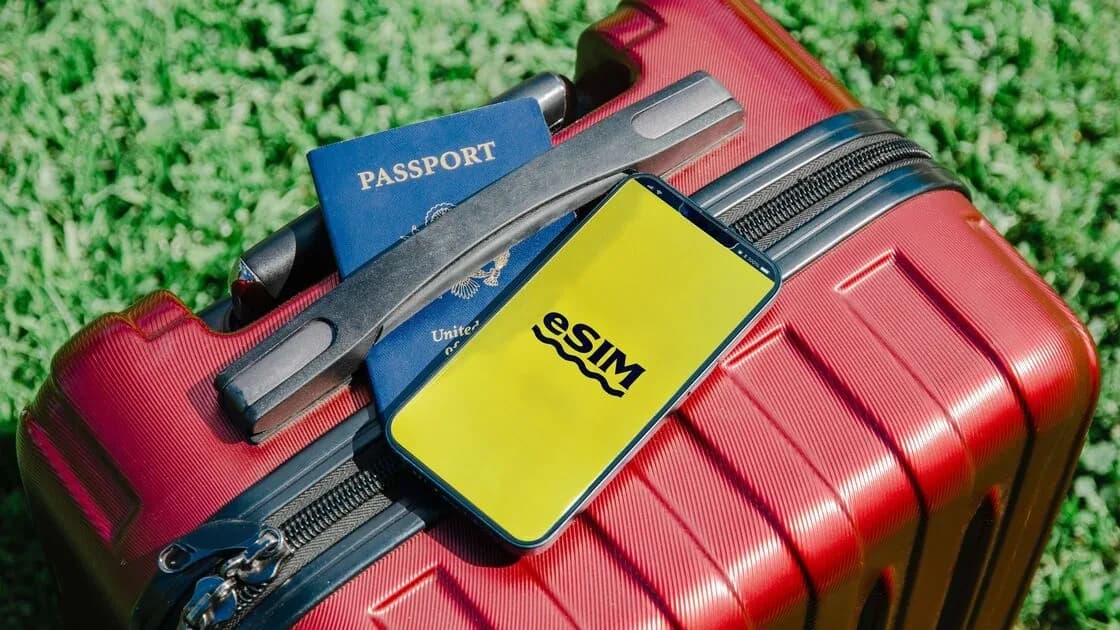
Keep any home-country SIM active if important accounts still send SMS to it. For mainland China numbers, the mainland-number continuity guide explains how to test roaming and recovery separately. Use a local SIM, travel eSIM, or roaming plan for data only after checking current operator terms. An eSIM provides connectivity; it does not replace a VPN or preserve the identity of the original number. See the eSIM and VPN comparison.
For payment, bring at least two methods that do not share one wallet, one phone, or one issuer. Confirm overseas use and account recovery with the issuer before departure. Keep a modest offline fallback appropriate to your trip, without assuming every merchant accepts the same wallet or card. The payment backup guide provides a fuller decision tree.
Download the first-night address, a small offline map, booking references, and the names of the transport stops you need. This remains useful when the airport Wi-Fi, roaming registration, or a payment app is unavailable.
Before leaving the airport, run a short handoff check. Reopen the accommodation address and the next transport stop without using search, confirm that the home-country line can remain available without consuming the travel data allowance, and make one low-risk payment only if it is genuinely needed. If one layer fails, change that layer alone: use the saved address when maps fail, mobile data when venue Wi-Fi is unclear, or the separate payment method when an issuer declines a transaction. Avoid swapping SIMs, resetting account passwords, and retrying several payments at the same time because that makes the original failure harder to identify.
Also decide where the offline copy will live during the day. A copy stored only in the same phone is not an independent backup. A small paper record, an encrypted copy reachable from a second trusted device, or a trusted contact who knows the itinerary can preserve the minimum arrival details without exposing passwords or full card numbers.
Repeat the check after changing accommodation or replacing a SIM, because yesterday's saved route or recovery path may no longer match today's plan.
If a captive portal or public network behaves unexpectedly, disconnect and use trusted mobile data. If you already entered credentials on a suspicious network, follow the post-public-Wi-Fi response from a trusted connection.
Move to a safe place and identify the failing layer before changing several things at once.
For travelers from China, China's consular service advises protecting documents and valuables, staying alert to fraud, and using official assistance channels.[3] Travelers of other nationalities should save the equivalent official mission for their own passport. If the phone is gone, use the ordered lost-phone recovery guide.
No. ICA explicitly says it is not a visa. Check any visa requirement separately through the current official entry guidance.[2]
ICA says the official submission is free. A paid third-party service is not the official filing channel and is not endorsed by ICA.[2]
ICA currently says within three days before arrival, including the day of arrival. Recheck the official page for your actual trip.[2]
Not automatically. It may provide data or another number, but it does not inherit the SMS identity or account bindings of the mainland SIM.
No. Encryption does not make the destination legitimate. Close the page and reopen the ICA service from the official domain.
Keep the first-night address, a trusted contact, key booking references, and the official emergency and consular routes. Do not print passwords or full payment-card details.
Yes. The official arrival, offline-record, connectivity, payment, public-network, and emergency workflow applies to international visitors generally. Replace the mainland-number, China-issued payment, and Chinese consular notes with the equivalent services for your passport and home country.
Disclaimer: This article provides general travel and digital-safety information. Entry, visa, carrier, payment, and assistance rules can change; follow the current official instructions for your passport and itinerary. AethoVPN may relate to a permitted travel connection in Singapore, but cannot satisfy arrival, visa, carrier, or payment rules; check the relevant official services.
Sources:
Sources checked 25 August 2026.
Related Articles:
Sign up to experience all premium features at no cost.
*Available only to new users. Each user is limited to one trial.