Start your 3-day free trial
Sign up to experience all premium features at no cost.
*Available only to new users. Each user is limited to one trial.
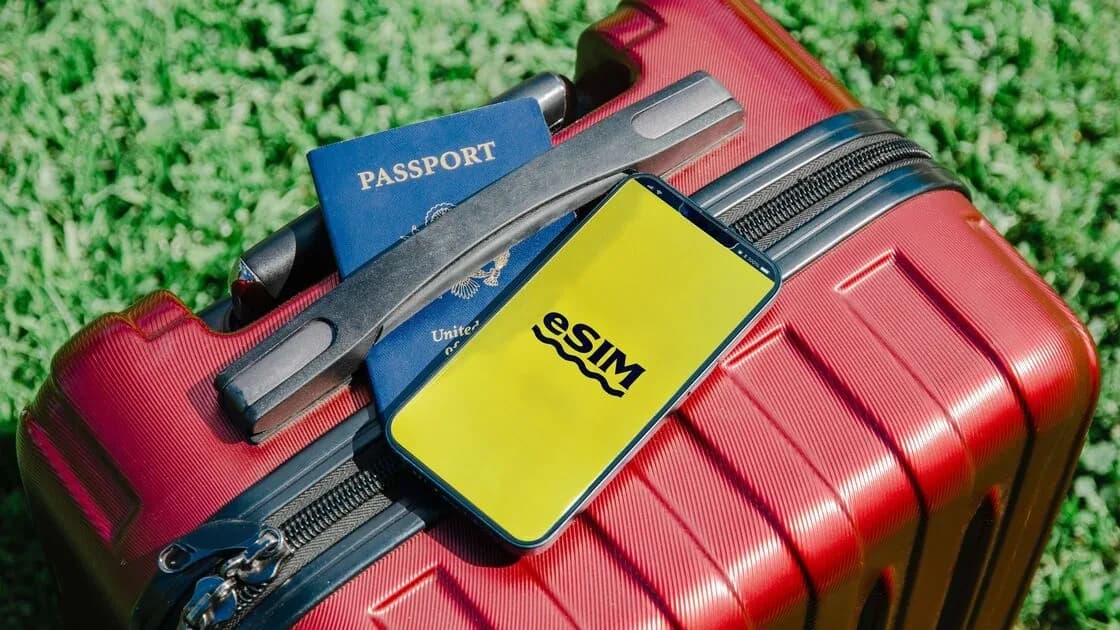

In a travel eSIM vs VPN comparison, the two tools are not substitutes. A travel eSIM gives your device access to a mobile network and a data plan; a VPN creates an encrypted connection from the device to a VPN server.[1][3] If your question is which one secures your data on the road, that is the VPN's job; the eSIM's job is getting you online. You may need only the eSIM, only a VPN on an existing connection, or both, depending on how you will get online and what you need to protect.
Key Takeaways
- An eSIM supplies mobile connectivity; it does not replace a VPN's network-path protection.
- A VPN cannot create mobile service, provide data, or remove roaming charges.
- Pairing a travel eSIM with a VPN can be useful when mobile data is your main connection and you also want the local carrier path separated from your destination traffic.
- Check device compatibility, carrier lock status, plan terms, coverage, data limits, and local rules before buying an eSIM.
- Set up the eSIM while you still have reliable internet, then test the mobile-data line and VPN separately before departure.
An eSIM is a digital SIM built into a compatible device. It lets a carrier or travel provider activate a mobile plan without handing you a removable card. Apple describes travel eSIMs as one way to use cellular data abroad, while also noting that the device, carrier, model, and region affect compatibility.[1]
A VPN is a network service that runs over an internet connection you already have. The VPN client connects to a VPN server through the local carrier, Wi-Fi operator, or hotspot provider, then sends traffic through an encrypted tunnel to that server. Cloudflare describes this as an encrypted connection between the client and the VPN server.[3]
That gives the two tools different starting points:
| Question | Travel eSIM | VPN |
|---|---|---|
| Does it provide an internet connection? | Usually, if the plan is active and coverage exists | No; it needs Wi-Fi or mobile data first |
| What does it primarily change? | The mobile line and data-plan source | The path from your device to the VPN server |
| Does it replace roaming? | It may provide an alternative plan, subject to its terms | No |
| Does it encrypt the full path to every website? | Not by itself | It encrypts the tunnel to the VPN server; HTTPS still matters afterward |
| Does it change your public IP? | Usually the carrier or plan determines it | Usually, the VPN server supplies the public exit IP |
| Can it change GPS or account country? | No | No |
| What can stop it working? | Device lock, unsupported bands, no coverage, inactive plan, or exhausted data | No underlying internet, portal restrictions, server availability, or network policy |
The table is a responsibility matrix, not a claim that every eSIM plan or VPN behaves identically. Read the provider's current terms and check what the device actually reports after setup.
The simplest decision is to start with the connection problem, then add the privacy layer only if it matches the task.
An eSIM is the relevant tool when you need data after landing, want to avoid using your home line for all traffic, or need a second data line for maps and messaging. It can be more convenient than obtaining and swapping a physical SIM, but it is still a carrier service: coverage, speed, tethering, activation, and data limits come from the plan.
Before purchasing, confirm that the device is unlocked and supports the required eSIM type and mobile bands. A travel eSIM also does not guarantee a local phone number. Many plans are data-only, so calls and messages may continue to depend on your home line or an internet service.
If mobile data is the main part of your decision, compare it with using a VPN on cellular data rather than assuming the eSIM itself is a security product.
A VPN makes sense when you already have usable Wi-Fi or mobile data and want an additional encrypted path between your device and the VPN gateway. This is common on hotel Wi-Fi, airport Wi-Fi, coworking networks, or a travel eSIM's data connection.
It does not make a weak signal stronger, add data to a plan, or guarantee that a bank, streaming service, or work system will accept the VPN's IP. It also does not stop phishing, repair an infected device, or replace multi-factor authentication.
For a broader before-and-during trip sequence, see VPN for international travel: the complete guide.
Using both can be reasonable when a travel eSIM is your internet connection and a VPN is your network-protection layer. The flow is:
Travel eSIM provides mobile data → device reaches the internet → VPN builds its tunnel → apps use the VPN path
The VPN does not sit inside the eSIM or make the eSIM anonymous. The mobile carrier or connectivity provider still handles the radio connection and may see that the device is communicating with a VPN service. The VPN provider becomes another party in the traffic path, so review its privacy practices before relying on it.
If AethoVPN is the protection layer in this flow, treat the eSIM line as nothing more than the connection underneath it: confirm the eSIM loads a page with Wi-Fi off, then connect to a nearby location with a green load indicator and repeat one real trip task, such as opening a booking. On Android that happens in the AethoVPN app; on an iPhone you import a configuration from the website setup guide into a VPN client, which needs the Pro or Premium plan. AethoVPN cannot activate the eSIM, add data, or strengthen a weak signal, so an eSIM without service leaves the tunnel nothing to run over. To test the pairing before you fly, start the 3-day free Pro trial, which is available once per user.
If you are traveling with several devices, compare this setup with a personal hotspot in portable hotspot vs public Wi-Fi. A single eSIM on one phone can be enough for one traveler, but sharing it may consume data and battery faster.
Do the setup in a known-good environment. Troubleshooting an activation QR code or account login at the arrivals hall is harder than testing the same steps at home.
Apple's travel guidance also recommends checking the carrier and device requirements before relying on an international eSIM.[1] Android menu names and prerequisites vary by manufacturer, so use the device maker and carrier instructions rather than copying an iPhone path.
Install the eSIM while connected to a trusted network. After activation, check that the intended line is selected for mobile data, that data roaming settings match the plan's instructions, and that a normal website loads with Wi-Fi turned off. This isolates eSIM problems from VPN problems.
Do not delete your home line or travel eSIM while testing. Save the exact line labels and note which one is selected for data. If you use dual-SIM features, check which line handles calls, messages, and data before boarding.
Once mobile data works on its own, connect the VPN over it and choose one currently available server nearby. Confirm that the client reports an active connection, then test ordinary browsing and one real task you expect to perform on the trip.
If the VPN fails, turn it off and confirm that the eSIM still provides internet access. If the eSIM fails, the VPN cannot fix the underlying mobile connection. Keeping those two tests separate prevents you from changing the wrong setting.
An eSIM plan is normally tied to a destination, region, duration, data allowance, and carrier arrangement. Apple also separates travel eSIM choices from the home line's data-roaming settings.[4] A VPN subscription is a separate service. Buying one does not include the other, and a VPN cannot reduce an eSIM provider's roaming or overage charges.
Compare the total situation, not only the advertised price: activation requirements, taxes, unused-data rules, tethering, top-ups, and the cost of keeping your home line available can matter more than the headline number. Apple's general eSIM explanation is a useful reminder that the feature is a carrier plan activated on compatible hardware, not a replacement for the carrier relationship.[2]
With both tools active, traffic travels first over the mobile network to the VPN gateway and then onward to the destination. Radio coverage, congestion, plan limits, server distance, routing, and the destination service can all affect performance. A VPN may add latency because it introduces another endpoint; a far-away server can make that effect more visible.[5]
Choose a nearby available VPN location for ordinary browsing and calls. If you have a legitimate reason to use another region, expect a different performance profile and follow the service's terms. How to choose a VPN server location while traveling covers that trade-off.
The phone must maintain a cellular connection for the eSIM, and the VPN client must maintain its tunnel. Weak coverage, hotspot sharing, background sync, video, and repeated reconnects can drain the battery or data allowance faster than expected. Carry a trusted power option, limit unnecessary background traffic, and set device data warnings where available.
Websites may use the public IP, GPS, browser permissions, cookies, account region, SIM context, payment profile, or device settings. A VPN normally changes the public IP seen after traffic exits the VPN server, but it does not rewrite those other signals. An eSIM similarly does not guarantee that a site will treat you as a local resident.
Do not use repeated server changes as a way to force a service to ignore its account, payment, or regional rules. If a service blocks the connection, follow its support and policy channels.
Use this order before you buy or configure anything:
Not automatically. The eSIM provides mobile data; decide whether you also want a VPN for the network path, privacy model, or travel policy you are following. Keep HTTPS, device updates, account security, and destination rules in the decision.
No. A VPN cannot create mobile coverage or provide a data plan. It runs over an existing Wi-Fi or cellular connection, including one supplied by a travel eSIM.
It can remove the need to join a particular public Wi-Fi network, which reduces one local-network dependency. It does not make every website trustworthy, prevent phishing, or protect an infected device. Use HTTPS and normal account safeguards.
Usually, yes: an eSIM and a VPN are compatible because the VPN runs over whatever data connection the eSIM provides, as long as the device, VPN app, and network allow it. Test the eSIM with Wi-Fi off first, then connect the VPN. If the tunnel fails, check the mobile connection and plan restrictions separately.
It may change the public IP presented by the VPN server, but services can also use account, payment, GPS, cookie, SIM, and device signals. There is no guarantee that a service will treat the session as local or accept the connection.
That depends on the device, carrier, and plan. Phone hotspot support is not universal, and tethering may have separate limits or charges. Confirm the plan terms before using the phone as the main connection for several devices.
Install and sign in to both before departure if possible. For testing, verify the eSIM's mobile data first, then connect the VPN. This order tells you whether a failure belongs to the connection or the tunnel.
Turn off the VPN and confirm that ordinary mobile data works. Then check the app account, choose one nearby available server, and review whether another VPN, private DNS, proxy, or work profile is active. Switch to a trusted fallback if the task is urgent.
Disclaimer: This article provides general travel and network guidance, not legal, financial, medical, compliance, or carrier-plan advice. Follow the current terms of your device, connectivity provider, VPN provider, destination, and online services.
Sources:
Sources checked 4 October 2026.
Related Articles:
Sign up to experience all premium features at no cost.
*Available only to new users. Each user is limited to one trial.