Start your 3-day free trial
Sign up to experience all premium features at no cost.
*Available only to new users. Each user is limited to one trial.


This EVUS and I-94 guide separates five different decisions: a US visa supports a request to travel for its stated purpose; EVUS updates travel eligibility for eligible People's Republic of China passport holders with a ten-year B1, B2, or B1/B2 visa; a carrier checks documents before transport; CBP decides admission; and the I-94 records the admission granted. None of these layers guarantees the next one.
Key Takeaways:
- EVUS applies only to the defined PRC passport and ten-year B-class visitor-visa group; it is not a visa.[1]
- A valid visa and EVUS enrollment do not guarantee boarding or admission.
- CBP creates the I-94 admission record; its "Admit Until Date" is about the authorized stay, not the visa's expiry date.[3]
- An I-94 is not a visa extension.
Keep document recovery ready before departure: if the passport is lost, follow the Chinese passport recovery sequence instead of trying to reuse an invalidated document.
| Layer | Question it answers | What it does not prove |
|---|---|---|
| Visitor visa | Has a consular officer issued a B-class travel document for the stated purpose? | Admission or authorized stay length |
| EVUS | Is the required enrollment current for the eligible PRC ten-year B-visa traveler? | A visa, boarding guarantee, or admission |
| Carrier check | Will the carrier transport the passenger under its document obligations? | Admission by CBP |
| CBP inspection | Is the traveler admitted, in which class, and until when? | A future extension |
| I-94 record | What admission class and authorized period were recorded? | A replacement visa or automatic extension |
The State Department describes B-1, B-2, and B-1/B-2 visas as temporary visitor visas for business, tourism, or both.[2] A visa lets a traveler seek entry; the border decision remains separate.
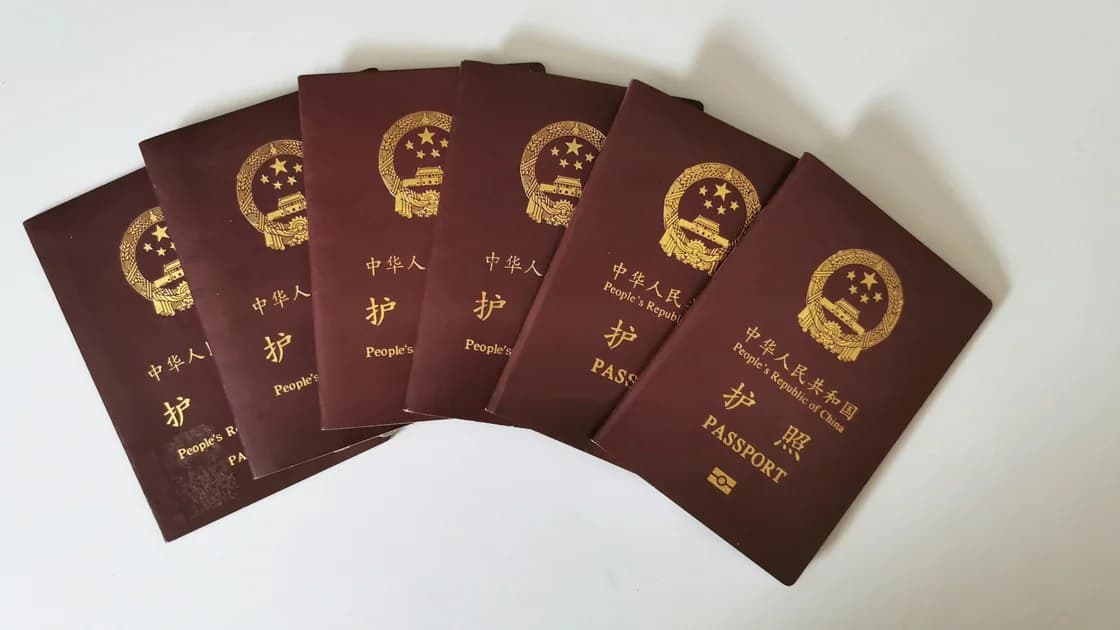
CBP says EVUS is for PRC citizens or nationals traveling on a ten-year B1, B2, or B1/B2 visitor visa.[1] Check the passport nationality, visa class, and visa validity together. A different passport, a different visa class, or a document that does not match the defined group must be assessed under its own rules.
EVUS is not a visa and cannot substitute for one. Use the current official CBP entry rather than a paid intermediary, social-media link, or copied form. This article does not reproduce fields or screen order because both can change.
If a message claims it can guarantee approval or asks you to move the process to a private chat, stop and re-open the official channel independently. The verification habit is the same as in the consular scam guide.
Before travel, verify that the passport, visa, and EVUS record all belong to the same traveler and contain consistent identity details. Keep your mainland number available if an account or carrier uses it, but do not assume SMS access repairs a document mismatch; prepare it separately with the mainland-number guide.
The carrier performs its own document check before transport. Passing that check is not admission. At the port of entry, CBP assesses the traveler, purpose, documents, and admissibility, then records the class and authorized period if admitted.
Do not answer a document problem by buying another ticket or paying an unofficial agent. Identify the owner of the mismatch: the State Department for visa questions, CBP for EVUS and admission records, the carrier for its transport check, and USCIS or another designated authority for an extension or change of status.
CBP's I-94 fact sheet explains that the electronic record includes the admission class and "Admit Until Date."[3] Retrieve the record after arrival and compare the name, passport details, entry date, class, and authorized-stay date with the documents and the admission you understood.
If a detail appears wrong, use CBP's current correction channel rather than editing a saved copy. Preserve the original record, travel documents, and any correction reference. A screenshot may help you compare records but does not change the official record.
The visa expiry date and I-94 authorized-stay date answer different questions. Likewise, filing or obtaining an extension is a separate legal process; the I-94 itself is not an extension request or approval.
For other border systems, compare Indonesia's declaration and visa boundary and the Schengen EES and ETIAS boundary. The names differ, but the safe method is the same: determine what each system actually decides.
No. CBP explicitly states that EVUS is not a visa. An eligible traveler still needs the relevant valid visitor visa.[1]
No. The rule targets PRC citizens or nationals with ten-year B1, B2, or B1/B2 visas. Other documents require their own assessment.[1]
No. The carrier performs a transport check, and CBP makes the admission decision at the border.
No. The visa supports travel to seek entry; the I-94 records the admission class and authorized stay after CBP admits the traveler.[2][3]
No. It records the authorized period granted. Any extension or status change is a separate process with the designated authority.
Preserve the records and use CBP's current official correction channel. Do not edit a local copy or pay an unofficial intermediary to "replace" the government record.
Disclaimer: This article provides general travel-document information, not legal or immigration advice. Visa, EVUS, carrier, admission, I-94, extension, and correction rules can change. Check the current official instructions for your documents and itinerary.
Sources:
Sources checked 25 August 2026.
Related Articles:
Sign up to experience all premium features at no cost.
*Available only to new users. Each user is limited to one trial.