Start your 3-day free trial
Sign up to experience all premium features at no cost.
*Available only to new users. Each user is limited to one trial.
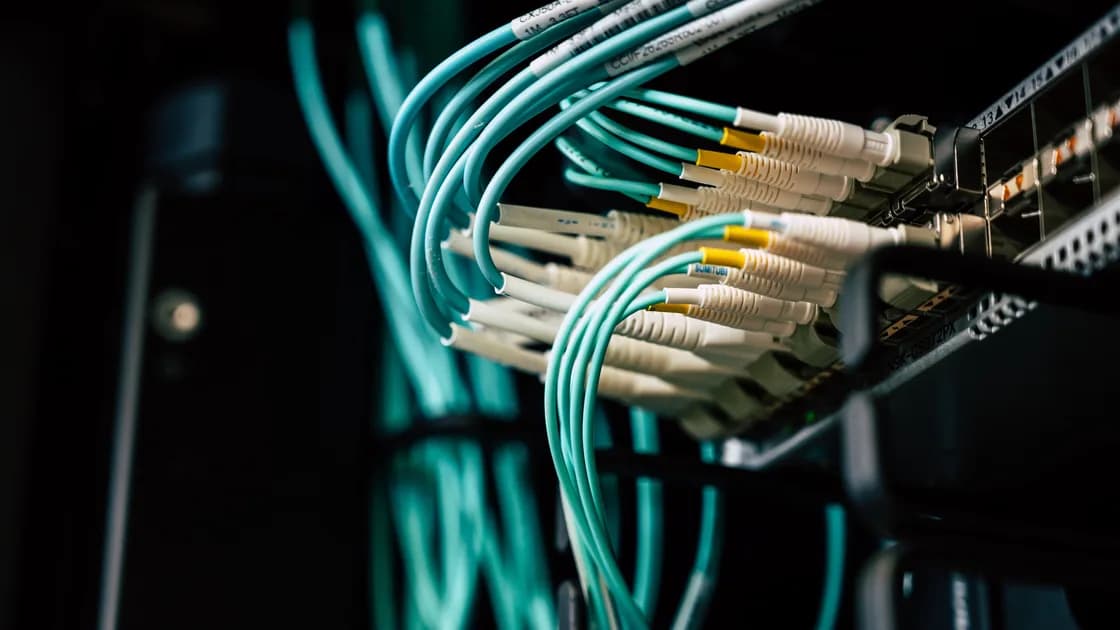

TLS fingerprinting in VPN detection is the classification of a TLS-based connection from observable handshake choices and traffic behavior. It does not require decrypting the protected application payload, and it does not prove by itself that a connection is a VPN. It produces a hypothesis whose reliability depends on the signals, the comparison set, and later confirmation.[1][2]
The complete VPN guide explains the tunnel and observer model. This article focuses only on passive TLS classification, not on active probing or instructions for evading a network policy.
Key Takeaways
- TLS encrypts application data, but parts of connection setup and traffic shape may remain observable.
- A fingerprint combines several choices; one cipher, port, or packet length is rarely enough.
- Client and server implementations, configuration, versions, and intermediaries can all change a fingerprint.
- A similarity score is not an identity proof, and false positives can affect ordinary TLS services.
- Active probing is a separate confirmation stage rather than another name for passive fingerprinting.
Diagram key: 1 = visible TLS handshake and flow signals; 2 = comparison with reference samples; 3 = a VPN hypothesis, not proof. The question mark preserves uncertainty: shared libraries and untested configurations can cause errors.
RFC 9846 defines a TLS 1.3 handshake that begins with a ClientHello. That message carries negotiation data needed before protected application traffic can flow, including supported protocol versions, cipher suites, extensions, and key-share information. Some later handshake messages are encrypted, but the network still sees addresses, ports, direction, packet sizes, timing, and connection duration.[1]
An observer can encode selected visible values in a stable order and compare the result with previously measured implementations. It may also add flow features such as the size of the first records, the direction of early packets, retry timing, or a recognizable server response. The result is a fingerprint only because the combination tends to recur; none of the individual fields carries a trustworthy “VPN” label.
Encrypted ClientHello changes this exposure boundary by protecting sensitive ClientHello material when both client and server support the mechanism. RFC 9849 does not claim to hide IP addresses, packet timing, or every outer protocol property. A classifier can therefore lose some inputs while retaining others.[3]
A practical fingerprinting system first chooses features, normalizes them, and records an observation. It might preserve the order of advertised extensions, group equivalent values, ignore randomized fields, and separate client-side from server-side behavior. The system then compares that representation with labeled samples or a rule set.
The comparison may be an exact match, a weighted similarity score, or one stage of a larger classifier. Exact rules are simple but brittle when software changes. Statistical rules can tolerate variation but may be harder to interpret and can classify unrelated traffic that happens to share the measured traits.
The OpenVPN study presented at USENIX Security 2022 measured a two-stage detection design: passive filtering narrowed candidate flows, and active behavior supplied additional confirmation. Its results are evidence about tested OpenVPN configurations and networks, not a universal signature for all VPN protocols or releases.[2]
Encryption is designed primarily to protect content and integrity. It does not automatically make every protocol implementation indistinguishable from ordinary web browsing. Two encrypted systems can negotiate different options, frame records differently, keep connections alive differently, or respond differently when inputs are unexpected.
VPN software also has to establish and maintain a tunnel. Reconnects, authentication phases, keepalives, transport choice, and long-lived bidirectional traffic can contribute context. A sound analysis separates a TLS fingerprint from those surrounding flow features instead of calling every encrypted pattern “TLS fingerprinting.”
This is also why moving a service to TCP port 443 is not a complete disguise. VPN ports are one observable field, while handshake and connection behavior can supply others. Conversely, traffic on an unusual port is not automatically a VPN.
TLS fingerprinting is not a certificate fingerprint. A certificate fingerprint is normally a digest used to identify a specific certificate byte sequence. A ClientHello-style fingerprint summarizes negotiation behavior and can be shared by many installations.
It is also not browser or device fingerprinting. Websites may combine fonts, screen size, APIs, cookies, and account behavior after a connection reaches the application. A network-side TLS observer usually has a different vantage point and input set. What a VPN hides explains why those application signals do not disappear when an exit IP changes.
Finally, it is not payload decryption. A classifier can make an inference from metadata without recovering the page, message, password, or file inside the protected channel. That privacy boundary matters when describing what an ISP or local network can actually see.
Software updates can add an extension, reorder negotiation preferences, change record sizing, or adopt a new TLS library. Operating systems may expose different capabilities. A proxy, load balancer, security gateway, or TLS-terminating relay can replace the original client or server handshake with its own.
Configuration matters as much as the product name. Two clients from one vendor may use different transports or libraries, while unrelated applications may use the same common library and look similar. Networks can also fragment, coalesce, delay, or retransmit packets, affecting flow-level measurements without changing the endpoint software.
A durable detector therefore needs versioned reference data, bounded claims, and repeated validation. A durable article needs the same caution: fingerprints are observations under stated conditions, not permanent identities.
Reliability depends on coverage and base rates. A rule tested only against a few VPN samples and a small set of ordinary websites may appear accurate while failing on software it never saw. If ordinary TLS traffic greatly outnumbers VPN traffic, even a modest false-positive rate can affect many innocent connections.
Researchers should report where samples came from, which versions and configurations were tested, which fields were visible, and how results changed over time. Network operators should distinguish security telemetry from an automatic enforcement decision. Broad blocking based on a weak fingerprint can interrupt unrelated services that share a library or infrastructure.
From the user's side, a connection failure does not prove fingerprinting. DNS failure, unreachable IP addresses, UDP filtering, captive portals, server outages, certificate problems, and local firewall rules can look similar. Use general VPN connection troubleshooting to establish the failed stage before assigning a cause.
For a permitted comparison, install AethoVPN on the same device, connect to a location you pick in the app, and write down the app build, network, and time next to your other observations. A connection that works on one network and fails on another is a data point you can give the network owner; it is not a fingerprint measurement. AethoVPN protects traffic inside its tunnel and changes the exit address destinations see, but its documentation makes no claim about a TLS fingerprint, so connection success is not evidence of evading classification. Create an account with your email and start the free trial for that comparison.
If a network intentionally restricts VPN use, follow its policy and ask the owner which secure connection methods are permitted. Do not disable certificate verification or install an unknown root certificate to make a connection appear ordinary.
Not completely in ordinary TLS 1.3. Some ClientHello negotiation data is visible so the connection can be established; Encrypted ClientHello can protect sensitive parts when supported, but outer network metadata remains.
Usually not. Many users and unrelated applications can share an implementation or TLS library, so the same fingerprint may appear across numerous devices and services.
TLS fingerprinting can be one DPI or traffic-analysis technique. DPI is the broader category and may also examine ports, clear-text fields, packet patterns, or other protocols.
No guarantee follows from a port change. The port is one signal, while the handshake choices and traffic behavior may remain similar.
Not by itself. It may classify the outer connection, but it does not automatically reveal the protected destinations or content carried inside that tunnel.
Yes. Shared TLS libraries and similar flow behavior can produce collisions, especially when a detector uses a narrow comparison set or weak threshold.
No. Record the failure stage and compare DNS, address reachability, transport, TLS, authentication, and server health before attributing the result to detection.
Disclaimer: This article explains network measurement concepts and does not authorize bypassing network controls. Follow applicable law and the policy of the network you use.
Sources:
Sources checked 10 September 2026.
Related Articles:
Sign up to experience all premium features at no cost.
*Available only to new users. Each user is limited to one trial.