Start your 3-day free trial
Sign up to experience all premium features at no cost.
*Available only to new users. Each user is limited to one trial.
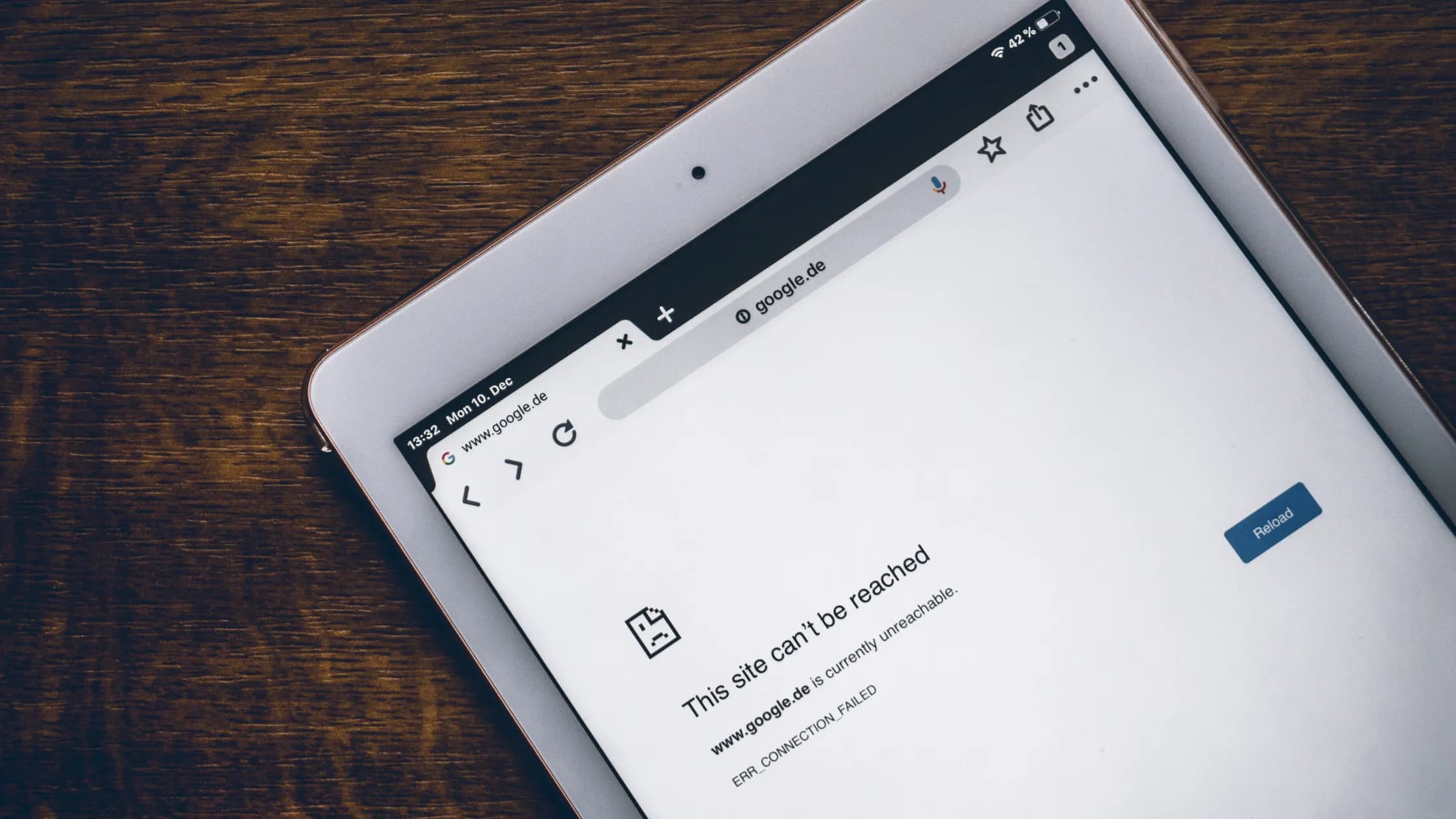

When your VPN is not connecting, the service is usually not “completely broken.” More often, one layer is failing: your base internet connection, a blocked protocol, DNS, missing permissions, router behavior, or mobile battery restrictions. Do not uninstall the app right away. Work through the right order, and most VPN connection failures can be fixed in minutes.[1][2][4]
This guide first helps you identify the layer where the failure is happening, then walks through 12 common fixes. If you just want to reconnect quickly, start with the quick diagnosis table below.
Key Takeaways
- Check whether normal internet access works before troubleshooting the VPN. That alone can save half the effort.[1][2][4]
- On phones, the problem is often not a “bad server,” but missing VPN permission, an outdated system, or battery mode limiting background activity.[1][3]
- On Windows and routers, the common issues are firewall blocking, network adapter problems, outdated firmware, and incorrect network settings.[2][4][5]
- Switching protocols helps because WireGuard uses UDP, while OpenVPN supports both UDP and TCP. Different networks handle them differently.[6][7]
- If nothing works after changing settings, the last practical step is often resetting network settings and importing the VPN profile again.[1][2][4]
Many people see “connection failed” and immediately keep switching servers. A faster approach is to identify which layer is more likely broken.
| Symptom | More likely cause | What to do first |
|---|---|---|
| Regular websites will not load either | Local network, Wi‑Fi, ISP, or router issue | Disconnect the VPN and test normal internet access[2][4] |
| Only the VPN fails, while normal browsing works | Protocol, port, firewall, permission, or account issue | Switch protocol, check permissions, review firewall rules[1][4][5] |
| Phone cannot connect, but computer can | App permission, battery mode, system setting conflict | Check VPN permission and battery restrictions[1][3] |
| Wi‑Fi fails, but mobile data works | Router restriction, band conflict, LAN setting issue | Restart router, change bands, reset network settings[2] |
| VPN connects but is slow or drops | Server congestion, incompatible protocol, weak signal | Change server, protocol, or network[2][6] |
This step is what makes the rest of the guide useful. Once you know the layer, the fix becomes much faster.
A VPN needs a working internet connection underneath it. If Wi‑Fi is unstable or your ISP connection is down, the VPN cannot connect. Android, Apple, and Microsoft support docs all put basic network checks near the start of troubleshooting.[1][2][4]
Test it like this:
Sometimes your device is fine, but the current VPN server is overloaded, under maintenance, or temporarily restricted by the network you are using. The quickest test is to pick another server in the same region and try again.
If you normally use an automatic “fastest” server, choose a nearby location manually when connection fails. That separates a single node problem from a wider outage.
VPN protocols behave differently across networks. WireGuard sends packets over UDP, while OpenVPN supports both UDP and TCP.[6][7] That means UDP may be faster but easier to block on some networks, while TCP may be slower but more likely to pass through certain firewalls or campus networks.
Try this:
Old VPN apps often fail not because they cannot install, but because they no longer work well with a newer network stack. Android documentation points out that VPN connections depend on both system settings and the VPN app; Apple also recommends updating the system when Wi‑Fi and network issues appear.[1][2]
If you recently upgraded Windows, iOS, or Android and your VPN app is old, update the app before deeper troubleshooting.
Microsoft explains that if an app is blocked by Windows Firewall, you can allow that app through the firewall instead of turning protection off entirely.[5] This matters for VPNs because many connection failures are really a security tool blocking the app process or network request.
Recommended steps:
Some VPNs do not fail at the tunnel stage. They fail earlier, when domain names for servers or authentication endpoints cannot resolve. Cloudflare’s 1.1.1.1 docs explain that devices often get DNS from the ISP, but you can manually switch to a public resolver.[8]
If the app spins forever, the server list does not fully load, or authentication times out, try:
1.1.1.1 and 1.0.0.1;1.1.1.2 and 1.0.0.2 for malware domain blocking;[8]For DNS-specific troubleshooting, read How to Fix DNS Server Not Responding.
This is one of the most effective and most overlooked fixes. Apple states that resetting network settings clears Wi‑Fi, cellular, VPN, and APN settings; Microsoft also lists network reset as a standard way to resolve connection problems.[2][4]
It is especially useful if:
Save Wi‑Fi passwords and required settings before resetting, because this step clears network parameters. On Windows, some network software may need to be reinstalled or reconfigured afterward, including VPN clients.[2][4]
Android explains that system-level VPN can be configured through Network & internet > VPN, or managed by a VPN app.[1] If the app has not received proper permission, or background limits are too strict, the status can get stuck on “connecting.”
On phones, check:
Apple’s documentation is clear: Low Power Mode reduces background activity and disables features such as background app refresh.[3] That does not mean iOS will always disconnect your VPN, but it can affect apps that depend on background keepalive and reconnect behavior.
If your VPN fails halfway through connecting on iPhone, or disconnects shortly after the screen locks, go to:
Settings > Battery > Low Power Mode
Turn it off, then connect again.
If mobile data works but one Wi‑Fi network does not, the issue is probably the network environment, not your account. Apple recommends checking router compatibility, updating router firmware, and trying both 2.4GHz and 5GHz bands on dual-band networks.[2]
Common situations include:
Sometimes the problem is not the VPN app itself, but a network adapter state, driver conflict, or missing permission. A practical way to think about it: older clients, managed enterprise devices, or operations that modify adapters may need administrator rights.[4][5]
Try this order on Windows:
Do not forget the basic account layer. What looks like a network failure may be an expired session, too many devices, or an unverified account.
Check:
Phones are different from computers. The cause is often system policy, not simply “bad internet.”
The three most common categories are:
| Phone scenario | Typical issue | Fix |
|---|---|---|
| Android permission not fully granted | App cannot take over the VPN connection | Re-authorize VPN permission[1] |
| iPhone Low Power Mode is on | Background activity is limited, reconnect is unstable | Turn off Low Power Mode and retry[3] |
| Old network settings remain | Old VPN, proxy, or APN conflicts | Reset network settings[2] |
If you switch between phone and computer often, cross-check first:
Wi‑Fi is misleading because “connected to Wi‑Fi” does not always mean “connected to the internet,” and it does not guarantee that VPN traffic can pass. Apple and Microsoft both make that distinction in support guidance.[2][4]
Check these five items first:
This is not a full connection failure, but the troubleshooting logic is similar.
First choose a nearby server, then switch protocol. Both routing and protocol stack affect speed, and protocols handle packet loss and congestion differently.[6] If you want to confirm whether the VPN itself is the issue, run a full check with How to Test If Your VPN Connection Is Working.
Prioritize:
Many “keeps disconnecting” problems have the same root causes as “cannot connect,” just with milder symptoms.
Separate the network layers before changing settings. If the device has no internet with the VPN off, look for an incorrect SSID, a captive portal, or a venue-side outage. If ordinary browsing works but the VPN will not connect, the network may be restricting a protocol or destination. If the app says connected but pages still fail, check DNS behavior, kill-switch state, and whether the network changed underneath the tunnel.
Use this order on a hotel or airport network:
The captive-portal troubleshooting guide covers the first branch. If the connection is available only during a flight, VPN on airplane Wi-Fi explains why a slow or limited link can look like a VPN failure.
Disconnect the VPN and confirm whether normal websites load. If the base internet connection is down, troubleshooting the VPN will not help.[1][2][4]
Try another server, then switch protocol, then check DNS and permissions. On phones, also check whether battery restrictions are enabled.[1][3][6][7][8]
That usually means the current Wi‑Fi or router is restricting the connection, has outdated firmware, has unstable band switching, or is subject to network policy.[2]
Yes. Microsoft specifically documents how to allow apps through Windows Firewall, which shows firewall blocking is a normal troubleshooting item.[5]
Phones depend more on permissions, background keepalive, and power-saving policies. Missing permission, outdated systems, or Low Power Mode can all affect VPN connections.[1][3]
Apple explains that network reset clears Wi‑Fi, cellular, VPN, and APN settings, so save passwords and required configuration first.[2]
It can help if the failure happens during domain resolution or control endpoint access. It will not fix every VPN issue, but it is a good way to rule out DNS quickly.[8]
Disclaimer
This article is for general network and device troubleshooting only. It does not constitute professional technical support, enterprise IT advice, or legal advice. Different system versions, router models, and network environments may behave differently.
AethoVPN can be considered for the VPN task in “VPN Not Connecting 12 Common Causes and Fixes”, with current device availability and local conditions checked through official channels first.
Sources:
Sources checked 8 May 2026.
Related Articles:
Sign up to experience all premium features at no cost.
*Available only to new users. Each user is limited to one trial.