Start your 3-day free trial
Sign up to experience all premium features at no cost.
*Available only to new users. Each user is limited to one trial.
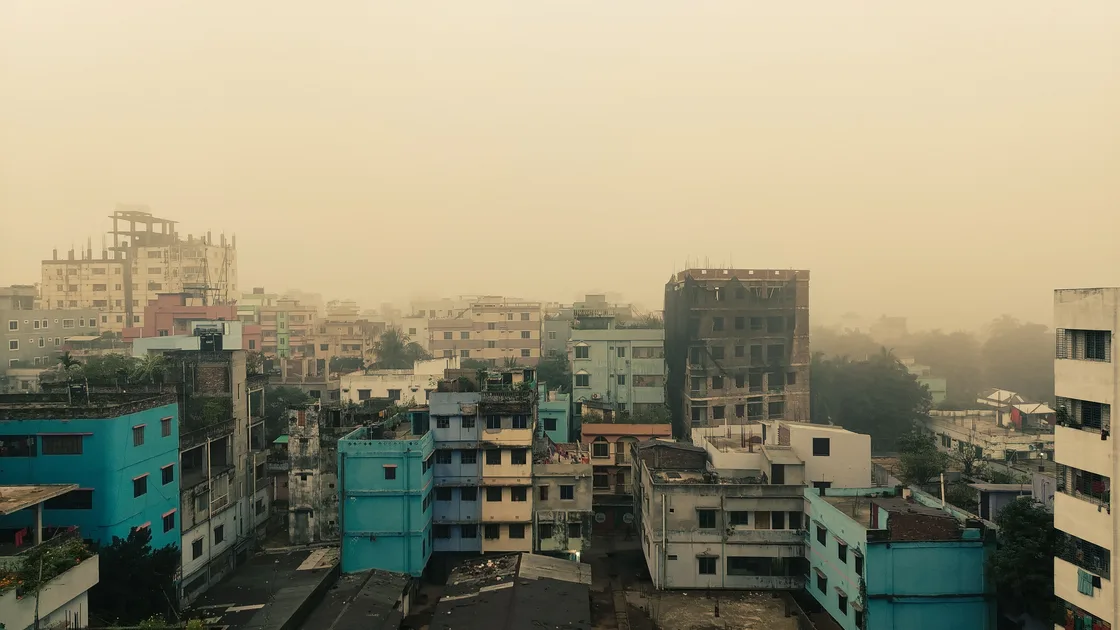

To check air quality and weather alerts in China, select the correct city or district, read the National Meteorological Centre forecast, open the current warning page separately, and then check the Ministry of Ecology and Environment data for that city's AQI and primary pollutant. Record the issue or observation time and follow the action guidance issued for that place. Refresh everything shortly before departure because a saved value is not a current condition.[1][2][3]
Key Takeaways
- Confirm the city, district or county before interpreting any value.
- Treat a general forecast and an official hazard warning as separate products.
- Check warning type, severity, affected area, issue time, and official action advice.
- Read AQI and primary pollutant from the same official Chinese data source.
- Do not compare China's AQI number directly with a differently defined foreign index.
- Recheck before leaving and use qualified medical advice for personal health decisions.
- A VPN does not measure pollution or determine whether a warning is active.
| Question | Official page | Fields to capture |
|---|---|---|
| What weather is forecast? | National Meteorological Centre city forecast | Place, forecast period, temperature, precipitation, wind |
| Is there an active hazard warning? | National Meteorological Centre warning page | Type, color or level, affected area, issue time, guidance |
| What is the reported air quality? | Ministry of Ecology and Environment data service | City, AQI, category, primary pollutant, observation time |
The forecast service lists cities and forecast periods and links separately to warning information.[1] The warning page is the better source for an active warning and its issuing authority.[2] The environment data service presents city AQI and primary pollutant fields.[3] A third-party app may be convenient, but it should not be the only evidence for a safety-sensitive decision.
Large municipalities can contain districts with different rain, wind, heat, visibility, or pollution conditions. Confirm the Chinese city and district name from your hotel, destination, ticket, or map and navigation guide. Do not select a similarly named city based only on English transliteration.
For a trip between cities, check the origin, route, transfer point, and destination separately. Mountain, coastal, desert, and urban locations can differ sharply even within one province. If a local authority issues a more specific district warning, the more specific current notice controls for that area.
A screenshot or browser tab saved the previous evening is historical evidence, not a live check. If a warning has been updated, canceled, or replaced, use the latest notice from the responsible authority.
Do not react to color alone. First identify the hazard: heavy rain, thunderstorm, gale, heat, cold, fog, snow, dust, typhoon, or another event. Then read the affected area and valid or issue time. The same color can have different practical meaning across hazards, and local notices can add specific closures or precautions.
Follow the official action language. That may mean delaying travel, avoiding mountains or waterways, staying away from exposed structures, changing a transport route, or monitoring local updates. For an immediate emergency, use the China emergency-number guide, not a weather website contact form.
Use the city row, reported AQI, category, primary pollutant, and timestamp together. A number without a city and time is incomplete. The primary pollutant field can be blank or change, and the citywide value may not describe every street or indoor space.
Do not convert the number by memory into a U.S., European, or other national AQI label. Index breakpoints, pollutant treatment, and reporting conventions can differ. Keep the Chinese official category with the Chinese official value, and use the issuing authority's current advice.
Weather and air quality are related in some circumstances but not interchangeable. A clear day can still have pollution concerns, while severe rain or wind can occur when AQI is low. Check both signals independently.
| Official result | General planning response | Escalation |
|---|---|---|
| No relevant warning; routine conditions | Continue with normal preparation | Recheck before departure |
| Warning affects destination or route | Delay, reroute, shorten, or move activity indoors per guidance | Follow local authority and transport notices |
| Air-quality category worsens | Reduce optional exposure according to official advice | Seek medical advice for personal risk |
| Conflicting city or timestamps | Stop and verify location and newest notice | Use the issuing authority's current page |
| Symptoms or immediate danger | Leave the hazard and seek help | Use emergency services or professional care |
This table is not personal medical advice. Age, pregnancy, respiratory or cardiac conditions, medication, and symptoms require advice from a qualified professional. Do not use a generic mask, purifier, or itinerary claim as a guaranteed solution.
| Problem | Check | Safe next step |
|---|---|---|
| Page shows the wrong city | Chinese place name and district | Reselect location before reading values |
| Forecast and warning seem inconsistent | Product type and timestamps | Treat the current warning as a separate notice |
| Third-party AQI differs | Source, city, standard, update time | Use the official Chinese value and category together |
| Primary pollutant is blank | Official row and timestamp | Do not invent one; report the field as unavailable |
| Page does not load | Connectivity and alternate official access | Ask hotel or venue staff for the current official notice |
| Conditions change during travel | New local notices and visible hazards | Stop, move to safety, and reassess |
The phone preparation guide can help save addresses and contacts, but this workflow deliberately avoids dependence on a specific app interface or notification permission.
The National Meteorological Centre provides city forecasts and links to official warning information.[1]
Use the National Meteorological Centre warning page and read the hazard, affected area, issue time, level, and action guidance.[2]
The Ministry of Ecology and Environment data service lists cities with AQI and primary pollutant fields.[3]
Do not assume it is. Keep the official Chinese value and category together rather than applying another country's labels.
Use it as a prompt, then confirm the current official warning, location, and timestamp. App delivery can be delayed or mapped to the wrong place.
Check during planning and again shortly before departure. Recheck when the route, time, or conditions change.
Do not guess. Preserve the official AQI, category, city, and timestamp and state that the field is unavailable.
No. A VPN only changes a network route; it cannot measure conditions, change official data, or make a hazardous trip safe.
Disclaimer: This guide provides general travel-planning information, not a live alert service or individualized medical, environmental-health, transport, or emergency recommendation. Use the latest issuing authority notice and qualified professional advice for the actual place and person.
Sources checked 30 August 2026.
Sign up to experience all premium features at no cost.
*Available only to new users. Each user is limited to one trial.