Start your 3-day free trial
Sign up to experience all premium features at no cost.
*Available only to new users. Each user is limited to one trial.
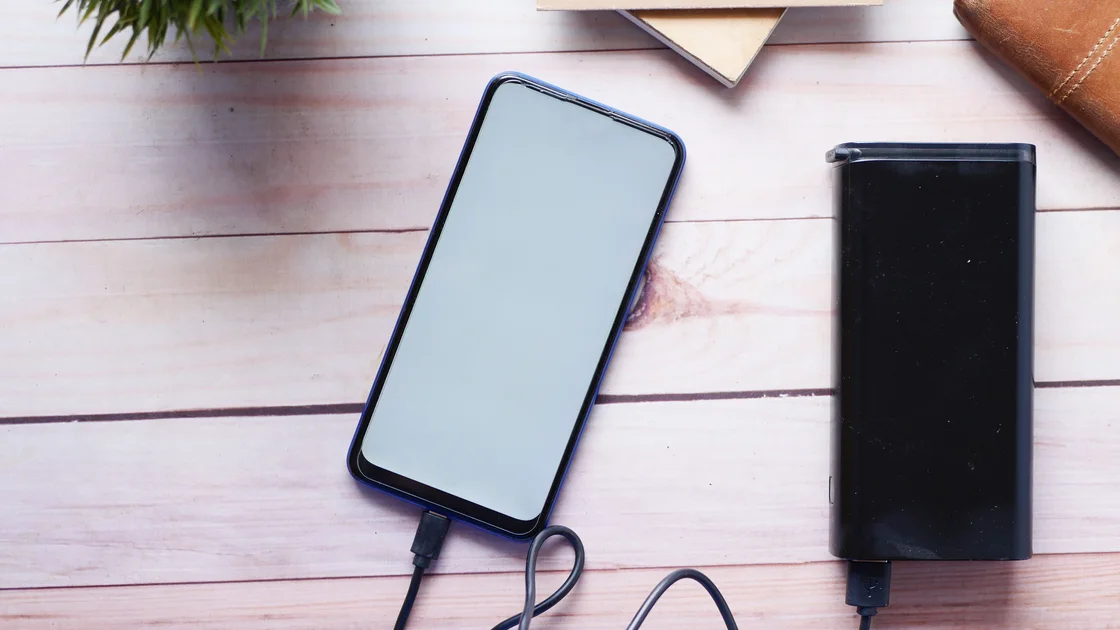

Yes, you can take a qualifying power bank on a flight in China, but it belongs in your carry-on bag, counts toward a maximum of two power banks per passenger, and must pass capacity, condition, marking, recall, airport, and airline checks. For a mainland domestic flight, the current CAAC rule also excludes a unit with no clear CCC mark, an unreadable CCC mark, or a recalled model or batch.[1][4]
Key Takeaways
- Never put a power bank or spare lithium battery in checked baggage.
- For a mainland domestic sector, verify a clear CCC mark and the current recall list.
- Carry no more than two power banks in total, regardless of their individual capacity.[4]
- At or below 100 Wh, approval is normally unnecessary; above 100 Wh and at or below 160 Wh, obtain operating-carrier approval.[2]
- Missing or unreadable capacity information is a practical stop sign because security cannot verify the rating.
- Protect terminals, keep the unit switched off during the flight, and follow crew instructions.
- International itineraries can add carrier, departure, transit, and destination rules.
Start with the broader China travel and connectivity pillar, then use this guide only for the battery decision. The separate domestic airport security checklist covers identity, liquids, tools, and other baggage categories.
The route matters. CAAC's 2025 CCC and recall notice is written for domestic flights, so do not automatically extend that single notice to every international sector.[1] An international itinerary can involve the operating carrier's dangerous-goods policy, the departure airport, a transit airport, and the destination jurisdiction.
| Trip segment | Minimum check | Who makes the operational decision? |
|---|---|---|
| Mainland domestic flight | CAAC limits, clear CCC mark, recall status, carrier notice | Security staff, airport, and operating carrier |
| Flight leaving mainland China | CAAC carriage rules plus carrier and destination requirements | Departure security and operating carrier |
| Connecting itinerary | Rules for every carrier, airport, and country or region | Each responsible operator or authority |
| Codeshare | Rules of the operating carrier, not only the ticket seller | Operating carrier and airport |
Use the flight number and operating carrier shown on your itinerary. If you booked through a platform, confirm the actual operator through the workflow for booking a China domestic flight with a foreign passport.
Look for a clearly printed Wh value on the unit. If only voltage and milliamp-hours are printed, the electrical relationship is Wh = V × mAh ÷ 1000, but use it only when both manufacturer ratings are clear and refer to the battery pack itself. Do not estimate from the case size, marketing name, USB output, or how many times it charges a phone.
| Marked rating | General CAAC route | What to do before travel |
|---|---|---|
| At or below 100 Wh | Carry-on, normally without airline approval | Count toward the two-power-bank total; check marks, condition, quantity, recall, and carrier policy |
| Above 100 Wh and at or below 160 Wh | Carry-on only with airline approval; no more than two | Obtain explicit approval before reaching the airport |
| Above 160 Wh | Not accepted under the ordinary passenger allowance | Arrange a lawful cargo or alternative solution |
| Rating missing or unreadable | Cannot be reliably classified | Leave it behind or obtain an authoritative answer before travel |
CAAC's passenger guidance states the 100 Wh and 160 Wh approval thresholds.[2] Separately, ICAO's March 2026 addendum limits each passenger to two power banks in total, irrespective of their capacity or other spare batteries carried. It also prohibits recharging power banks on board.[4] Do not read the older approval-category limit as permission to carry unlimited smaller units. A carrier may impose stricter controls, and its approval does not override security.
Air China's 4 August 2026 notice applies that total limit, retains approval for units above 100 Wh through 160 Wh, and bans both use and recharging on board. It also prohibits overhead-bin storage, specifying insulated carriage under the seat in front or in the seat-back pocket. These are that carrier's instructions, not a substitute for checking your actual operator.[5]
For mainland domestic flights, examine the CCC mark in good light and compare the exact brand, model, and batch with current recall information. Since 28 June 2025, the CAAC notice has prohibited power banks without a clear CCC mark, with an unreadable CCC mark, or belonging to recalled models or batches.[1]
A clear CCC logo is not a complete pass. The unit must still have a verifiable rating, stay within the applicable capacity and quantity limits, be in sound condition, and meet carrier and security instructions.
Do not carry a swollen, leaking, cracked, overheated, modified, or damaged unit. If a model is recalled, follow the manufacturer's return or disposal route instead of testing whether airport security notices it.
Power banks are treated as spare lithium batteries and must travel in the cabin, not in checked baggage.[3] CAAC passenger guidance also requires individual protection against short circuit.[2]
If you rented a unit locally, return it before travel when its label, ownership, or recall status is uncertain. The shared power bank guide explains rental return and billing separately.
Do not move the unit to checked baggage, peel off a label, cover a mark, or try another checkpoint without resolving the reason. Ask which authorized option is available before your check-in or boarding deadline.
| Problem | Safe next action |
|---|---|
| CCC mark missing or unclear on a domestic sector | Remove the unit from the trip |
| Model or batch is recalled | Follow the manufacturer recall or disposal instructions |
| Rating cannot be verified | Leave it with an eligible companion or use an authorized return, storage, or disposal route |
| Airline approval is missing | Ask the operating carrier; do not assume airport staff can grant it |
| Unit is damaged or hot | Stop handling it unnecessarily and alert staff |
| Connection has a stricter rule | Comply with the stricter applicable requirement or travel without the unit |
Shipping lithium batteries is also regulated and is not an automatic fallback. Never place the unit in a bin or unattended area unless airport staff direct you to an authorized disposal point.
No. A power bank is treated as a spare lithium battery and belongs in carry-on baggage, subject to all applicable limits and inspections.[3]
No. A unit at or below 100 Wh normally does not require airline approval under the general CAAC rule. A unit above 100 Wh and at or below 160 Wh requires approval.[2] The separate maximum is two power banks in total, including units at or below 100 Wh.[4]
No. Milliamp-hours alone do not establish watt-hours without the battery voltage, and acceptance also depends on marks, condition, recall status, quantity, carrier policy, and security inspection.
The cited 2025 CAAC notice specifically addresses domestic flights. For an international itinerary, check the operating carrier, departure airport, transit points, and destination requirements rather than assuming one rule covers the whole trip.[1]
No. CAAC's power bank notice bars charging devices from a power bank during the flight and requires a unit with a switch to stay off;[3] ICAO's addendum also bans recharging power banks on board.[4] Follow crew instructions and keep it accessible rather than inside an overhead bag where a developing problem could go unnoticed.
No. It does not override capacity, quantity, condition, recall, packaging, carrier, or security requirements.
Do not assume a receipt or photograph will substitute for a readable battery rating and required mark. Ask the carrier before travel or leave the unit behind.
Only through a service authorized to accept that battery under its current dangerous-goods rules. Ordinary parcel acceptance is not guaranteed, so do not rely on shipping as a last-minute solution.
Disclaimer: This guide provides general passenger information, not dangerous-goods approval or a security decision. Current law, CAAC requirements, the operating carrier, airports, security staff, transit points, and destination authorities determine acceptance.
Sources checked 4 October 2026.
Sign up to experience all premium features at no cost.
*Available only to new users. Each user is limited to one trial.