Start your 3-day free trial
Sign up to experience all premium features at no cost.
*Available only to new users. Each user is limited to one trial.
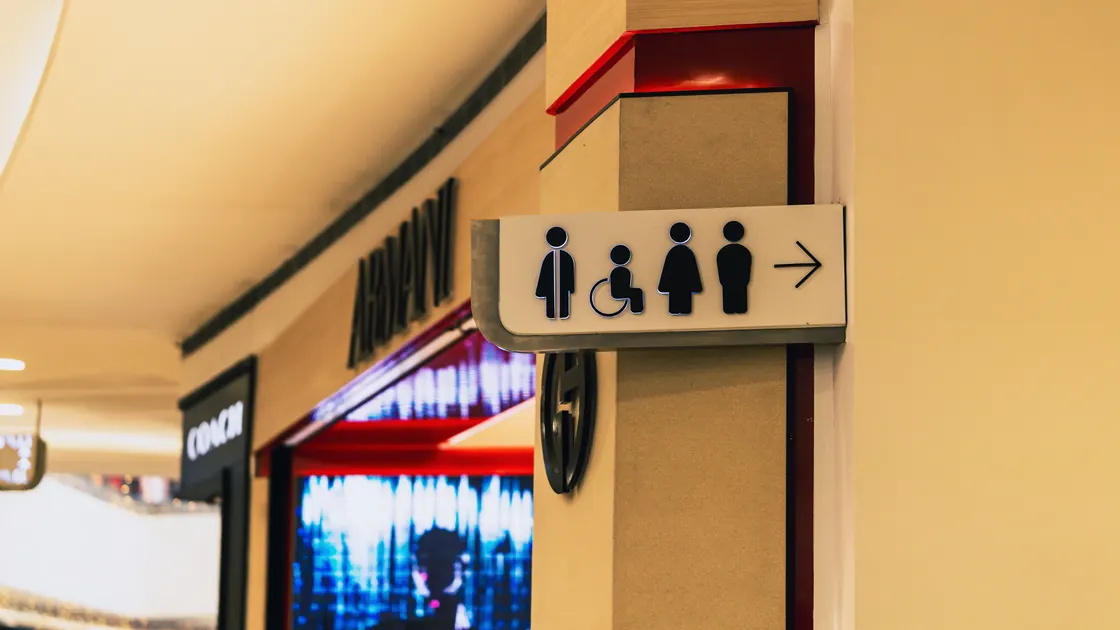

To find public toilets in China, open a map app that works there and search nearby using 公厕, 公共厕所, 卫生间, 洗手间, or WC. Compare several results instead of following the closest pin automatically. Check the POI name, last update, opening hours, building or venue, route, floor, and user notes. When you arrive, trust current signs and staff directions over the pin: a map can identify the site without identifying the usable entrance. If the result is closed or inaccessible, try a metro station, shopping center, hotel, museum, park, or service area, or ask 请问,洗手间在哪里? (Excuse me, where is the restroom?).
Key Takeaways:
- Search with several Chinese terms because map listings and signs use different names.
- Treat a toilet POI as a lead, not proof that it is open, free, accessible, or available to non-customers.
- Check whether the toilet is inside a station, ticketed attraction, office, restaurant, or restricted building.
- At the destination, follow physical signs and ask staff rather than chasing the exact pin through a wall or closed gate.
- Prepare an offline screenshot, written Chinese question, and several fallback venue types before you urgently need them.
- Share precise location only when necessary and revoke unnecessary background location access later.
- A VPN cannot correct GPS drift, stale POIs, inaccurate hours, or entry restrictions.
The most useful generic terms are:
| Search term | Basic meaning | Practical note |
|---|---|---|
公厕 | Public toilet | Often the most effective short map query |
公共厕所 | Public restroom | Formal full term used in listings and signs |
卫生间 | Restroom | Common inside malls, restaurants, and buildings |
洗手间 | Washroom | Polite, common question and venue label |
厕所 | Toilet | Broad term; results may include private facilities |
WC | WC | Sometimes appears on signs or international listings |
无障碍卫生间 | Accessible restroom | Verify the route and current availability separately |
母婴室 | Baby-care room | Not the same as a toilet; facilities vary by venue |
Shanghai's official guidance first points to the city's 上海智慧寻厕 WeChat mini-program, which marks open and closed toilets, and also suggests searching 公厕 in Amap.[1] City tools and other map products differ in coverage and interface, so check what the city you are visiting offers.
Check whether the location marker is plausible before searching. GPS can drift indoors, between high-rise buildings, underground, or near large transport complexes. Compare the marker with a station exit, road name, landmark, shop, or building sign. If the marker is obviously wrong, move near a window or outdoor area, toggle precise location only if you are comfortable doing so, or place the search center manually.
Do not assume that a VPN changes satellite positioning. A VPN changes the network path for supported traffic; it does not move the phone's GPS receiver or repair a map database. If the map shows you on the wrong block, solve the location problem first.
Start with 公厕 and expand the map around your actual position. If results are sparse, try 公共厕所, 卫生间, 洗手间, or WC. Search within nearby venue categories as well: 地铁站 (metro station), 商场 (shopping center), 酒店 (hotel), 博物馆 (museum), 公园 (park), or 服务区 (service area).
A listing inside a mall or station may be more dependable than an isolated pin, but it may require entering the building, passing security, using a ticketed area, or walking to another floor. A result labeled with a business name may be intended only for customers. Read the venue context before starting the route.
China's sustainable-development reporting has described tourism-toilet mapping and navigation as part of public-service improvements, showing why map-based discovery is a real use case.[2] It does not prove that every mapped record is current.
The nearest straight-line distance is not always the fastest usable option. Compare at least two or three candidates when possible:
Use recent evidence cautiously. A user review can be helpful but may describe a different entrance, operating period, or facility. Opening hours in a POI record are not a guarantee, especially on holidays, during renovation, or inside a venue with its own schedule.
Before following the route, ask: Is the toilet outdoors, inside a building, beyond a security checkpoint, past a ticket gate, on another floor, or behind a customer-only area? Does the route include stairs? Does an accessible entrance exist on another side of the building? Is the apparent facility a baby-care room rather than a general toilet?
For an accessible restroom, a map label alone is insufficient. Verify the step-free route, lift operation, door access, and whether the room is unlocked. If you need a specific facility urgently, call the venue or ask staff when practical.
Do not enter restricted staff areas, cross barriers, or use emergency exits because the pin appears behind them. Route to a lawful public entrance and then follow signs.
Once you are close, look for standard male/female symbols, wheelchair-access symbols, 卫生间, 洗手间, 公厕, or directional arrows. In a station or mall, directory boards and floor maps are often more precise than the outdoor map pin. Ask a guard, cleaner, reception desk, shop employee, or information counter if signs are unclear.
Useful questions include:
请问,洗手间在哪里? — Excuse me, where is the restroom?最近的公厕在哪里? — Where is the nearest public toilet?这里有无障碍卫生间吗? — Is there an accessible restroom here?需要买票吗? — Do I need a ticket?可以使用洗手间吗? — May I use the restroom?请问,地铁站在哪里? — Excuse me, where is the metro station?Show the written sentence if pronunciation is difficult. Do not hand an unlocked phone containing sensitive information to a stranger; hold the screen so the person can point.
If the toilet is closed, demolished, restricted, or impossible to find, stop circling the same pin. Try this order based on what is nearby:
Historical central-government reporting described public-toilet location platforms and a broad push to map facilities.[3] Treat that source as background, not proof that an old platform or database remains complete today.
| Signal | What it can tell you | What it cannot prove |
|---|---|---|
| Recent venue hours | The host building may be open | The toilet itself is usable |
| Recent photo or review | Someone found a facility at that time | The same entrance works today |
| Accessible-restroom tag | Accessibility was recorded | A step-free route or unlocked door exists |
| “Free” label | No fee was reported | No ticket, purchase, or access condition exists |
| Pin inside a station | A facility may serve the station | It is outside the paid or secure area |
| Navigation endpoint | You have reached the mapped coordinate | You have reached the correct public entrance |
Before a long outing, save the Chinese search terms, a screenshot of your neighborhood, and the names of major nearby venues. Download any map data offered legitimately by your chosen app, but remember that offline data can still become outdated. Carry a power bank when navigation will be important.
If data service fails, a screenshot with a landmark and written question may be more useful than repeatedly refreshing. Hotel reception can mark a nearby option on a paper map or write the venue name in Chinese. For the rest of your arrival toolkit, including staying connected, see the China visitor pillar.
Precise location can improve nearby search, but it is sensitive data. Use the minimum permission that makes the feature work. Prefer permission while using the app instead of permanent background access when your phone offers that choice. Review permissions later, particularly if you installed an unfamiliar map or helper app only for the trip.
Avoid posting a live location, hotel room number, travel document, or personal schedule in public reviews. When asking remotely for help, a nearby public landmark is usually enough. If sharing a location with a trusted companion, confirm the recipient and stop sharing when the immediate need ends.
The POI may represent the facility's interior location rather than its entrance. Check the building directory, floor, nearest public door, and signs. Do not follow an unsafe shortcut.
Ask staff whether another floor or temporary facility is available. Then use the fallback ladder rather than relying on the listing's hours.
Ask whether a public-side facility exists before buying a ticket or entering a queue. Never bypass access controls.
Use station names, exit numbers, platform signs, and indoor directories. Place the map center manually if necessary and ask staff.
Look for a step-free route and lift, then ask staff. If the route is blocked, choose a larger staffed venue and request assistance.
Finding a public toilet with a map app is a verification task, not just a nearest-pin search. Use several Chinese terms, compare multiple POIs, inspect the host venue and opening conditions, and check floors, gates, tickets, and accessibility separately. Navigate to the area, then rely on current signs and staff for the actual entrance. Keep a short fallback list and a written Chinese question so a stale listing does not become a dead end.
Start with 公厕. Also try 公共厕所, 卫生间, 洗手间, and WC because listings differ.
No. The record may be outdated, the host venue may be closed, or the toilet may be under maintenance. Check recent information and confirm on site.
No guarantee applies. Many are free, but access may require entering a ticketed, customer-only, or controlled venue. Verify before relying on a result.
It depends on the station layout. Some facilities are in public areas and others are beyond ticket gates or security. Ask station staff.
Search 无障碍卫生间, then verify the step-free route, lift, door, and current availability with the venue. A map tag alone is not enough.
Compare the marker with signs and landmarks, move to a better reception area, recenter manually, and use station exits or building directories.
No. A VPN cannot repair GPS drift, update a stale POI, change venue hours, or grant access to a restricted building.
Save Chinese search terms, screenshots, nearby venue names, and a written question such as 请问,洗手间在哪里?. Keep enough battery to display them.
Use recent reviews as one signal, not proof. They may describe another entrance, date, floor, or access condition. Confirm with physical signs and staff.
Disclaimer: This guide offers general travel and navigation information. It cannot guarantee that any listed toilet is current, open, free, accessible, safe, clean, or available to non-customers. Follow venue rules, access controls, current signs, and staff directions.
上海智慧寻厕 mini-program and 公厕 search in Amap) — https://english.shanghai.gov.cn/en-FAQs-LivinginShanghai/20240306/3e66193949894abaa7bc54c69b3b21dd.htmlSources checked 4 October 2026. Map databases, opening hours, venue access, and facilities can change; verify the current listing and on-site conditions.
Sign up to experience all premium features at no cost.
*Available only to new users. Each user is limited to one trial.