Start your 3-day free trial
Sign up to experience all premium features at no cost.
*Available only to new users. Each user is limited to one trial.

Most expressways in China are toll roads, paid at toll stations through ETC, staffed or mixed lanes, and, in pilot areas, a phone-based cardless mode.[1] To use highway tolls and parking apps in China, confirm the rental car's plate and ETC status, follow the signs at each toll station, keep any CPC card issued at entry, and pay only through the road operator, parking operator, or a locally authorized channel. A city parking app, a payment method, or a pilot toll service should never be assumed to work nationwide.[1][2]
Key Takeaways
- Ask the rental company whether the car has working ETC and how tolls, parking, service fees, and later adjustments are charged.
- A vehicle without usable ETC should follow current signs to a staffed, self-service, or mixed lane rather than entering an ETC-only lane.
- Keep the CPC card in the car and hand it over at exit; a missing or unreadable card needs toll-station staff to resolve.
- Match every parking notice to the exact plate, place, entry time, and operator before paying.
- Roadside parking, commercial garages, hotels, airports, and attractions can use different local channels and payment deadlines.
Start with the rental agreement and the physical car. Record the full plate number, plate color if relevant, vehicle class, pickup time, and return time. Ask whether an ETC on-board unit is installed, active for this vehicle, and linked to the rental company's account.
An ETC box on the windscreen is not proof that it works. It may be disabled, removed from service, linked incorrectly, or subject to a rental-company billing process. Do not remove, move, cover, unplug, or replace it unless the company gives written instructions.
Also ask how the company handles tolls and parking incurred during the rental. It may pass through the actual charge, bill later, hold a deposit, add a disclosed service fee, or require you to pay locally. Record the official contact route for a charge that appears after return.
| Item | Confirm before driving | Evidence to retain |
|---|---|---|
| Vehicle identity | Plate, plate color, vehicle class | Pickup photos and agreement |
| ETC status | Installed, active, billing owner, fault procedure | Branch reply and device photo |
| Non-ETC route | Lane type and accepted payment at the actual station | Current signs and receipt |
| Parking responsibility | Driver pays, company pays, or later pass-through | Contract clause |
| Local account | Whether the plate can be bound temporarily | App or operator confirmation |
| Invoice or receipt | Who can request it and through which channel | Transaction number and route record |
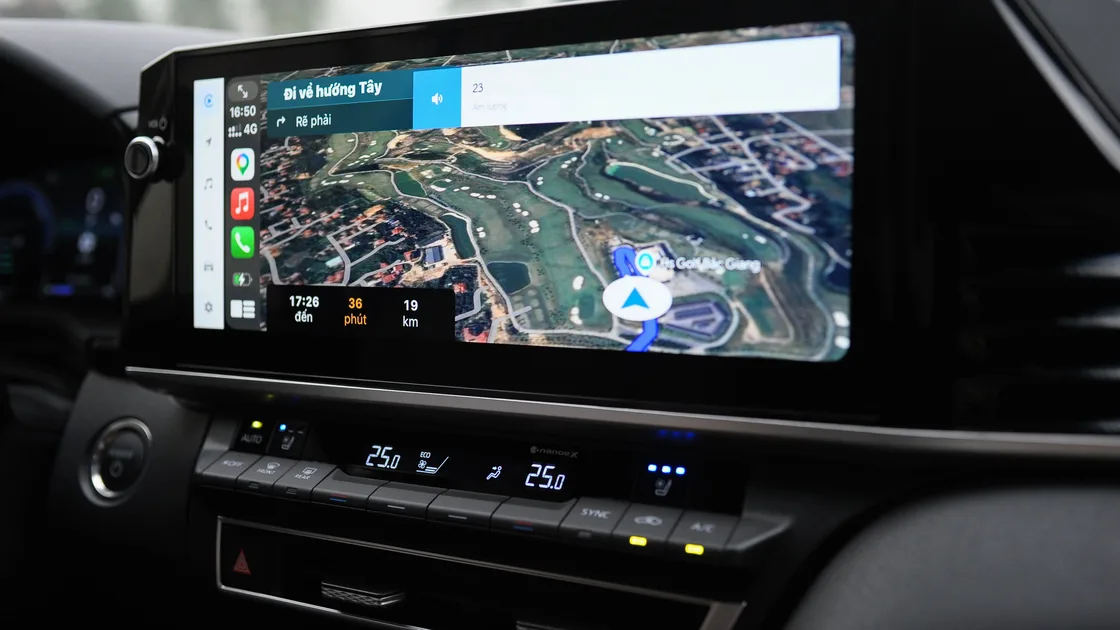
Plan the route with a reliable map, but treat lane arrows and staff at the actual station as controlling. See the China maps and navigation guide for address and route preparation. Navigation estimates do not establish the legal toll, vehicle class, or payment channel.
China's toll network supports ETC and manual or mixed handling. A 2026 Ministry of Transport explanation says the new mobile cardless model is intended to supplement, rather than replace, ETC and existing manual toll modes, and that its rollout is phased.[1] That means a press announcement about a pilot is not a promise that your entrance, exit, vehicle, phone, or payment account supports it.
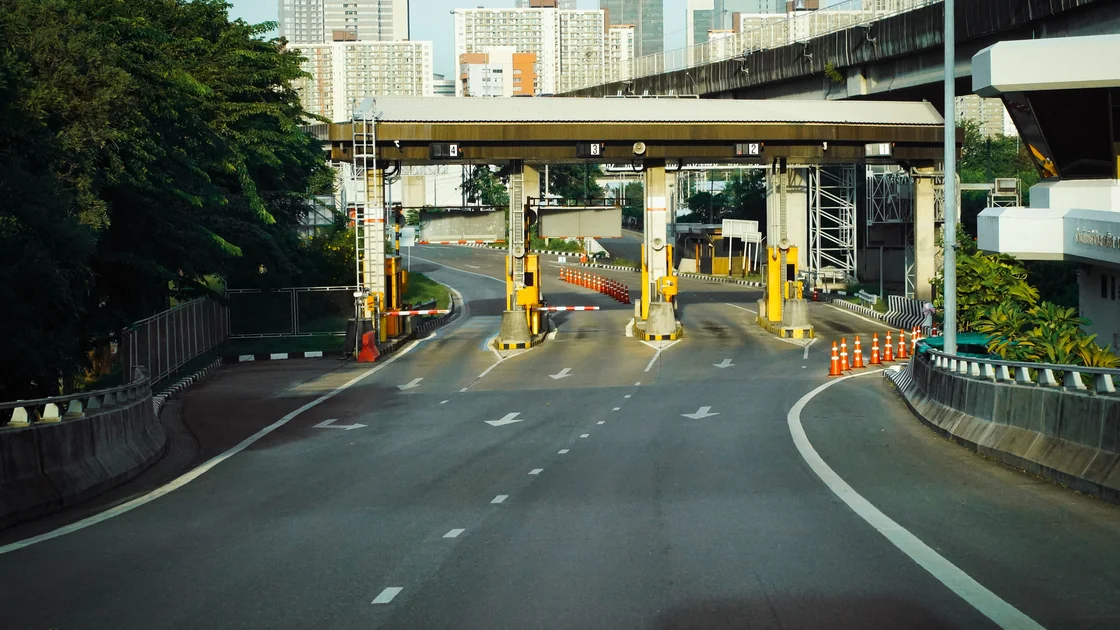
Approach slowly enough to read the overhead and lane-side signs without stopping in a live traffic lane. If the rental company confirms that ETC is active, use a lane currently marked for ETC and leave a safe gap. Watch for the barrier and fee display; do not follow another vehicle through an open gate.
If ETC is not active or its status is uncertain, follow the current signs to a staffed, self-service, manual, or ETC/manual mixed lane that accepts the vehicle. At an entry that issues a CPC card, take one card for the current vehicle and trip. Keep it dry, flat, and away from loss or exchange with another vehicle.
Do not drive around a barrier, abandon a CPC card, or attempt to pay a private person to open a lane. If you entered the wrong lane, switch off only where staff or signs direct you; reversing on the toll-station approach can be dangerous and unlawful.
Keep the vehicle stationary in the instructed position, turn on hazard lights if staff direct it, and wait for a safe resolution. Provide the actual plate and rental agreement if requested. A plate, vehicle-class, entrance record, ETC account, or CPC-card mismatch must be resolved by the operator, not by editing an app profile while blocking the lane.
For a lost CPC card, tell staff immediately and give the route you actually traveled. The operator may verify entrance records and calculate the payable amount under current rules. Do not invent an entrance or borrow another vehicle's card.
If ETC appears to have charged but the barrier did not open, preserve the device response, lane, station, time, and bank or wallet status. A pending authorization is not necessarily a completed toll. Ask station staff how the passage was recorded, then ask the rental company before making a duplicate settlement elsewhere.
First identify the type of parking. A gated commercial garage usually displays its operator and payment instructions at the entrance, pay station, exit, or official Mini Program. Roadside parking may be administered by a city or district and can require later payment through a local official or authorized channel. A hotel, airport, railway station, attraction, residential compound, or shopping center may have its own validation and grace-period rules.
Beijing illustrates why the local layer matters. Its transport authority lists the Beijing Transport app and several specifically authorized online and offline channels for Beijing roadside parking, and tells drivers to register and bind the correct vehicle details.[2] Those names and deadlines apply to the stated Beijing service; they do not prove that another city uses the same app or rules.
Before scanning or installing anything, match the operator name, domain or verified account, plate, entry time, site, and amount. Prefer instructions printed by the operator or linked from a transport-authority page. Avoid QR-code stickers that look pasted over the original sign, private payment accounts, search ads, and messages that demand unrelated identity data. If your phone is not yet ready for Chinese apps, Mini Programs, and payments, work through the China connectivity and visitor checklist before you set off.
For payment preparation, use the cash, card, and mobile-payment guide. The national visitor guide describes several payment options, but a particular toll booth or car park can accept a narrower set.[3]
Do not ignore a verified parking debt simply because the car is rented. Check the contract to learn whether you must pay the operator directly or the rental company will settle and pass through the charge. Pay only after matching the plate, place, time, amount, and responsible operator.
If the notice arrives after return, compare it with your pickup and return times. A session outside your custody should be sent to the rental company with the handover evidence. A session during your rental may still be wrong because of a plate-entry error, duplicate payment, unrecorded validation, or incorrect exit time.
For a receipt or invoice, preserve the original transaction reference and ask the toll or parking operator which party is eligible to request the document. An ETC account owned by the rental company may require the company to retrieve the record. Do not submit another customer's name or tax information to force an invoice.
| Problem | Safe next step | Avoid |
|---|---|---|
| ETC status unknown | Use a compatible staffed or mixed lane following signs | Testing an ETC-only lane at speed |
| Barrier remains closed | Stop and contact lane or car-park staff | Tailgating or driving around the barrier |
| CPC card lost or unreadable | Report it and let the operator verify the route | Borrowing a card or inventing an entrance |
| Plate not found | Recheck characters, color, site, and custody time | Binding an unrelated plate |
| Payment shows pending | Ask the operator whether the session is settled | Repeating payment to an unknown account |
| App rejects a foreign card | Use another officially accepted method or staffed desk | Sending card codes to a helper |
| Charge appears after return | Compare timestamps and contract, then contact the company | Paying before checking vehicle custody |
| Duplicate or wrong amount | Preserve both records and open an official dispute | Deleting the failed or first transaction |
No. Equipment and activation vary by vehicle and company. Confirm whether the device is active, who owns the linked account, and how charges will reach you.
Only after the rental company confirms that the device is active for that vehicle. A visible device can be disabled or incorrectly linked.
It is a toll-network passage card that may be issued to a non-ETC vehicle at entry and used to establish the trip at exit. Keep the card with the same vehicle and return it when requested.
Tell toll-station staff and provide the real route and vehicle details. The operator will apply its current verification and charging process; do not invent an entrance or use another card.
In pilot areas, yes. The Ministry of Transport's 2026 "phone-plus" cardless mode records the vehicle by plate recognition: unregistered users scan a code at the toll station to pass and pay, while registered users get an automatic barrier lift at entry and scan to pay at exit. The ministry said staffed lanes in Sichuan-Chongqing, Jiangsu, and other areas would accept it for entry by the end of 2026, and that its national platform, e路畅通, would open after internal testing.[1] Ask the rental company before registering its plate, and check a past trip through the receipt, payment record, or the company's ETC account.
No. Roadside parking and car parks are operated through different city, district, venue, and commercial systems. Verify the local authority or operator for the exact space.
Sometimes, but acceptance varies by location, terminal, card network, wallet, and account verification. Carry an official backup and ask staff rather than assuming national support.
Only if the official service permits temporary users and you can remove or end the binding correctly. Record the rental period and never claim ownership of the vehicle.
Compare the location and timestamps with your handover records and contract. Contact the rental company if the charge is outside your custody or if it controls the vehicle account.
The available channel depends on how the toll was paid and who owns the ETC or transaction account. Keep the passage reference and ask the operator or rental company for the current process.
Disclaimer: This guide provides general operational information. Toll modes, lane signs, vehicle classification, fees, payment methods, parking operators, deadlines, invoices, penalties, and rental-company pass-through charges are governed by current national and local rules, the actual operator, and your rental contract.
Sources checked 4 October 2026.
Sign up to experience all premium features at no cost.
*Available only to new users. Each user is limited to one trial.