Start your 3-day free trial
Sign up to experience all premium features at no cost.
*Available only to new users. Each user is limited to one trial.


You cannot normally rent a car in China with a foreign driving license alone. First obtain driving authority that China recognizes for your circumstances, then find a rental company that accepts that document, your passport, and your payment method. Legal permission to drive and a company's willingness to rent are separate checks, so confirm both before paying.[1][2]
Key Takeaways
- A foreign license or International Driving Permit does not normally replace a valid Chinese driving license or applicable provisional driving permit.
- Ask the exact pickup branch to approve your document type, age, driving history, passport name, and intended route before booking.
- Keep the reservation, rental agreement, vehicle condition record, insurance terms, deposit receipt, and return receipt together.
- Photograph the complete vehicle handover, but avoid recording other customers or exposing passport and card details.
- Do not drive if the recognized permit is missing, expired, restricted to another vehicle class, or inconsistent with the rental contract.
For most visitors, the answer is no. China does not generally treat a foreign driving license or an International Driving Permit as a stand-alone authorization to drive on mainland roads. The central government guide tells foreign renters to bring a valid Chinese driving license, along with a passport or Foreign Permanent Resident ID Card and an accepted payment card.[1]
Some short-term visitors can apply for a provisional driving permit based on an overseas license and supporting documents. The issuing authority decides whether you qualify, what vehicle class you may drive, and how long the permit remains valid. The separate Shanghai permit guide is useful for checking that process, but a permit issued for one class or period must not be stretched beyond its printed scope.[2]
There are limited country-specific recognition arrangements, and rules may depend on the license, nationality, residence status, and current agreement. Do not infer eligibility from a friend's experience or from a rental app accepting a document upload. Confirm with the relevant traffic-management authority and the pickup branch before you make a non-refundable reservation.[1][3]
Contact the exact branch, not only a general call center or aggregator. Airport and downtown branches can have different hours, vehicle stock, identity-verification procedures, deposit rules, and experience with foreign documents. Send only the minimum information needed for pre-checking, and use an official company channel.
The government guide notes that first-time foreign renters may need identity-document information verified at least one working day in advance.[1] Treat that as a planning minimum, not a promise that every company will approve the booking within one day. Allow time for correction if the passport name, permit number, or payment card cannot be matched.
| Check before payment | Question for the pickup branch | Evidence to save |
|---|---|---|
| Driving authority | Is this exact Chinese license or provisional permit accepted for this vehicle class? | Written reply and permit scope |
| Driver eligibility | Are there age, license-age, deposit, or additional-driver rules? | Current branch terms |
| Identity | How should the passport name and number be entered? | Reservation profile and confirmation |
| Payment | Which cards or mobile-payment methods can place the deposit or pre-authorization? | Payment terms and issuer confirmation |
| Route | Are cross-province travel, ferries, unpaved roads, or one-way returns restricted? | Contract clauses and branch approval |
| Vehicle | Is the booked class guaranteed or only a category? | Reservation and substitution policy |
| Insurance | What is included, excluded, and payable after damage? | Full policy and claim instructions |
If a platform shows an unusually cheap prepaid rate, read the cancellation, no-show, late-pickup, mileage, refueling, charging, toll, cleaning, and return-location rules before paying. A booking confirmation is not a driving permit, an insurance certificate, or a guarantee that the counter will accept incomplete documents.
Bring the original passport or accepted residence identity document, the original valid Chinese driving license or applicable provisional driving permit, the reservation confirmation, and the payment tool approved for the main driver's deposit. The name used for the booking, payment authorization, driving document, and rental contract should be consistent.
Carry the overseas license and Chinese translation if the issuing authority or rental company requires them as supporting documents. They support verification; they do not independently authorize driving. Keep digital copies securely for recovery, but expect the branch to ask for originals.
Prepare a second officially accepted payment option and enough lawful payment capacity for the deposit. A foreign card may work for the rental charge but fail for a pre-authorization, or the branch may require the named main driver to present the physical card. Check the cash, card, and mobile-payment guide before relying on one method.
Never send a full passport scan, card security code, one-time password, or account password to an unofficial agent. If an aggregator requests documents, verify its role and confirm that the actual rental company has received the approved reservation.
Do not accept pressure to sign blank damage diagrams or untranslated add-ons you cannot identify. Ask for a staff explanation, use a reliable translation method, and walk away if the legal driver, price, vehicle, or insurance terms differ materially from the confirmed booking.
The quoted rental price, security deposit, traffic-violation hold, and insurance protection are different items. A low or zero advertised excess may still exclude tires, glass, roof, underbody, interior, lost keys, charging equipment, unauthorized drivers, prohibited roads, late reporting, or conduct that violates the contract.
Ask who pays first after an incident, which police or insurer documents are required, whether repairs must use an approved workshop, and whether loss-of-use or administrative fees can apply. Do not describe a commercial waiver as comprehensive insurance unless the written contract does so.
For the deposit, record the amount, payment type, expected release process, traffic-violation hold, and contact route for a delayed release. A card pre-authorization can remain pending after the vehicle is returned because the rental company, acquiring bank, and card issuer have separate processing steps. Do not treat an app's “completed” label as proof that every hold has cleared.
Only approved drivers may operate the vehicle, and each driver must hold the required valid driving authority. Do not let an unlisted companion drive, even for a short distance. Follow the permit's vehicle-class and validity limits and the contract's route, mileage, parking, charging, and smoking rules.
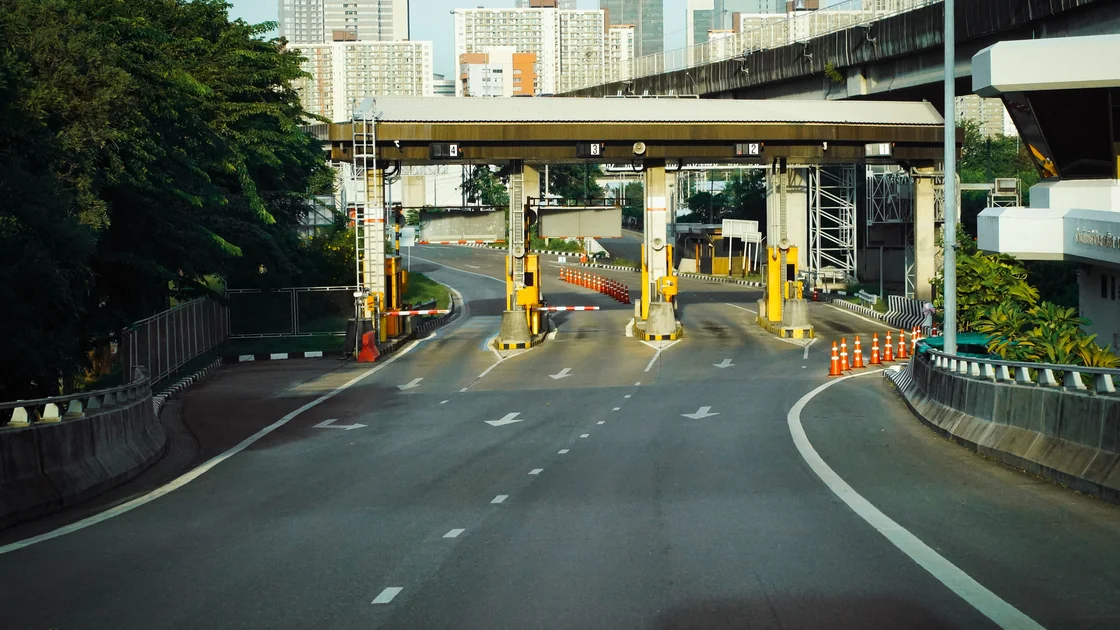
Keep the agreement, registration information, branch and roadside contacts accessible without leaving personal documents visible in a parked car. If you receive a toll or parking notice, preserve the plate, time, location, and payment record. The highway toll and parking guide explains how to separate ETC, manual tolls, local parking systems, and later rental-company charges.
After a collision, theft, warning light, tire problem, or breakdown, stop safely and contact the rental company's official assistance route. Call the appropriate emergency service where necessary. Do not admit liability, arrange an unofficial cash settlement, authorize repairs, or abandon the vehicle unless the police, insurer, or rental company instructs you through a verifiable channel.
Return to the agreed location within the time window and follow the fuel or battery rule written in the contract. Remove personal data from paired phones and navigation history where the vehicle permits, but do not reset vehicle systems if the rental company prohibits it.
Repeat the pickup photo sequence in comparable light. Record the plate, all body panels, wheels, glass, interior, odometer, fuel or charge level, parking bay, keys, cables, and handover time. Ask staff to inspect the car with you and issue a return receipt that lists the condition and any open charges.
If the branch offers an unattended return, document the authorized bay, key-drop procedure, vehicle lock state, and submission time. An unattended return usually postpones final inspection; it does not prove that the contract is closed. Keep records until the final invoice, deposit release, and any toll, parking, or traffic-violation reconciliation are complete.
Use the failure point to choose the next action rather than repeatedly editing documents or paying another seller.
| Problem | Safe next step | Avoid |
|---|---|---|
| Foreign license or IDP presented alone | Do not drive; verify recognized Chinese driving authority | Selecting a false document type |
| Valid permit rejected by branch | Ask for the written branch rule and seek another lawful provider | Pressuring staff or concealing the permit type |
| Passport name mismatch | Correct the reservation before signing | Shortening or inventing an identity |
| Deposit authorization fails | Ask the issuer and branch about accepted alternatives | Sharing an OTP or card security code |
| Vehicle differs materially | Request a documented substitution or cancellation outcome | Driving away before recording the change |
| Existing damage omitted | Add it to the signed handover record | Relying only on an unsubmitted phone photo |
| Post-return charge disputed | Request the contract clause, photos, invoice, and timeline | Deleting your pickup and return evidence |
No. An IDP does not normally provide stand-alone authority to drive on mainland Chinese roads. Confirm the recognized Chinese license or provisional permit required for your circumstances before booking.
Some companies may provide administrative help, but only the competent public-security traffic authority can issue the permit. Verify the official application and the printed scope independently.
No. It may establish legal driving authority within its scope, while the company can still apply lawful driver-age, document, payment, vehicle-class, deposit, and branch rules.
Requirements vary. Ask the pickup branch which physical card or mobile-payment method it accepts for charges and pre-authorization, and whether the named driver must be the cardholder.
Only if the company accepts that person and records them in the contract. The additional driver also needs valid recognized driving authority and the required original identity documents.
Record the exterior, wheels, glass, roof, interior, odometer, fuel or battery level, dashboard warnings, equipment, and every existing mark. Make sure the signed condition report matches the photos.
Not necessarily. Read the policy and rental agreement for deductibles, excluded parts, unauthorized use, reporting deadlines, required police documents, and additional fees.
The timing depends on the rental company, the type of hold, possible road or traffic charges, the acquiring bank, and your card issuer. Keep the return receipt and ask each responsible party for its current timeline.
The road may be open while the contract restricts a route, one-way return, ferry, remote area, or vehicle type. Obtain written approval from the branch for the intended itinerary.
Disclaimer: This guide provides general information, not legal advice or confirmation that you may drive or rent a particular vehicle. Driving authority, document recognition, vehicle class, insurance, deposits, routes, charges, and handover decisions depend on current law, the issuing authority, the rental company, and the signed contract.
Sources checked 4 September 2026.
Sign up to experience all premium features at no cost.
*Available only to new users. Each user is limited to one trial.