Start your 3-day free trial
Sign up to experience all premium features at no cost.
*Available only to new users. Each user is limited to one trial.
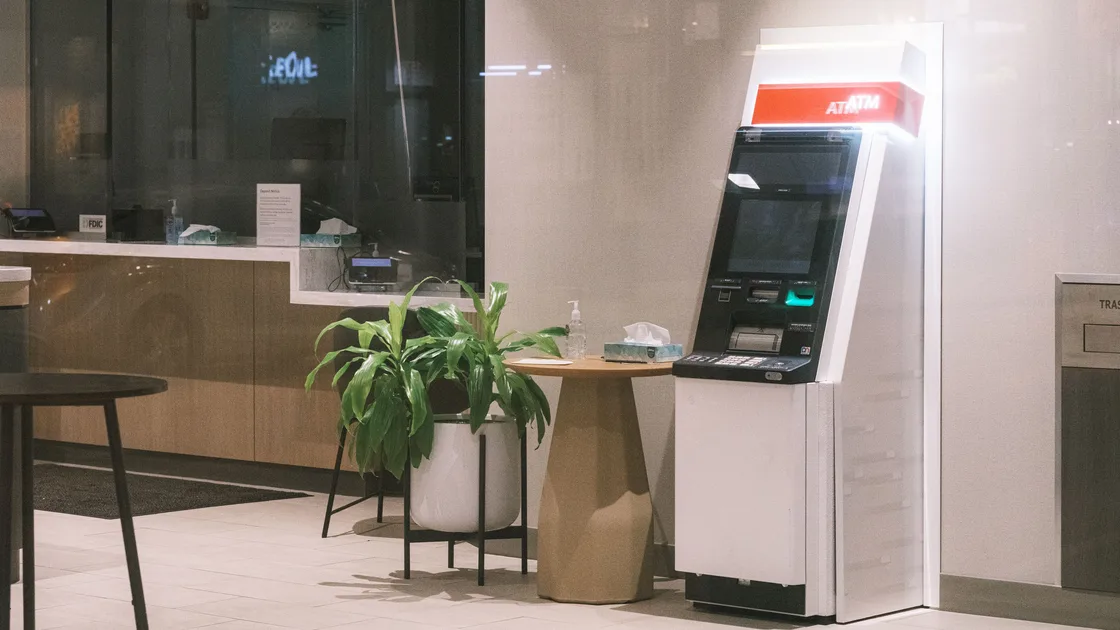

Yes, many ATMs in China pay out renminbi on foreign cards. To withdraw cash from an ATM in China with a foreign card, use a machine that displays your card network's acceptance mark, choose renminbi as the transaction currency, and make a small first withdrawal. The official visitor guide confirms that overseas visitors can withdraw RMB with international bank cards at ATMs, but an acceptance logo does not guarantee that every issuer, account, or transaction will work.[1]
Key Takeaways
- Confirm international ATM access, your PIN, and contact details with the issuing bank before travel.
- Match the network mark on the card with the marks on the ATM.
- Prefer a bank-operated machine and make a small first withdrawal in RMB.
- Read any exchange-rate and fee screen before confirming; do not rush through a conversion offer.
- Keep the receipt and account record until the withdrawal has settled correctly.
- A VPN cannot make an unsupported card eligible or reverse an ATM transaction.
Check whether your issuer permits cash withdrawals outside the card's home country. Confirm the daily withdrawal setting, available balance or credit cash limit, four- or six-digit PIN behavior, and the number to call from abroad. If the issuer offers a travel notice or location control, set it before departure.
Carry a second payment method separately. China's official payment guidance encourages a mix of bank cards, mobile payment, and cash rather than dependence on one route.[2] For a broader plan, prepare the options in the cash, cards, and mobile-pay guide.
| Check | Why it matters | Safe action |
|---|---|---|
| International ATM access | The issuer may block overseas cash use | Confirm in the issuer's official channel |
| Card network | The ATM must support the displayed network | Match the logo on card and machine |
| PIN | Some terminals do not support every PIN flow | Confirm the PIN before travel; never write it on the card |
| Cash limit | Issuer and ATM limits are separate | Start with a modest amount |
| Contact route | A retained card or debit dispute may need two banks | Save issuer and ATM-operator contacts |
Look for an ATM attached to a commercial bank branch or located in a controlled bank lobby. Check the front of the machine for the same card-network mark shown on your card. The People's Bank of China payment-facilitation measures support improving foreign-card acceptance and cash access for overseas visitors, while the actual result still depends on the operator and issuer.[3]
Before inserting the card, check that the card slot, keypad, and cash door look firmly attached and that nobody is pressuring you to hurry. This is a basic physical check, not a full guide to skimming; use the separate ATM skimming guide for that risk.
Some machines offer to convert the withdrawal into your home currency. That is dynamic currency conversion, not a required step. Compare the displayed rate and markup with your issuer's terms and choose deliberately; the DCC guide explains the decision in detail.
For a debit card, the matching account may be labeled checking, current, or savings depending on the issuer and ATM. A credit-card withdrawal is usually a cash advance and may carry different interest and fee rules. The ATM cannot reliably explain your issuer's contract, so check that contract first.
Select RMB/CNY when the machine asks for the withdrawal currency. If a separate screen offers a home-currency conversion, read both options. Rejecting a conversion offer should not be confused with canceling the withdrawal; follow the exact screen wording and stop if it is unclear.
There can be an ATM-operator fee, a card-network conversion, an issuer's foreign-transaction fee, and an issuer's cash-withdrawal or cash-advance fee. Limits may also exist per transaction, per ATM, and per day. None of these amounts should be treated as a nationwide constant.
Do not split a large withdrawal into repeated attempts without checking the issuer. Several small transactions can create several fees or fraud alerts. If a machine declines a modest request, changing the amount once may be reasonable; repeated guessing across machines can make the situation harder to investigate.
| Problem | Stop and record | Next action |
|---|---|---|
| Card declined before approval | Exact message, time, bank, amount | Try one smaller amount or contact the issuer |
| Network mark absent | ATM identity and location | Do not insert the card; find a compatible bank ATM |
| Card retained | ATM number, branch, time, receipt | Contact the ATM bank immediately, then the issuer |
| Account debited but no cash | Receipt, alert, amount, machine number | Do not repeat; report to operator and issuer |
| Wrong cash amount | Cash count, receipt, machine number | Stay near the branch and contact the operator |
| Duplicate or unfamiliar debit | Both transaction records | Lock the card if appropriate and open an issuer dispute |
If the card is retained, do not accept help from a stranger who asks for the PIN or says the card will reappear after another transaction. Use the number printed on the ATM or the bank's official branch channel. The operator controls the machine and retrieval process; the issuer controls the card, authorization, replacement, and dispute.
No. The matching network logo is necessary guidance, but support also depends on the ATM, network route, issuer, account type, security controls, and current limits.
Choose RMB/CNY for the withdrawal and review any separate home-currency conversion offer carefully. Your issuer's conversion may differ from the ATM's offered conversion.
Plan on RMB. The official visitor guides describe ATMs as a way to withdraw RMB with international cards, while foreign banknotes are exchanged at bank branches, airport counters, or authorized exchange points, each with its own daily limit. Keep the exchange receipt, because it helps when you convert unused RMB back before leaving.[1][2]
Possible causes include issuer controls, an incorrect account choice, a limit, insufficient available funds, a cash-advance restriction, or a temporary network problem. Contact the issuer for the authorization reason.
Usually not. It may be treated as a cash advance with separate fees and interest. Check the issuer's terms before using it.
Record the ATM and branch details, contact the operating bank immediately, and then notify the issuer. Never disclose the PIN to someone offering informal help.
Keep the receipt and alert, avoid making the same withdrawal again, and report the exact transaction to both the ATM operator and issuing bank.
No. They can vary by machine, operator, network, issuer, card, and transaction. Use the amount shown on the current screen and the issuer's current terms.
No. ATM eligibility and authorization are banking matters. A VPN cannot add card support, change a limit, or correct a disputed withdrawal. Internet access during the trip is a separate question, covered in the guide to VPNs and connectivity in China.
Disclaimer: This guide provides general visitor information, not financial advice. Card eligibility, fees, exchange rates, limits, retrieval procedures, and disputes are controlled by the ATM operator, card network, and issuing bank at the time of the transaction.
Sources checked 4 October 2026.
Sign up to experience all premium features at no cost.
*Available only to new users. Each user is limited to one trial.