Start your 3-day free trial
Sign up to experience all premium features at no cost.
*Available only to new users. Each user is limited to one trial.
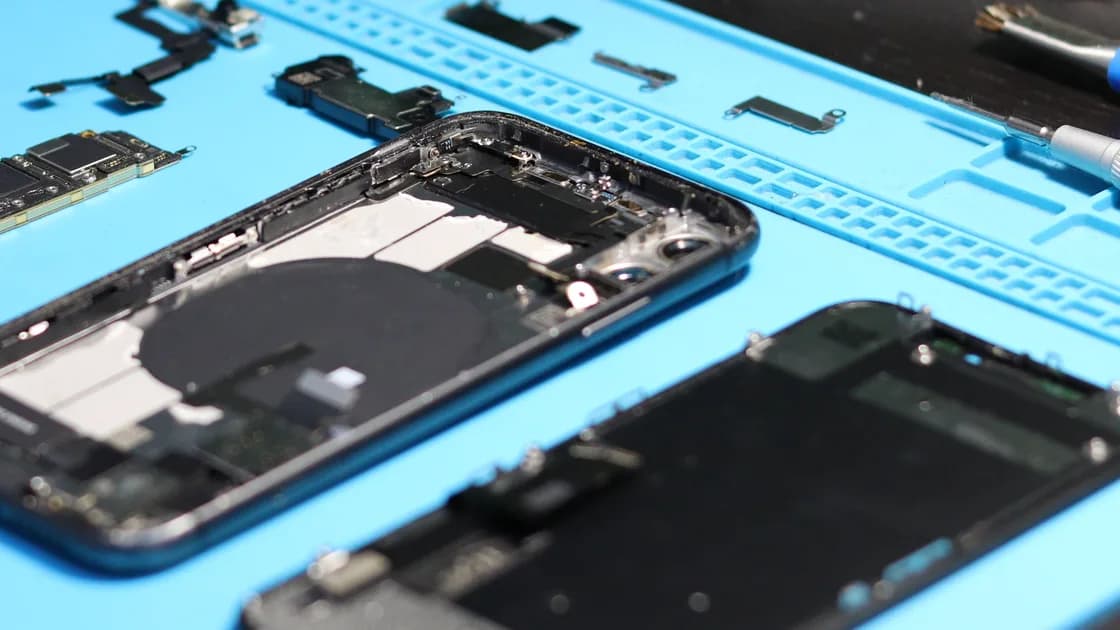

A credit card cell phone protection claim usually depends on two linked records: the wireless bill that identifies the covered line and the eligible card payment required by the benefit. Keep those records with the phone's identity, incident evidence, repair or replacement documents, and every instruction from the benefit administrator.
Key Takeaways:
- Save the Guide to Benefits that applied when the bill was paid and the incident occurred.
- Prove which wireless account, line, phone, and eligible card were connected.
- Preserve objective evidence for damage, theft, or another specifically defined event.
- Do not repair, replace, discard, trade in, or reset the phone before asking what the claim requires.
- Redact unrelated account data and track one complete submission by case number.
Include this protection file in your international travel preparation, especially when your phone carries boarding records and account access. The benefit is separate from digital recovery after a missing device and from general protection for a newly purchased item.
Identify the card product, issuing bank, benefit administrator, and last four account digits. Download the Guide to Benefits that was effective for the wireless-bill payment and incident dates. A current web page may describe a benefit that was different, replaced, or unavailable when your event happened.
Read the definitions of covered card, eligible person, cell phone, wireless bill, covered line, covered event, deductible, limit, exclusions, notice, proof of loss, and other insurance. Record the administrator's official claim channel and every applicable deadline. Do not assume that a card-network logo proves that your particular account includes the benefit.
Wells Fargo's general cell-phone-protection page tells cardholders to consult the Guide to Benefits for complete coverage and exclusions.[1] Its Reflect Visa guide is a card-specific example showing that the benefit terms and effective date belong to the named product, not every card.[2]
Write down the incident date and the billing cycle immediately before it. Some guides tie eligibility to the monthly wireless bill charged to the covered card, while others may use a different rule. Use the wording in your guide rather than substituting a general assumption about autopay.
If a benefit ended, the card changed, or the bill payment was reversed, ask the administrator which provision applies and retain the response. Do not edit an old statement or change an autopay record after the event to make it appear eligible.
Save the complete wireless statement for the relevant cycle. It should show the account holder, billing period, service provider, mobile line, amount due, and device details if the provider includes them. Redact unrelated lines and usage while keeping the covered relationship readable.
Add the corresponding card statement showing the wireless-provider transaction posted to the eligible account. If the payment was split, returned, made with another card, or offset by a credit, preserve the full sequence. A scheduled autopay screen does not prove that the charge posted.
Build a connection table:
| Record | What it establishes | What to clarify |
|---|---|---|
| Wireless bill | Account, cycle, line, and service charge | Whether the affected line appears |
| Card statement | Eligible account paid the bill | Posted, pending, returned, or credited |
| Device summary | Make, model, serial or IMEI, and line | Upgrade, replacement, dual SIM, or eSIM |
| Purchase or lease record | Ownership, financing, and device value | Carrier installment or trade-in terms |
| Account-holder record | Relationship between claimant and line | Family, employee, or shared plan eligibility |
Capture the device make, model, serial number, IMEI, phone number suffix, and carrier line without publishing them. If the phone was replaced under warranty or upgraded, preserve the activation and device-swap record. The claimed device must match the line and event, not merely the model shown on an older bill.
For family or business plans, confirm who may claim and whose phone can be covered. A cardholder paying a bill does not automatically prove every device or user is eligible. Ask for a written interpretation if the guide is unclear.
Create a factual timeline covering the phone's last normal use, incident, discovery, immediate actions, reports, and present condition. Record local time and place, witnesses, and what you personally observed. Keep assumptions and suspicions out of the factual sequence.
For damage, photograph the whole phone, front, back, edges, ports, screen, case, damaged area, and any detached parts. Record whether it powers on, charges, receives service, or has liquid exposure, but do not repeatedly test an unsafe or swollen device. Obtain a written diagnostic or repair estimate that identifies the phone and separates parts, labor, taxes, and non-covered work.
For theft, preserve the police or venue report when the guide requires it, along with the report number, agency, date, device description, and items reported. Save carrier suspension and device-location records only if they are safe and relevant. A location screenshot can expose home, hotel, or account information, so crop or redact it before submission.
For accidental parting, loss, or another named event, compare the facts with the guide's exact definition. Do not call an unexplained disappearance theft. The Reflect guide illustrates that damage, theft, and involuntary accidental parting can have different conditions and exclusions within one card's benefit.[2] Other cards may define the events differently.
If the phone is missing, begin the independent digital-recovery sequence: protect accounts, SIM or eSIM, payment wallets, and recovery channels. Those security actions do not replace the benefit claim, but postponing them can increase harm.
Contact the benefit administrator before authorizing repair, replacement, trade-in, recycling, or disposal. Ask whether it requires an inspection, a repair estimate, proof that repair is uneconomical, a replacement receipt, or return of the damaged device. Record the answer and claim number.
Do not factory-reset a working phone until you have preserved required device identifiers and the administrator confirms what it needs. If privacy or security requires an immediate remote lock or erase, document the reason and action. Never weaken device security merely to capture claim evidence.
When a repair shop inspects the phone, request a document showing the shop identity, date, phone make and model, serial or IMEI suffix, diagnosis, damage description, repairability, parts, labor, taxes, and total. An informal verbal estimate may be difficult to connect to the device.
If replacement is authorized, keep the purchase receipt, payment record, model, serial number, taxes, credits, trade-in value, carrier financing, and activation record. Do not assume that buying a more expensive model changes the covered value. Ask how the guide treats depreciation, deductible, taxes, accessories, installments, and replacement upgrades.
Card Benefit Services identifies wireless bills, account statements, device summaries, police reports for theft, repair estimates, replacement receipts, and other-insurance records among materials that may be requested for cellular-telephone claims.[3] Your administrator's written request remains controlling.
Complete one claim through the official portal, telephone route, or mailing address in the guide. Use the same account holder, line, device, date, and event description throughout. If a field is unknown, explain why instead of guessing.
Index the packet in this order:
Redact full card numbers, passwords, PINs, one-time codes, unrelated call records, other family members' lines, and unnecessary location history. Keep the minimum data needed to connect the claim. Send documents only through a verified channel named in the guide or confirmed by the administrator.
Save every file exactly as sent, plus the claim number, submission time, delivery receipt, and displayed status. A confirmation that documents uploaded does not establish coverage or payment.
The broader purchase-protection evidence checklist can help organize item and payment records, but do not combine two benefits into one claim unless the administrator explicitly directs you.
Keep a chronological log of contacts, requested documents, response dates, deadlines, and representative or team names. When the administrator asks for another bill, statement, diagnostic, or police document, answer the exact request and update the index. Do not resend an unstructured archive.
If a requested document does not exist, provide a truthful explanation and ask whether an alternative is acceptable. For example, a carrier device-swap record may help when a current wireless bill no longer shows the damaged phone. Never fabricate a repair decline or modify a receipt.
Disclose manufacturer, carrier, retailer, homeowners, renters, travel, employer, or other insurance payments relating to the same phone. Preserve denials, deductibles, credits, replacement devices, trade-in values, and refunds. The benefit's coordination terms determine how those amounts affect the claim.
For a denial or partial payment, request the exact guide provision, eligibility finding, valuation, deductible, exclusion, missing-document basis, and appeal route. Correct factual errors with a dated amendment that preserves the original submission.
When the case closes, compare the decision with the phone, line, payment, event, repair, and reimbursement records. Store the final decision and payment safely with an offline travel-document archive, then dispose of unnecessary sensitive copies under a reasonable retention policy.
Use the international phone checklist before the next trip to preserve device identity, recovery contacts, and billing access without carrying an unprotected data bundle.
No. It may identify the account and line, but the benefit may also require proof that the eligible card paid the relevant bill and that the claimed phone was connected to that line.
Ask the administrator first. A repair can change evidence or remove the opportunity for inspection. If safety requires immediate handling, photograph the condition and document why delay was unsafe.
No. Covered events, exclusions, cosmetic-damage rules, deductibles, and limits differ. Read the specific guide and let the administrator apply it to the documented facts.
Many guides require one for theft, but there is no universal requirement for every event. Follow the guide, local reporting rules, and the administrator's instructions.
Show the relationship between the cardholder, wireless account, covered line, device, and user. The guide decides whether that arrangement qualifies.
Protecting accounts and personal data comes first. Save safe identifiers and location evidence when possible, then lock or erase the device as needed and record the action for the claim.
No. A VPN cannot locate hardware, establish who owned or used it, change wireless-bill payment, or determine insurance coverage.
Disclaimer: This guide provides general record-keeping and security information, not legal, financial, insurance, repair, or claims advice. Terms, deadlines, exclusions, and remedies depend on the specific benefit and jurisdiction.
Sources checked 6 September 2026.
Related Reading:
Sign up to experience all premium features at no cost.
*Available only to new users. Each user is limited to one trial.