Start your 3-day free trial
Sign up to experience all premium features at no cost.
*Available only to new users. Each user is limited to one trial.

When you find a hotel accessibility request missing at check-in, address immediate safety and essential function before debating the booking history. Show the written request or confirmation, state the exact features you need, and ask a decision-maker for a usable room or a safe equivalent arrangement in writing.
Key Takeaways:
- Describe the functional barrier, not only the room category or booking label.
- Inspect any proposed room before moving luggage or transferring equipment.
- Keep the confirmed request, check-in response, names, times, and offered alternatives.
- Do not accept a nominal upgrade that removes an essential accessibility feature.
- Separate tonight's safe solution from later refunds, complaints, or legal questions.
This response fits into an international travel preparation plan. It covers a requested or confirmed accessibility feature that is unavailable at arrival, not an ordinary preference such as view, décor, or a non-essential amenity.
State the barrier in practical terms: for example, a wheelchair cannot enter the bathroom, the shower transfer setup is unusable, the bed transfer space is too narrow, an alarm has no visual signal, or the route contains steps. Explain what must work tonight. Staff can act more quickly on a concrete function than on a broad request for an “accessible room.”
Do not attempt an unsafe transfer or accept equipment you cannot use correctly. Stay in a safe public area while the hotel checks inventory. If a medical device needs power, medication needs refrigeration, a service animal needs relief space, or fatigue creates a time limit, state that urgency without disclosing unrelated medical history.
Ask for a chair, quiet waiting place, accessible restroom, water, charging point, or luggage storage as needed while the room problem is investigated. These temporary measures do not replace the confirmed accommodation; they reduce risk during the decision. If there is an immediate medical emergency, use the local emergency route rather than waiting for a booking dispute.
Identify one staff member who will coordinate the response. Ask for the manager on duty or accessibility lead and write down the name, role, time, and promised update. Avoid repeating sensitive details to every employee; provide a concise functional list that can be passed to the person controlling rooms or relocation.
Open the final confirmation, not only the initial request. Show the room type, accessibility features, dates, occupancy, reservation number, and any email, chat, or case number confirming the need. A free-text note such as “wheelchair user” is weaker operational evidence than a response confirming a roll-in shower, door width, transfer clearance, visual alarm, or other specific feature.
Ask the hotel to read back what appears in its system. Determine whether the feature was confirmed, merely requested, lost during a platform transfer, attached to a different guest profile, or replaced by a generic room label. If you booked through an agent or platform, contact it through the reservation page while the hotel checks its own record.
Preserve screenshots or exports of the original listing description and room features. Record the check-in time, names, exact room offered, barriers found, and each alternative. Photograph physical features only with respect for other guests and staff; focus on the doorway, route, bathroom, controls, and clearance rather than people.
Do not let the conversation collapse into whether someone “guaranteed” the word accessible. The useful question is what specific feature was represented, what is available now, and who can authorize a workable remedy. Keep the general room-mismatch process separate; this incident is about functional access and safety.
Ask to inspect the room before accepting keys as the solution or moving equipment. Bring the shortest possible checklist of non-negotiable features and useful preferences. Non-negotiables might include a step-free route, entry clearance, bathroom transfer space, a roll-in shower, reachable controls, suitable alarm notification, or a bed configuration that permits a safe transfer.
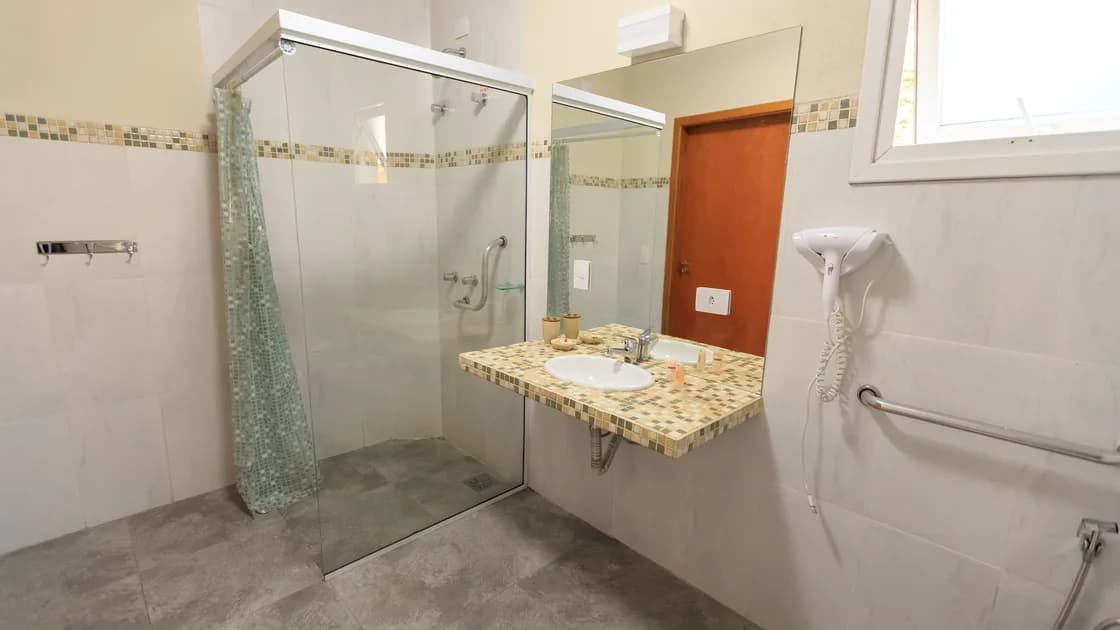
Check the whole route from entrance to room, not just the bathroom photograph. Look at lifts, thresholds, heavy doors, corridor turns, carpet, room-door force, bed height, toilet layout, shower controls, emergency instructions, and the path to breakfast or an exit. A room can carry an accessible label yet fail the particular access need.
Ask before accepting temporary equipment. A portable shower chair, ramp, or bed adjustment may solve a specific barrier only if it is safe, available for the full stay, compatible with the room, and acceptable to the guest. Staff should not improvise hazardous arrangements or move fixed safety equipment without authorization.
Document why an offered room works or fails in functional language. If it works with an agreed adjustment, ask the hotel to place that adjustment and maintenance contact in writing. If it fails, decline it calmly and keep the evidence; checking a room does not oblige you to accept it.
Ask first whether another room at the property meets the essential list for the entire stay. Verify that the room will not be reassigned on a later night. If only a temporary room is available, request a written transfer plan, assistance with luggage or equipment, and a time when the correct room will be ready.
If the property has no usable room, ask it and the booking provider to locate an equivalent accessible alternative. Compare actual access features, location, transport, companion occupancy, service-animal acceptance, equipment delivery, check-in time, and total stay—not star rating alone. Call the receiving property and verify features directly before traveling there.
Clarify who will reserve and pay for the alternative, accessible transport, and necessary transfer costs. Ask for a written authorization rather than relying on reimbursement language from a desk conversation. If you must book because waiting is unsafe, choose a reasonable option, preserve availability comparisons, and record why delay or a cheaper property was not workable.
Do not accept a higher-category room as compensation if it lacks the required function. Conversely, a lower-category room may be a practical short-term solution only if it is actually usable and you knowingly agree while preserving later questions about price or remedy.
Once tonight is safe, build a chronology: booking date, request, confirmation, arrival, discovery, staff responses, rooms inspected, accepted temporary measures, relocation, and out-of-pocket costs. Keep receipts for transport, accommodation, equipment, calls, and other directly related expenses. Mark estimates separately from paid amounts.
Ask the hotel or booking provider for a written incident response identifying the missing feature and remedy. Request a corrected folio showing unused nights, room changes, credits, or refunds. Do not sign a broad release or accept points without understanding whether the offer closes other requests. A practical solution tonight does not erase the failure that caused it.
In the United States, ADA Title III regulations include reservation requirements for places of lodging, including describing accessible features in enough detail for reasonable booking and holding accessible rooms for the reserving guest under specified conditions.[1] In Great Britain, service providers' reasonable-adjustment duties are explained under a different legal framework.[2] These examples do not create a worldwide rule or determine an individual claim.
Direct a formal complaint to the entity that controlled the representation and room. State the functional barrier, evidence, requested outcome, and response deadline. Use a disability-rights, consumer, tourism, or alternative-dispute body only after confirming its jurisdiction over the property and issue.
Back up the confirmation, evidence index, receipts, and complaint offline. Share only records needed by the recipient, and redact unrelated identity, payment, or medical details where permitted. The travel document backup guide can help keep an incident pack available when connectivity is unreliable.
If an insurer or card provider may be involved, describe events accurately: a confirmed feature was unavailable, an alternative was or was not offered, and defined additional costs resulted. Ask which policy section or dispute category applies. Do not label an authorized hotel charge as fraud merely because the accommodation was deficient.
For the remainder of the trip, reconfirm essential features directly with the next property. Use a short functional checklist and ask for written confirmation. This is risk reduction, not an admission that the first hotel's response was acceptable. Build extra transfer time only where the disruption actually changed the itinerary.
Connectivity can help you reach official channels, but the accommodation provider and competent bodies control the remedy.
Ask what was represented for this booking and what specific features appear in its record. Request a usable alternative now, then preserve the statement for the appropriate complaint route; legal consequences depend on the jurisdiction and facts.
Accept it only if it meets essential functional needs and the occupancy and stay terms are workable. Record any price, location, bed, or duration difference and ask the hotel to confirm the arrangement.
Sometimes, but only when the equipment safely resolves the particular barrier and remains available. Do not accept an improvised setup that creates transfer, evacuation, electrical, or fall risk.
Ask the responsible hotel or booking provider to arrange and authorize accessible transport. If urgency forces you to arrange it, keep evidence showing why the cost and vehicle were necessary.
Contact both when their records differ. The hotel controls current room inventory; the platform or agent may control the representation, payment, or relocation process. Obtain a case number from each.
Keep the confirmed feature, functional barrier, timeline, rooms offered, written remedy, relocation details, and receipts. Avoid collecting unrelated medical information or images of other people.
No. It can support connectivity to official channels but cannot change the room, verify equipment, determine legal rights, or require a provider to act.
This article provides general travel and record-keeping information, not legal, medical, accessibility, financial, or insurance advice. Duties, remedies, deadlines, equipment standards, and complaint routes depend on the guest's needs, booking, property, and jurisdiction.
Sources checked 6 September 2026.
Sign up to experience all premium features at no cost.
*Available only to new users. Each user is limited to one trial.