Start your 3-day free trial
Sign up to experience all premium features at no cost.
*Available only to new users. Each user is limited to one trial.
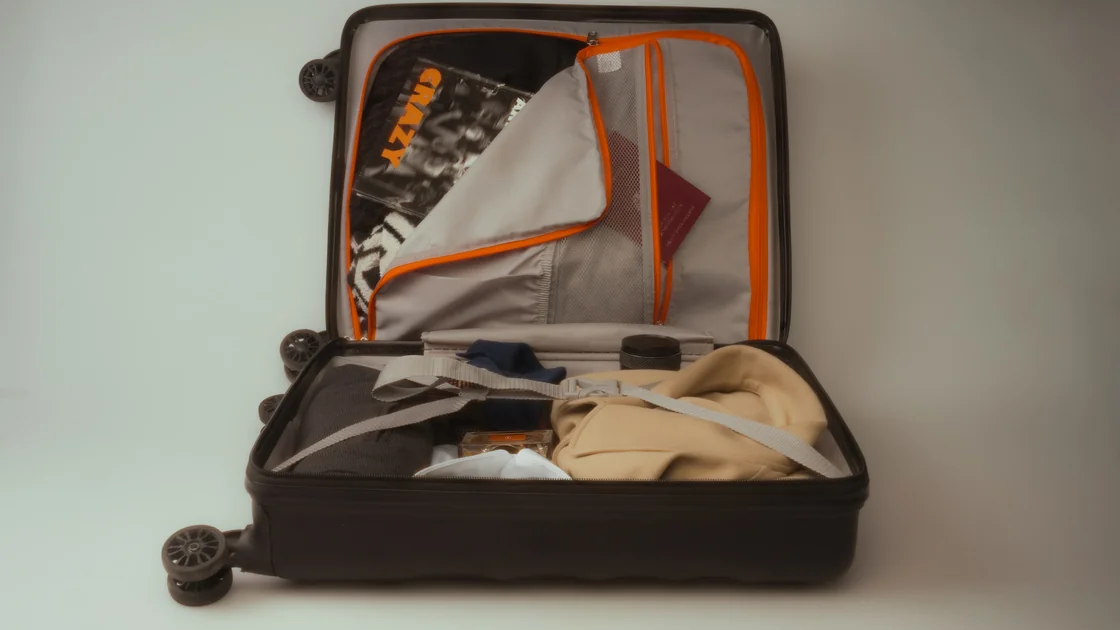

If you find items missing from checked baggage that did arrive, stop unpacking, document the bag’s closure and contents, and report the shortage to the operating airline or ground handler promptly. Build an itemized claim, check for an official inspection notice, and immediately secure any missing passport, card, key, or connected device.
Key Takeaways:
- Photograph the bag before changing its condition, including seals, zips, locks, tag, and disturbed packing.
- List only items you can reasonably establish were packed and are now absent.
- Obtain a baggage report and then complete any separate written airline claim.
- Check for a screening or customs notice without assuming that an official inspection caused the loss.
- Protect identity, money, access, and accounts before waiting for compensation.
- Disclose later recovery, refunds, card credits, or insurance payments.
Keep the record alongside your wider international travel preparation file. This process is for a delivered bag with missing contents, not a whole checked bag that is still delayed and not ordinary property lost elsewhere in the airport.
Move the bag to a safe, well-lit place near baggage reclaim. Before closing zips or rearranging packing, photograph every side, the baggage tag, locks, seals, zip pulls, straps, tears, openings, and the first view inside. Capture wide context and close detail without including unrelated passengers or their documents.
Note whether the bag was open, reclosed, wrapped, wet, torn, or apparently intact. Photograph any inspection notice found inside or attached. Preserve loose fasteners, broken seals, tags, and packaging, but do not handle an unsafe object. Ask airport staff for help if the contents include a damaged battery, sharp object, medicine spill, or another hazard.
Record the flight, airport, carousel, collection time, discovery time, and who had the bag after collection. If a courier delivered it, document the outer packaging, seal, handover time, driver receipt, and any reservation you write before signing. Keep the bag and packing arrangement until the responsible organization gives instructions.
Do not decide immediately that theft occurred. A bag may have been screened, opened after damage, repacked, misrouted, or packed differently from memory. Describe observable facts—“zip open and charger absent”—rather than naming an unknown person or cause.
Compare the remaining contents with a pre-trip packing list, photographs, purchase history, messages, serial-number records, and the travelers who packed the bag. Create one row per item with description, brand or model where relevant, quantity, age, condition, identifying marks, purchase evidence, estimated current value, and why you believe it was packed.
Separate confirmed missing items from uncertain items. Check other luggage, hotel storage, laundry bags, vehicle compartments, and anything redistributed before check-in. Record that search. A smaller, defensible list is more useful than a hurried claim containing property later found elsewhere.
Preserve proof of ownership without overstating it. A receipt, photograph in use, warranty record, serial number, card statement, or replacement record may each establish a different fact. A card statement may show a merchant and amount but not the exact item. Explain missing evidence rather than inventing precision.
Use current depreciated value where the applicable process asks for it, and keep replacement prices separately. Do not claim a new retail amount as though an older used item were new. For foreign-currency purchases, record original currency and amount, claim currency, and the conversion basis requested by the airline or insurer.
Report the missing contents at the operating airline’s baggage desk or its ground handler before leaving reclaim when possible. Present the bag, tag, itinerary, and factual inventory. Ask for a Property Irregularity Report, pilferage report, damage report, or another written reference that explicitly records missing contents rather than only a damaged zip.
Confirm passenger name, flight, tag number, arrival point, report time, and listed items. Save the full record and the staff instructions. If the desk is closed or refuses to record the matter, photograph the location and submit immediately through the airline’s verified online or written channel.
The airport report may not be the complete claim. Ask for the deadline, claim form, evidence, operating-carrier details, and whether police, security, customs, or screening reports are requested. The US Department of Transportation advises passengers to file baggage claims as soon as possible and distinguishes airline responsibility according to domestic rules and international treaties.[1]
For connecting flights, keep every segment and transfer tag. Start with the operating airline or handler at arrival, then follow the written allocation it provides. Do not assume that the ticket seller, marketing carrier, airport, security authority, or last airline automatically owns every part of the case.
Look for an official notice, replacement seal, inspection tape, electronic declaration, or case reference. Photograph it in place and retain the original. Verify the authority’s contact route on its official site or airport information channel; do not use a phone number or QR code from an unexplained message.
An inspection notice proves that an inspection was recorded, not that the inspecting authority removed a specific item. Likewise, the absence of a notice does not prove that no authorized inspection occurred. Ask factual questions: when the bag was opened, what record exists, whether an item was detained, and how to request documentation.
If an authority confirms detention or seizure, use its review or collection process and keep that case separate from the airline claim. Do not conceal prohibited or restricted contents in a complaint. If the bag was physically damaged during the same event, document that damage but use the dedicated damage analysis for repair or replacement.
Consider a police report when the facts, insurer, airline, or local process make it appropriate and safe. A police report documents what you reported; it does not itself prove carrier custody, ownership, value, or coverage. Do not delay urgent passport, payment-card, or account protection while searching for a police station.
Submit the airline’s written claim within the shortest potentially applicable period. Include the report number, itinerary, baggage tag, first-condition photographs, inventory, ownership and value evidence, official inspection response if any, and a clear requested remedy. Identify outstanding records rather than waiting until a deadline passes.
Airline rules can differ for domestic and international journeys. The US DOT notes that domestic contracts may exclude categories such as fragile items, electronics, cash, perishables, and other valuables, while its summary describes different responsibility for accepted items on international travel.[1] The actual itinerary, contract, treaty, facts, and jurisdiction must be checked.
The UK Civil Aviation Authority likewise advises reporting baggage problems promptly and checking the airline's written claim deadline.[3] Its guidance is a UK-facing route, not a universal timetable.
For covered international carriage, the Montreal Convention addresses destruction, loss, or damage while checked baggage is in the carrier’s charge and contains written-notice and liability provisions.[2] The Convention framework does not guarantee that every claimed item will be paid, and a liability ceiling is not the value of the claim.
Notify travel insurance according to the policy and disclose the airline case. Provide the same factual inventory but follow the insurer’s format, exclusions, excess, valuation, and original-document rules. Keep submission receipts and record any airline payment, insurer payment, merchant refund, card credit, or recovered item to prevent duplicate recovery.
Treat identity and access loss as a separate urgent track. Report a missing passport to the issuing authority and follow its replacement instructions. Freeze or cancel payment cards through verified channels. Change access arrangements if house, hotel, car, storage, office, or safe keys were labeled or could be linked to you.
For a phone, tablet, laptop, storage drive, hardware token, or smart key, use the manufacturer or organization’s official lost-device process. Revoke active sessions, payment tokens, and app passwords where appropriate; notify an employer if work data may be involved. Preserve serial numbers and remote-status evidence, but do not confront a suspected person or travel to an unverified tracker location.
If medicine is missing, contact an appropriate clinician, pharmacist, insurer, or local health service for a safe replacement route. Do not buy a restricted medicine from an informal seller. Keep prescriptions and emergency purchase receipts if they are relevant to a later claim.
Continue tracking the airline and authority cases after immediate protection. If an item returns, photograph its condition, record the date, and notify organizations considering payment. Retain the complete chronology until claims, appeals, security actions, and required retention are finished.
Provide genuine alternatives such as photographs, warranty records, serial numbers, emails, card entries, or witness information. Explain the gap and the item’s age and condition honestly.
No. It shows that an inspection was recorded. Ask the named authority for its record and any detention information instead of assuming the cause.
Some contracts and domestic rules exclude specified categories, while international carriage may be treated differently. Check the actual itinerary, contract, treaty, and any insurance rather than relying on a generic list.
No universal rule applies. Obtain one when appropriate and safe or when the responsible process requests it, but remember that it records your report rather than proving every element of the claim.
Start at the operating airline or ground handler at the arrival airport and keep all segment and transfer records. Follow the written carrier instructions for the formal claim.
Notify both within their deadlines and follow each process. Tell each about the other case and disclose any payment or later recovery.
No. It cannot establish what was packed, identify who opened a bag, replace a passport, block a card, or compel compensation.
Sources checked 4 September 2026.
This article provides general information, not legal, insurance, security, or financial advice. Reporting duties, exclusions, deadlines, liability, and remedies depend on the itinerary, contract, facts, and jurisdiction.
Related reading:
Sign up to experience all premium features at no cost.
*Available only to new users. Each user is limited to one trial.