Start your 3-day free trial
Sign up to experience all premium features at no cost.
*Available only to new users. Each user is limited to one trial.


Prepare mobile access and a payment method before arrival, and use the same card or device for both ends of an OVpay journey. This Netherlands digital travel guide separates online trip planning from contactless check-in so that an internet failure does not lead you to change the wrong setting. Keep an offline route and an accepted payment alternative for the first transfer.
Key Takeaways:
- A phone wallet and the physical card linked to it count as different payment media for transport.
- Airport or train Wi-Fi can help with planning but is not proof that a ticket or payment succeeded.
- EU roaming inclusion depends on the applicable subscription and its conditions.
- A VPN can protect online account traffic; it cannot perform or correct a contactless tap.
The international travel preparation guide covers the wider account checklist. In the Netherlands, the important separation is between the network used to view information and the medium used by a transport reader.
Treat arrival as a short journey with several independent confirmations. You need to know where you are going, how you will pay, whether your travel entitlement is valid, and how to recover when the phone or connection fails. Do not make all four depend on opening one email while standing at a gate.
| Arrival task | Prepare in advance | Proof to look for |
|---|---|---|
| Reach accommodation | Saved address and first route | Current station information and correct destination |
| Get internet | Confirmed roaming or mobile offer | Ordinary browsing works on the chosen connection |
| Use contactless transport | Supported card or wallet and chosen medium | Reader confirmation at check-in and check-out |
| Buy a separate ticket | Official sales channel and payment backup | Issued ticket and operator's usage instructions |
| Review journey charges | Official account or journey-reference route | Record associated with the medium actually used |
| Recover a problem | Support contacts and relevant references | Resolution from the carrier, operator, or issuer |
Save the accommodation address and the stations involved before you leave home. Check current disruptions before traveling and again when you arrive if a connection is available. A route saved yesterday is useful context but does not replace a current platform announcement.
Bring a locally readable version of the booking reference and the operator's ticket instructions. Keep identity documents and recovery codes private rather than putting them into a shared trip folder. A driver or host normally needs the destination and booking details, not access to your whole mailbox.
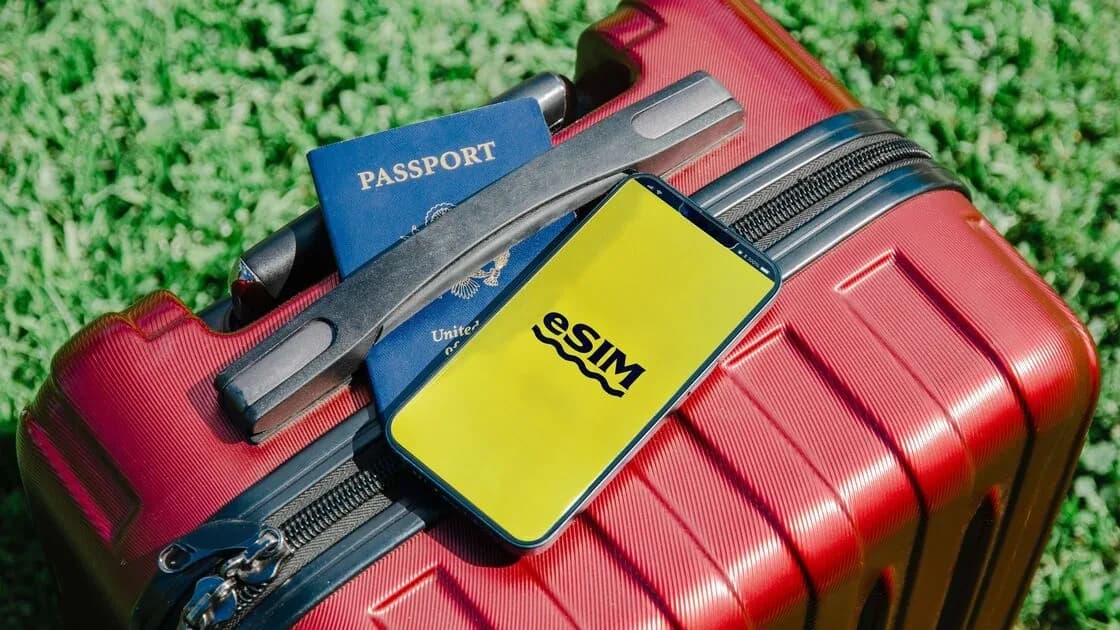
Compare your home roaming plan with the exact local or travel eSIM offer. Ask about included destinations, validity, activation, tethering, support, and whether the device must be unlocked. Confirm the regional variant of your phone rather than relying on a generic model name.
The European Commission's roaming guidance includes the Netherlands and explains that fair-use conditions can apply.[1] This does not mean every international traveler has EU roaming included: your own subscription determines the arrangement and any charges outside it.
A data-only eSIM may not receive SMS or provide a voice number. Keep the usual verification line under an understood charging arrangement and test the recovery options for email and important accounts before departure. Do not discover at a ticket gate that the only login code goes to a disabled line.
The travel eSIM and VPN comparison separates mobile service from a tunnel. Buying the latter does not activate a SIM, increase a mobile allowance, or establish subscriber identity.
Use the purchased offer's official installation instructions. If a profile is present but data does not work, record the error and ask support before deleting it. Installation, activation, and validity can have different meanings for different offers; changing them without the provider's guidance can complicate recovery.
Schiphol's official service page documents free airport Wi-Fi.[2] Confirm the current network and access instructions through the airport's signage or staff. A matching name alone cannot prove that a hotspot is genuine.
NS documents free Wi-Fi on almost all Intercity trains and a Wi-Fi logo identifying equipped trains. Its page gives “Wi-Fi on the train” as the network name.[3] Do not assume the same service exists on every Sprinter, international train, or replacement bus.
A shared connection is useful for checking a route, opening an official operator page, or contacting accommodation. It is less suitable as the only dependency for a time-critical booking or sensitive payment. Keep the next address and ticket locally available even when normal browsing works.
Complete any legitimate portal before opening account applications or establishing a tunnel. Stop if a portal asks for a bank password, unexpected identity evidence, or an unverified management profile. Use your known official app and keep HTTPS certificate warnings meaningful.
If an app stops loading, test an ordinary nonsensitive page and confirm the current network. That result tells you about internet access, not whether the transport reader registered a tap. Avoid removing a card from a wallet because a journey page is slow.
A venue-specific tunnel failure belongs to the hotel Wi-Fi troubleshooting path. Follow network policy and use another authorized connection when necessary; no measured speed or nationwide reachability is promised here.
OVpay's official guidance says to check in and out with the same card or device. A physical card, phone, and watch are different media, even when associated with the same underlying bank account.[4] Choose the medium you intend to keep available for the entire journey.
Present only the intended card or device to the reader. Keep other contactless cards away from it so that you can identify what was used. If you start with the phone, preserve enough battery to use that phone at the end rather than expecting the plastic card to complete the same journey.
Read the actual reader confirmation and follow operator instructions for transfers and gates. Do not interpret an online bank notification as a replacement for check-in confirmation. Some routes and products have additional conditions; consult the operator for the ticket, supplement, or discount you actually intend to use.
Confirm that your payment card or wallet is supported under the current OVpay arrangements. Do not assume every foreign card, discounted product, or travel class follows an identical process. If it is unsupported or refused, obtain an accepted travel method through the operator rather than repeatedly tapping different devices.
OVpay provides official ways to review and correct journey records.[4] Keep the relevant journey and payment references privately. A missed check-out is a transport-account issue; it cannot be corrected by changing a VPN location or clearing a browser cache.
Do not describe the whole country as universally cashless or universally accepting every card. Check each merchant or service's accepted methods, and keep a separate accepted alternative. A successful small transaction at one shop does not prove your card will work everywhere else.
The NS app plans train, metro, tram, and bus journeys and provides service-change notifications.[5] Use it for the next connection; OVpay’s app instead tracks travel expenses.[4] Neither replaces the required reader tap or makes a saved itinerary current.
When buying a ticket or making a reservation online, wait for the issued document or final status. If the form stalls, examine both the merchant account and the issuer record before submitting again. Keep the reference and exact symptom for official support.
Install the operator and journey-planning apps you will actually use, rather than collecting unrelated tools. Sign in and check recovery while your usual number and email are available. Save first-day destinations and any tickets in the format the operator permits.
Keep the accommodation address and a contact route somewhere accessible without that phone. If the device is lost, use the issuer's official process to protect payment credentials and the account provider's recovery route. Do not give a stranger a verification code in return for a promised wallet repair.
A charging cable or power bank matters when the phone is both ticket holder and payment medium. An internet connection cannot restore a dead battery, and switching to a different device may create a different transport record rather than recovering the existing one.
After using OVpay, you may need to inspect the journey or charge from a shared train or airport connection. That is an online account task, separate from the contactless exchange at the reader. Encrypting the network route can reduce local-network visibility, but it does not change which card or device was recorded.
For that online check, establish the authorized Wi-Fi connection first, then connect AethoVPN and open the official journey or payment-account route. Use the App's current location list; iPhone, iPad, and Mac configuration requires Pro or Premium. A tunnel cannot repair a missed tap, make an unsupported card acceptable, or complete the operator's correction process.
The Dutch VPN legality and account-permission guide explains the legal boundary, while the travel VPN selection criteria help assess the connection itself. New users receive a one-time 3-day free Pro trial after email-code registration. Create an account for the 3-day Pro trial.
No. NS describes Wi-Fi on almost all Intercity trains and tells passengers to look for its Wi-Fi logo. Check the actual train and operator; do not extend that description to every rail or bus service.[3]
No. They count as different payment media even if linked to the same bank account. Use the same card or device at both ends and follow the operator's instructions for the journey.[4]
Not necessarily. Check the exact offer's voice and SMS capabilities and preserve a verified recovery method. A working data connection cannot receive a code addressed to another disabled line.
Do not assume universal acceptance. Check current compatibility for your card and wallet, and keep an operator-approved alternative; one successful payment elsewhere does not prove contactless travel support.
No. The journey record belongs to the transport payment system. Use OVpay's official correction route with the relevant reference; a changed internet route does not alter the recorded contactless medium.
Check the final order status and issuer record before retrying. A frozen screen does not prove failure, and repeated submissions can complicate recovery; use official support with the reference and exact error.
Ordinary lawful use is generally legal, with legitimate encryption uses recognized in Dutch cybersecurity guidance. Local law, venue policy, and account terms remain separate requirements, as explained in the linked legal guide.
Disclaimer: VPN regulations vary by country and region and are subject to change. This article does not constitute legal advice. Please review and comply with your local laws before using a VPN.
Sources:
European Commission — Roaming: Questions & Answers: https://digital-strategy.ec.europa.eu/en/faqs/roaming-questions-answers
Schiphol — Free WiFi at Schiphol: always connected: https://www.schiphol.nl/en/at-schiphol/services/wifi-at-schiphol/
NS — Facilities on the train: https://www.ns.nl/en/travel/on-the-train/facilities-in-the-train
OV-chipkaart — OVpay. The new way of checking in and out: https://www.ov-chipkaart.nl/en/ovpay
NS — The NS app: https://www.ns.nl/en/travel/ns-app
Sources checked 5 October 2026.
Sign up to experience all premium features at no cost.
*Available only to new users. Each user is limited to one trial.