Start your 3-day free trial
Sign up to experience all premium features at no cost.
*Available only to new users. Each user is limited to one trial.
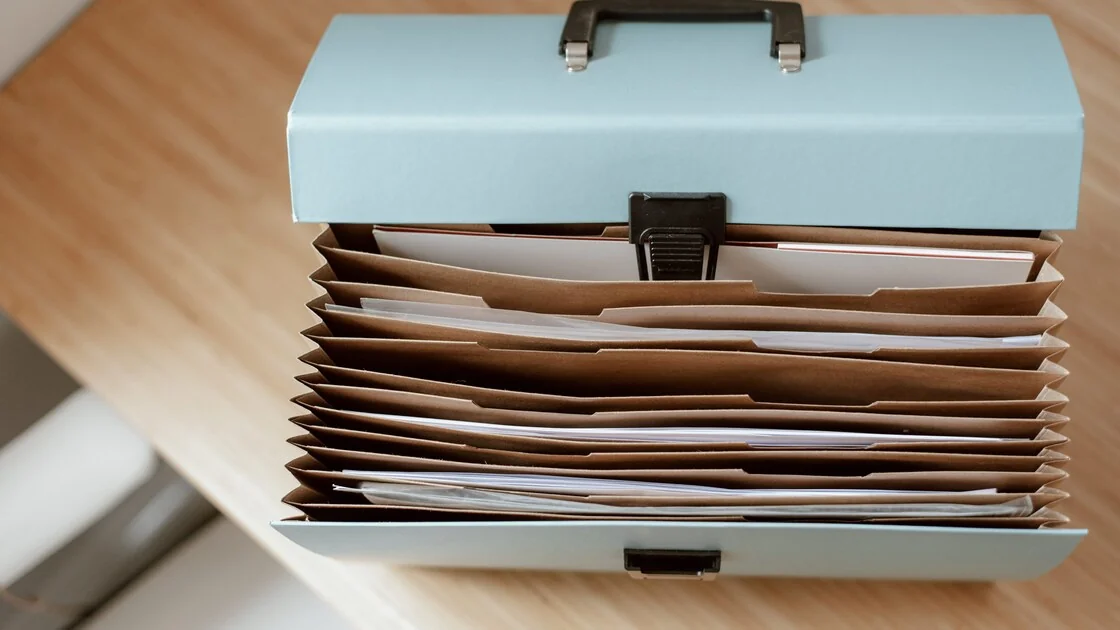

Photograph or keep the itemized receipt and proof of payment for every claimed cost, your policy documents, booking changes, and the third-party record for the event: an airline or baggage report, a medical invoice and relevant treatment record, or a police report, plus photos of damaged items, bag tags, and serial numbers. Then keep these travel insurance claim receipts and evidence as one connected record: link each item to a dated timeline, leave originals unaltered, and log every version and submission.
Key Takeaways:
- Read the applicable policy section and notification deadline before building the evidence list.
- Link every cost and document to an event, date, traveler, provider, and claimed amount.
- A card statement proves payment but may not show what was bought; keep the itemized receipt too.
- Request airline, hotel, medical, police, or transport records while systems and memories are fresh.
- Minimize sensitive data, use the insurer's official channel, and retain a submission receipt.
- Disclose refunds and other recoveries so the same loss is not claimed twice.
Evidence preparation belongs in a wider international travel record plan. The purpose is not to predict coverage; it is to give the insurer a clear, traceable account of what happened, what you lost, what you paid, and what other reimbursement you received.
Open the policy schedule, certificate, wording, endorsement, and any card-benefit guide that applied when the trip was booked. Identify the insured traveler, covered dates, relevant section, exclusions, excess or deductible, notice deadline, claim deadline, assistance number, and any requirement to obtain approval before spending. Use the insurer's current form, but preserve the policy version from the covered trip. If you can't find your travel insurance documents, ask the insurer, the card issuer providing the cover, or the seller for a copy of the certificate and wording that applied to your travel dates.
Create a one-page event header with the policy number, booking references, travelers, location, time zone, incident date, date discovered, date reported, and claim reference. Then write a factual timeline. Separate what you personally observed from what an airline, doctor, police officer, hotel, or other provider told you.
Turn policy wording into a request list rather than assuming a generic checklist is complete. Smartraveller advises travelers to read coverage, exclusions, excesses, and claim conditions and notes that cover differs between policies.[1] A delay claim, stolen-property claim, medical claim, and cancellation claim can require different evidence.
Do not rewrite history to fit a policy phrase. If an exact time or cause is unknown, mark it unknown and identify the record requested to clarify it. A consistent honest chronology is more useful than unsupported precision.
Keep the itemized invoice or receipt and separate proof that it was paid. A useful receipt shows the provider, date and local time, location, currency, line items, taxes, discounts, total, payment status, and traveler or booking reference when available. A bank or card statement can confirm payment but often cannot prove whether a charge was a hotel room, meal, medicine, transport, or replacement item.
For digital receipts, save the original email or downloadable file and a stable viewable copy. For thermal paper, photograph or scan it promptly, front and back, beside no unrelated personal documents. Keep the paper flat and dry. Do not edit away a rejected item; submit a redacted working copy only when the insurer permits it and retain the original.
Use a ledger:
| Field | Example purpose |
|---|---|
| Evidence ID | Stable reference such as E-014 |
| Incident link | Delay, baggage, medical, theft, cancellation |
| Date, time, place | Places the cost in the chronology |
| Provider and item | Explains what was purchased |
| Currency and amount | Separates local charge from conversion |
| Payment proof | Matches receipt to settled payment |
| Refund or credit | Prevents duplicate recovery |
| File name | Locates the preserved copy |
When a receipt is missing, ask the provider for a duplicate or written confirmation. Record the request and response. Do not create a substitute receipt or alter an amount; explain the gap and provide the strongest genuine supporting records available.
Match evidence to the event. For a flight problem, preserve the original and revised itinerary, boarding documents, cancellation or delay notice, actual timing, airline case number, rebooking, and any assistance offered. For baggage, keep the tag, property irregularity report, delivery or tracing record, photographs, inventory, proof of ownership, repair assessment, and carrier response.
NAIC's general claim guidance recommends documenting damage with photographs, videos, reports, and receipts, then providing the evidence requested by the insurer.[4]
For medical treatment, request an itemized provider invoice, clinical or discharge record relevant to the claim, prescription, payment evidence, assistance authorization, and fitness-to-travel statement only when needed. Avoid collecting unrelated medical history. In an emergency, seek care first; administrative perfection should not delay treatment.
For theft or loss, record when and where the item was last seen, steps taken to recover it, a police or transport-operator report where appropriate and safe, serial number, purchase evidence, photographs, age, and replacement or repair quote. A police report documents a report; it does not by itself prove ownership or coverage.
For cancellation or curtailment, keep the reason evidence, booking and fare conditions, cancellation invoices, supplier refunds, unused-value statement, and proof of any non-refundable balance. Financial Ombudsman guidance on travel insurance complaints shows the range of records involved, including the policy schedule and full terms, claim notes, medical evidence, invoices or receipts, police reports, proof of ownership, and whether a refund was claimed from an airline, tour operator, or hotel.[2]
Keep an immutable-original folder and a separate submission folder. Give files stable names such as E-014-hotel-itemized-receipt.pdf rather than IMG_8831.jpg. Maintain an index that maps each evidence ID to the event, source, original location, working copy, redaction, translation, and submitted version.
Preserve email headers and original attachments where practical. Export chats only through a supported method, and keep the visible date, participants, and case number. If you combine pages into a PDF, retain the individual originals. If a translation is required, keep the source document beside the translation and label who produced it.
Share only what the claim requires. Mask unrelated account numbers or medical information only on a working copy and only where accepted. Never redact the amount, date, provider, policy identity, or other field needed to evaluate the claimed item. Do not send a password, one-time code, recovery key, or full payment-card security code.
Use the insurer's verified portal or contact address obtained from policy documents or its official site. Check recipient, file limits, supported formats, and reference number before upload. Public links, shared family folders, and messaging apps can expose records or change access later; the travel document sharing guide explains safer delegation boundaries.
Create a submission cover sheet listing the claim number, event, requested remedy, claimed total by currency, evidence IDs, unavailable records, and other payments already received or pending. Keep descriptions factual and short. Do not bury a missing document inside a large unsorted upload.
Before sending, compare the upload set with the index. Open every file, check that it is readable and correctly oriented, and confirm that no unrelated traveler's record is included. Save the exact submitted copies in a versioned folder. If the portal renames files, preserve both your name and the displayed receipt.
Record submission date and time, channel, recipient, claim number, file list, portal confirmation, email delivery, and any upload error. Take a screenshot of the confirmation page only if it contains no unnecessary sensitive information; otherwise save the confirmation number in the log. A draft left in a portal is not proof of submission.
When the insurer asks for more material, preserve the request exactly and answer against numbered items. If a record cannot be obtained, explain who was asked, when, and what alternative evidence you provide. Never silently replace a previously submitted file; send a new version and state what changed.
Record every airline refund, hotel refund, voucher, card chargeback, employer payment, government assistance, other insurance payment, and recovered property. Note whether a voucher was accepted, used, transferable, or expired. Tell the insurer about pending recoveries as well as completed ones.
This does not mean every other payment automatically removes coverage. The policy and applicable law decide coordination, excess, subrogation, and settlement. Your job is to disclose the facts, report prior recoveries, and avoid seeking full payment for the same loss from more than one source. MoneyHelper similarly advises keeping receipts because insurers may ask for evidence of the items claimed.[3]
Maintain a contact log with date, channel, person or team, summary, promised next action, and deadline. Follow the insurer's complaint process if the decision or delay remains unresolved, then use the appropriate external dispute route for the jurisdiction. Keep the original decision letter and the exact policy clause relied upon.
Store the complete record until the claim, appeal, tax or legal retention need has ended. Then delete unnecessary working copies from shared devices and temporary links while retaining whatever the policy, regulator, or professional advice requires. Do not destroy evidence during an open dispute.
Often not. It may prove payment but not the goods, traveler, date of service, or reason. Request a duplicate itemized receipt and explain any remaining gap.
Yes. Photograph them promptly in good light, keep all edges visible, and retain the original. Thermal paper can fade, so do not wait until the claim deadline.
Follow the insurer's instructions. Keep the original with any translation and label the translator or method; do not replace the source document.
Record the request and refusal, then provide genuine alternatives such as correspondence, booking records, payment proof, photographs, or an official case number. Do not fabricate a report.
Only on a working copy and only where the insurer accepts it. Preserve the original and do not hide fields needed to identify the policy, event, provider, amount, or loss.
Yes. Record refunds, credits, vouchers, chargebacks, and other payments, including pending ones, so the claim can be assessed against the actual remaining loss.
No. It may protect a connection within its technical scope, but policy terms, evidence, the insurer, and applicable dispute rules determine the outcome.
This article provides general record-keeping information, not insurance, legal, medical, tax, or financial advice. Coverage, evidence, deadlines, privacy duties, and dispute routes depend on the policy and jurisdiction.
Sources checked 4 October 2026.
Sign up to experience all premium features at no cost.
*Available only to new users. Each user is limited to one trial.