Start your 3-day free trial
Sign up to experience all premium features at no cost.
*Available only to new users. Each user is limited to one trial.
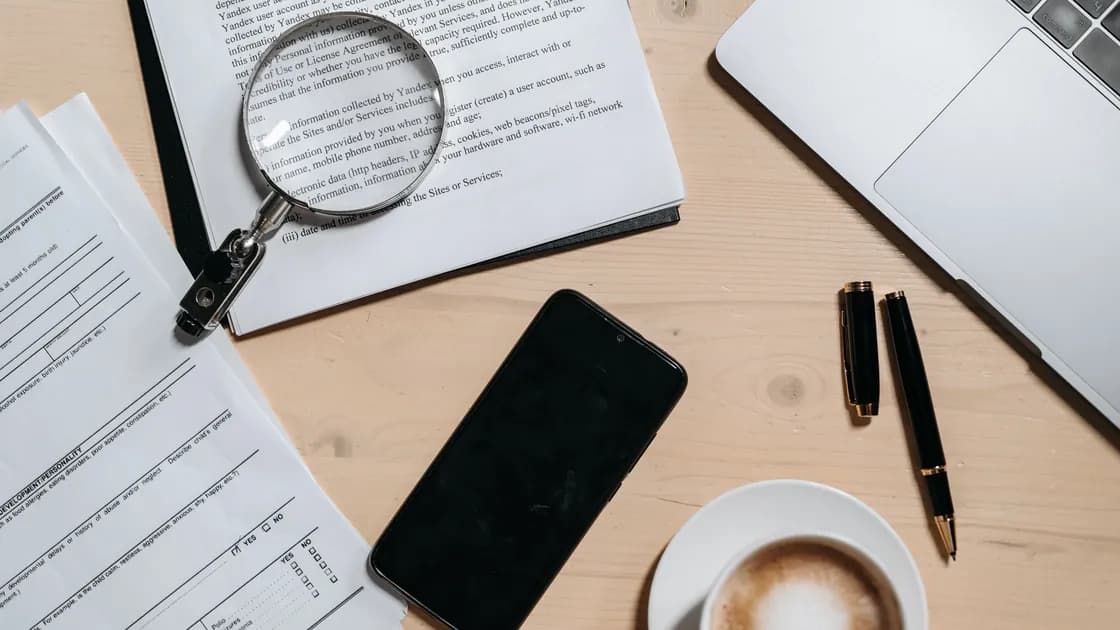

If a university requires original documents after arrival, verify the request through the institution's published channel before handing anything over. Confirm which office is responsible, whether it needs to inspect an original or retain it, what alternatives are accepted, and how custody, return, and registration will be recorded.
Key Takeaways:
- Authenticate the notice and responsible office independently.
- Separate inspection of an original from surrendering it for retention.
- Bring only the minimum document set named in current instructions.
- Obtain a receipt whenever an original leaves your hands.
- Confirm both document return and the resulting student-status record.
Original-document checks are one part of a broader international study and travel plan. Admission, immigration, right-to-study, academic registration, and identity systems can request different evidence. Do not assume that satisfying one automatically closes the others.
Preserve the message, attachment, sender, portal location, date, deadline, appointment details, and exact wording. Then find the relevant registration, international student, admissions, or compliance page by navigating from the university's official website. Use the published phone number or authenticated portal to confirm that the request is genuine.
Ask which office owns the check and whether the named staff member, building, and appointment system are correct. Do not send passport scans, immigration credentials, tax numbers, or academic certificates to an unfamiliar email address simply because the message uses a university logo or knows your student number.
Check whether the request applies to you. Some processes depend on nationality, immigration status, course, document type, digital-status availability, or whether an earlier upload could be verified. Ask the office to cite the current instruction and explain any deadline or registration consequence.
If this request is part of general arrival check-in, use the international student office registration guide for the broader sequence. Keep this page focused on authenticity, necessity, custody, and return of originals.
Make a line-by-line list from the verified instruction. For each item, record whether the university needs the physical original, a certified copy, an ordinary copy shown beside the original, an official electronic status, a share code, a sealed transcript, or a document sent directly by the issuer. These formats are not interchangeable.
Ask whether “original” means issued by the authority, bearing a physical signature or seal, or simply not a screenshot. Confirm whether a translation must accompany it, who may certify a copy, whether expired documents are relevant to status history, and whether the office will scan the document while you wait.
The University of Bristol's right-to-study guidance gives specific circumstances in which students must bring original documents for an in-person check.[1] By contrast, the University of Illinois describes an international-student check-in process completed through an online form and uploads.[2] These first-party examples show why you must follow your institution's current process rather than assume a universal physical-original rule.
If the requested item is an enrollment letter that the university itself has not issued, track the missing enrollment confirmation with the registrar. Do not substitute an unrelated admission email without written acceptance.
Ask why each original is necessary, what fields will be recorded, whether a copy will be retained, which system receives it, who can access it, and how long it is kept. An office may need to inspect a passport to confirm identity without needing a full permanent copy of every page.
For identity and immigration documents, ask whether the university can mask unrelated numbers or avoid copying pages that are not required. For academic records, distinguish checking authenticity from reassessing grades or retaining the only issued certificate. For financial documents, verify that the request belongs to an authorized admissions or compliance process rather than an informal payment query.
Do not alter, laminate, annotate, or remove seals from an original to make it easier to submit. If the instruction conflicts with the issuing authority's warning—for example, that a document must remain sealed—ask both owners for a compatible process in writing.
Use the guidance on protecting identity documents when moving abroad to separate travel copies, disclosure copies, and irreplaceable originals. Redact only when the university confirms a redacted version meets the requirement.
Book through the official appointment system and record location, accessibility arrangements, named office, reference, cancellation rules, and expected duration. If the deadline is close but no appointment is available, notify the office before the deadline and retain the ticket showing when you tried.
Create a checklist with one row per requested item: exact name, issuing authority, original or accepted alternative, translation, copy, delivery method, and return expectation. Carry only the minimum set. Keep unrelated passports, family records, bank statements, and certificates secured rather than bringing an entire personal archive.
Make a private inventory of each original's document number, issue date, condition, and number of pages. Store an encrypted or otherwise access-controlled recovery copy separate from the originals. The offline travel-document backup guide explains how to retain a recovery route without exposing every document on a daily-use device.
Use a protective folder and keep documents with you in transit. Do not leave originals at a reception desk, residence office, courier drop, or with a student volunteer unless the verified procedure expressly assigns custody and provides a receipt.
At the appointment, confirm the staff member, purpose, document list, and whether each original will be inspected immediately or retained. Watch the inspection where permitted. If staff need to take an original away, request a receipt before releasing it.
The receipt should identify the institution and office, your student reference, each document, page or envelope count, date and time, recipient, purpose, expected return date, collection method, and contact for escalation. Photograph or securely save the signed receipt. Do not accept a vague note saying “documents received” for a passport or irreplaceable certificate.
If asked to use an unplanned courier or email address, pause and verify the change through the published office contact. Use tracked, insured, signature-required delivery only when the university's official process requires shipping and the issuing authority permits it. Never send an original passport through an informal messaging contact.
When collecting retained items, inspect names, pages, seals, covers, and condition before leaving. Sign only for documents actually returned. Report a missing or damaged original immediately to the university and, where relevant, the issuing authority or police under the applicable local process.
Ask for the result of the check: verified, pending, rejected, or requiring another item. Record which system was updated, the effective date, and any remaining hold. A returned passport proves custody ended; it does not prove that registration or right-to-study verification succeeded.
Check the student portal after the stated processing interval. If the hold remains, reply on the same case with the appointment receipt and ask which field is unresolved. Keep admissions, academic registration, immigration reporting, fee access, and student-card production as separate statuses.
If the university rejects a genuine document, request the reason and accepted remedy in writing. It may require direct verification from the issuer, a certified replacement, a corrected name record, or a formal review. Do not buy a fabricated replacement or let an unverified intermediary “fix” an official document.
Some institutions and status checks do; others use online evidence. Verify the current rule for your university, course, status, and document type rather than relying on another student's process.
Inspection does not automatically require retention. Ask whether staff can check it while you wait and what official rule requires custody if they cannot.
No. Acceptance depends on the document, purpose, institution, certifier, and jurisdiction. Obtain written confirmation before substituting a copy.
It should identify every item, page or envelope count, receiving office and person, time, purpose, return date and method, and an escalation contact.
Only if the verified instructions allow it. Emailing a scan may expose personal data yet still fail an in-person or electronic-status requirement.
Contact the responsible office before it passes, show your earliest booking attempt, explain the constraint, and ask for a written interim instruction.
Obtain the recorded outcome and review the relevant portal or hold. Document return, identity inspection, and completed registration are distinct events.
Disclaimer: This guide provides general administrative and document-safety information, not legal or immigration advice. Evidence, inspection, retention, privacy, right-to-study, and registration rules vary by institution, country, jurisdiction, status, and document.
Sources checked 12 September 2026.
Related Reading:
Sign up to experience all premium features at no cost.
*Available only to new users. Each user is limited to one trial.