Start your 3-day free trial
Sign up to experience all premium features at no cost.
*Available only to new users. Each user is limited to one trial.

For many people, the first thing they notice after connecting to a VPN is slower internet. In reality, even a perfectly configured VPN setup adds some network overhead. The good news is that with a high-quality VPN service and the right protocol, server, and connection settings, the speed loss can be small enough that you barely notice it.
If pages load slowly, videos buffer, or games feel laggy, the usual causes are physical distance, overloaded servers, poor protocol choice, or restrictions on the local network.
Without a VPN, your device usually follows your ISP's direct route to a website. With a VPN, your data first enters an encrypted tunnel and travels through a VPN server before reaching the site. That creates four main speed factors.
Data is limited by physics. Even through fast fiber, longer distance still adds latency[1]. If you are in Asia, a Hong Kong or Japan server is usually faster than a New York server because the route is shorter.
A VPN also adds a detour. Your data travels to the VPN server, gets decrypted, reaches the website, then returns through the VPN server and is encrypted again. That detour is one of the biggest reasons for speed loss.
VPNs encrypt packets before sending them and decrypt them at the VPN server. Modern algorithms such as AES-256 and ChaCha20 are secure, but they still use CPU resources.
New phones and computers usually handle this well, and some hardware includes AES acceleration. Older phones, low-end routers, and whole-home setups with many devices can become CPU-bound and slow down VPN traffic.
Even a wide highway slows down when too many cars enter at once. VPN server capacity directly affects speed. If a provider has weak infrastructure or too many users on limited bandwidth, speeds fall during peak hours.
On normal networks, efficient protocols such as WireGuard are often enough. In environments with strict firewalls and deep packet inspection (DPI), encryption alone may not be enough.
To avoid identification and blocking, VPN tools may need obfuscation, which disguises VPN traffic as ordinary HTTPS traffic[2]. Header masking, packet reshaping, and extra handshakes can all add delay.
If your VPN feels too slow, do not give up yet. Work through these steps one by one.
This is the highest-impact first move. If you only need privacy or general browsing, use the nearest reliable server. In Asia, test Hong Kong, Japan, or Singapore before Europe or North America.
Free VPNs usually cannot fund enough high-speed bandwidth and often crowd many users onto a small server pool. Congestion and throttling are almost inevitable.
The VPN protocol controls speed, security, and compatibility. If you are using an older or heavier option, switch to something lighter.
| Protocol | Speed | Security | Best for |
|---|---|---|---|
| WireGuard | Very fast 🚀 | High | Browsing, streaming, downloads |
| IKEv2 | Fast | High | Mobile devices switching between cellular and Wi-Fi |
| OpenVPN (UDP) | Medium | Very high | Compatibility and some firewall bypass scenarios |
| OpenVPN (TCP) | Slowest 🐢 | Very high | Only for very poor networks with frequent packet loss |
Split tunneling lets you choose which apps use the VPN and which use your local connection. For example, send your browser through the VPN while local messaging, domestic video apps, or games stay direct. This reduces VPN load and avoids location mismatches for local services.
Slow pages are not always the VPN's fault. Too many cookies and stale cache files can slow loading. Clear the browser cache or test with a lighter browser such as Brave or Firefox.
Steam updates, P2P downloads, cloud backups, and system updates can consume bandwidth without warning. If speed suddenly drops, check background traffic first.
If the device running the VPN is overloaded, a restart can free memory and clear software conflicts. It sounds basic because it is, but it often works.
Routers that run for too long can suffer from channel congestion, heat, memory pressure, or stale NAT states. Power cycling the router can improve stability.
Evening hours are often peak time for international or long-distance routes. A good VPN cannot fully overcome congestion in the broader internet path.
Some ISPs, schools, or workplaces limit common VPN ports such as OpenVPN's 1194. Switching to an HTTPS-like 443 port may avoid some hidden throttling.
Wi-Fi is affected by walls, Bluetooth devices, microwaves, and neighboring routers. A wired Ethernet connection usually reduces jitter and improves download speed.
Strong encryption needs compute power. If your base connection is fast but your phone or router becomes slow as soon as the VPN is on, the processor may be the bottleneck. Upgrade the device or use a stronger router.
It sounds counterintuitive, but a VPN may improve speed in one limited situation: content-based ISP throttling.
Large-scale research has found content-based traffic differentiation, particularly for video, on some networks[3]. Because a VPN encrypts the traffic inside its tunnel, it can make application-level classification harder. It cannot fix congestion, a plan-wide speed cap, or throttling based on the VPN endpoint itself.
Use this simple baseline process:
With a high-quality paid server in the same country or nearby region, a 10% to 20% drop is common. If you connect to the other side of the world, 30% to 50% can happen.
It can be. Phones are limited by battery, heat, and wireless network variability. Desktop CPUs and wired connections often handle sustained encryption better.
Corporate VPNs are designed for internal access, security, and compliance. Their servers may sit at headquarters, and many remote employees share one gateway. They are rarely optimized for streaming or fast browsing.
Almost always. Free providers often use congested data centers and limited bandwidth. When many users connect at once, real speeds can collapse.
It can. Competitive games are sensitive to ping. If you use a VPN for cross-region gaming, pick a gaming-optimized nearby server and test UDP-based protocols first.
Start by switching to a closer server, using WireGuard, closing background downloads, and testing split tunneling. Those steps solve many cases.
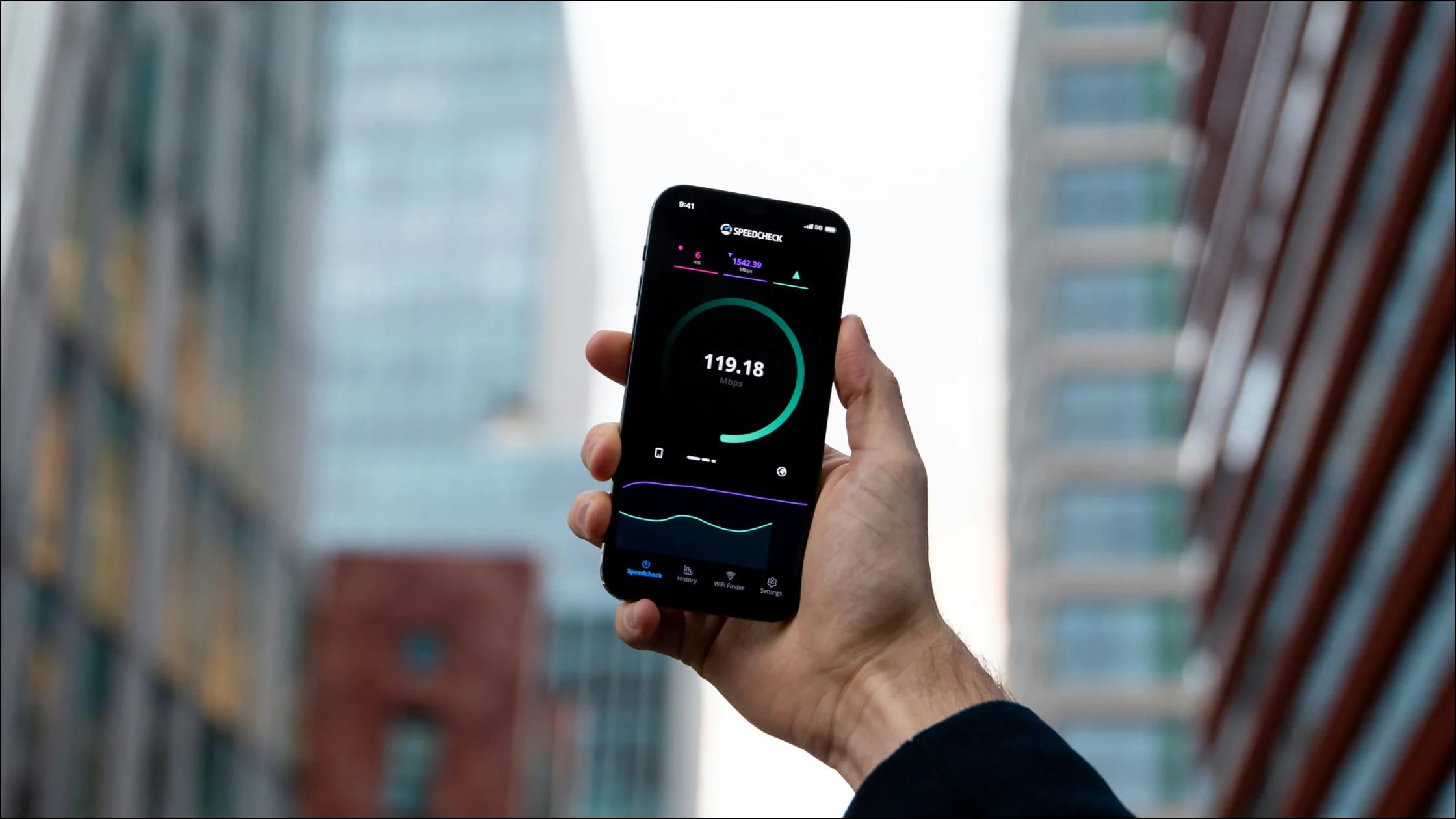
A good VPN speed should support your main activity without obvious buffering. If your base broadband is 100 Mbps and the VPN keeps 60-80 Mbps while streaming 4K smoothly, that is a strong result.
Disclaimer Using a VPN is not a shield for illegal online activity. Always use proxy and privacy tools responsibly and in accordance with local laws.
In “Does a VPN Slow Down Internet 12 Speed Fixes”, treat AethoVPN as one VPN option rather than a guarantee of access, speed, compatibility, or results.
Sources
Sources checked 5 August 2026.
Related Articles:
Sign up to experience all premium features at no cost.
*Available only to new users. Each user is limited to one trial.