Start your 3-day free trial
Sign up to experience all premium features at no cost.
*Available only to new users. Each user is limited to one trial.
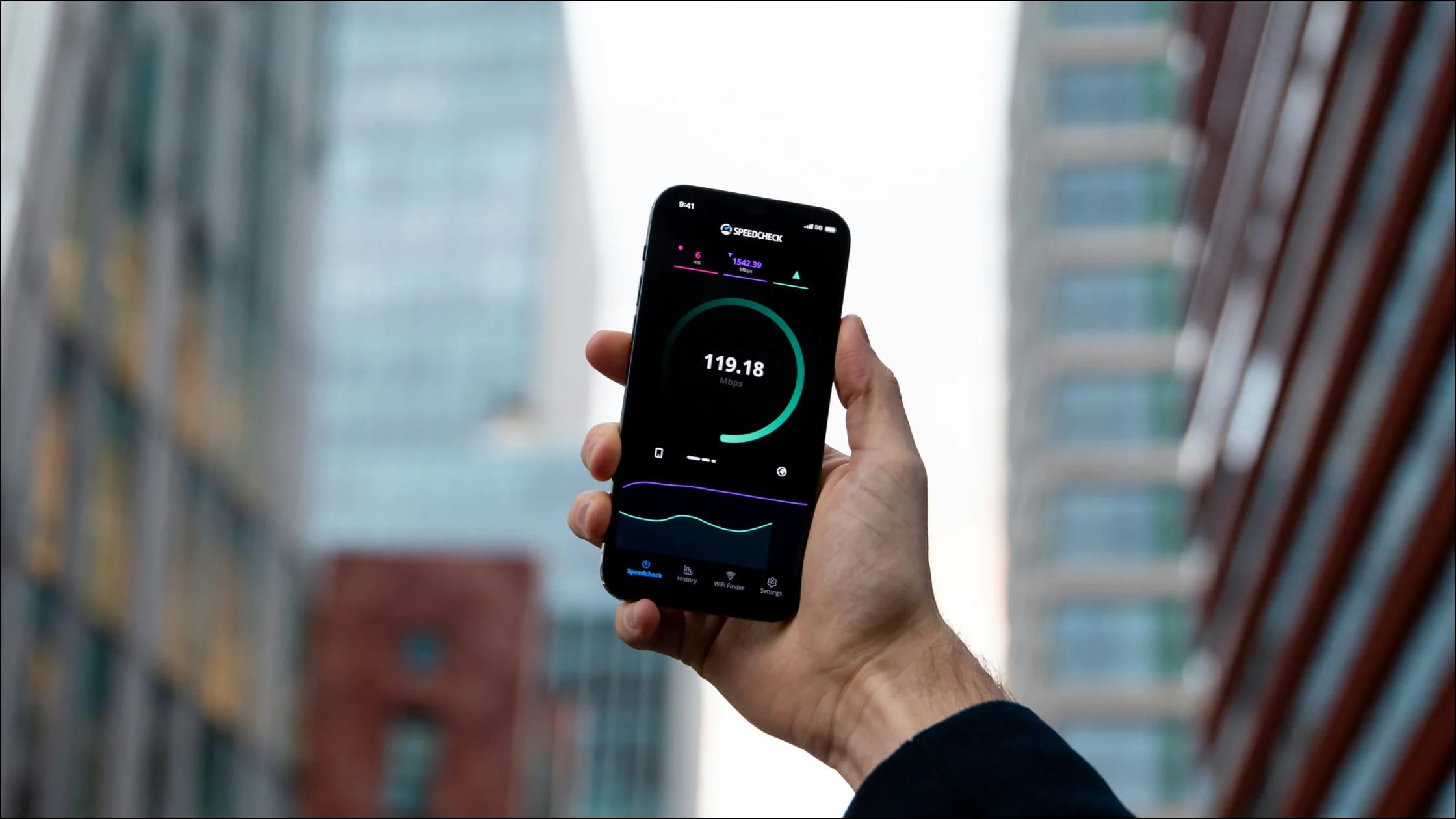

Running a VPN speed test does not require complex tools. The practical method is to test your baseline connection first, connect to the VPN on the same device and the same speed test site, then compare download, upload, and latency together. That tells you not only whether the VPN slowed the connection, but whether the difference affects streaming, meetings, or gaming.
The quick rule: some speed loss is normal with a good VPN. But if latency spikes, download speed is nearly cut in half, and switching servers does not help, you should troubleshoot protocol choice, server load, or the local network.[1][2]
If you want the VPN fundamentals first, read our complete VPN beginner's guide.
The safest VPN speed test takes three steps.
| Step | What to do | Why it matters |
|---|---|---|
| 1 | Disconnect the VPN and test baseline speed | Creates the original network reference |
| 2 | Connect the VPN and retest on the same speed test site | Removes test-site differences |
| 3 | Record download, upload, and latency | Shows whether real usage is affected |
Disconnect the VPN, then pause cloud sync, game downloads, online video, and large file transfers. The numbers you get are your baseline.
Record at least three metrics:
After connecting, do not test just one server and call it done. Test at least:
VPN speed depends on protocol, physical distance, server load, and congestion at the time of testing. WireGuard describes itself as a faster, lighter modern VPN protocol, and its older public performance page also shows a design direction toward higher performance compared with heavier OpenVPN setups.[1][2]
Do not only ask how many Mbps remain after connecting. Compare it with the baseline:
Speed loss = (baseline download speed - VPN download speed) / baseline download speed × 100%
If your original download speed is 200 Mbps and VPN download is 160 Mbps, the speed loss is 20%.
Many people only look at download speed and miss half the problem. A complete test should include at least three metrics.
For web browsing, streaming, and file downloads, download speed is the key number. Netflix recommends at least 3 Mbps for HD, 5 Mbps for full HD, and 15 Mbps for 4K Ultra HD.[3]
So if you still have 50 Mbps after connecting to the VPN, browsing and 4K streaming are usually fine. If you only have 8 Mbps, 1080p may work, but 4K is likely to buffer.
If you use video calls, large uploads, or livestreaming, upload speed matters. Zoom's Web App bandwidth guidance lists about 1.2 Mbps up/down for 1:1 720p calls and about 3.8/3.0 Mbps for 1080p.[4]
That explains a common case: download speed looks fine, but meetings are blurry, choppy, or delayed. The issue is often upload or latency.
High latency affects interaction first. Games feel delayed, meetings get awkward pauses, and remote desktop feels sluggish.
If you care about interaction, latency matters more than peak bandwidth. WireGuard's older performance test showed lower ping time than OpenVPN. The data is older and directional, but it supports the idea that lighter protocols often fit low-latency scenarios better.[2]
There is no universal threshold, but this table is a useful reference.
| Test result | Meaning | How it feels |
|---|---|---|
| Download loss under 10% | Excellent | Almost unnoticeable in most cases |
| Download loss 10%-25% | Normal | Browsing and streaming usually fine |
| Download loss 25%-40% | Acceptable | Common on long-distance servers or peak hours |
| Download loss over 40% | Troubleshoot | Protocol, server, load, or local network may be wrong |
| Small latency increase | Normal | VPN routing usually adds delay |
| Latency doubles and varies | Troubleshoot | Gaming, calls, and remote control will suffer |
The practical question is not "is this number high?" It is "is this enough for what I am doing?" Streaming mostly needs download; meetings need upload and stability; games need low latency.[3][4]
Your traffic does not go straight to the site. It first goes to the VPN server. The farther the server, the longer the round trip, and the higher the latency usually becomes.
If you only need encryption on public Wi-Fi, a nearby server is usually fastest. If you need a specific region, accept some cross-region delay. For the underlying concept, read What is a VPN tunnel?.
WireGuard, OpenVPN, and IKEv2 often perform differently under the same provider. WireGuard calls itself a "fast, modern, secure VPN" and emphasizes performance as a design goal. Its public performance page is older, but it still shows why it is often faster and lower-latency than OpenVPN.[1][2]
If your VPN app supports protocol switching, record the protocol during tests. For more context, read our VPN protocol comparison guide.
Two servers in the same region can perform differently. The reason is usually not that the country is slow. One server may simply be more crowded.
If Wi-Fi is unstable, background sync is active, or the router is overloaded, the VPN may amplify an existing problem. Check the non-VPN baseline first. If the baseline is unstable, the VPN is usually not the root cause.
Network load changes constantly. Run three tests in the same time window and use the median instead of trusting one peak result.
Different speed test sites use different server locations and routing logic. Mixing them can distort the result.
If your signal is fluctuating, you cannot judge the VPN fairly. Use Ethernet on desktop when possible, and make sure phone Wi-Fi is stable.
Speed tests are a lab signal. Real experience comes from opening pages, watching video, joining calls, and launching games.
Do not switch providers immediately. Troubleshoot in this order:
If you have not checked for VPN leaks or connection problems, read How to test whether your VPN connection is working.
If you rely on a VPN daily, test when you change networks, switch protocols, or notice obvious lag. If everything feels fine, every few weeks is enough.
It depends. Video needs download, calls need upload and stability, and gaming cares most about latency.
Common reasons include server load, ISP route changes, peak-hour congestion, and switching protocols or servers.
Not necessarily. Long-distance servers, cross-border routing, and congestion can cause around 30% loss without meaning the VPN is broken. The key is whether your real use suffers.
Upload speed or latency is usually the problem. High download speed does not guarantee smooth video calls.[4]
Often, but not always. Device performance, provider implementation, server load, and network conditions all matter. WireGuard's positioning and public benchmarks suggest it usually favors performance.[1][2]
Not fully. Phone Wi-Fi, cellular networks, chip performance, and background tasks differ from a computer. Test them separately.
Disclaimer Speed test results vary with device performance, network environment, time of day, and server load. This article provides general testing methods and does not guarantee fixed speeds on any specific node or third-party network.
In “VPN speed test”, treat AethoVPN as one VPN option rather than a guarantee of access, speed, compatibility, or results.
Sources
Sources checked 8 May 2026.
Related Articles:
Sign up to experience all premium features at no cost.
*Available only to new users. Each user is limited to one trial.