Start your 3-day free trial
Sign up to experience all premium features at no cost.
*Available only to new users. Each user is limited to one trial.

You open your VPN app, click connect, and see a little lock icon. Are you actually safe? Not always. A VPN tunnel can be established while your real identity still leaks through protocol fallback, browser behavior, or conflicting system settings. A repeatable VPN test routine is the only dependable way to verify your online privacy.
Key Takeaways
- IP leak testing is the first step. If your real IP remains visible after connecting to a VPN, every other protection is compromised.
- DNS leaks are harder to notice: your IP may be hidden while DNS requests still go through your ISP.
- WebRTC leaks are browser-level risks many users never think about.
- Speed tests help you tell normal encryption overhead from a real configuration problem.
- The full routine takes less than 10 minutes and is worth running at least once a month.
💡 AethoVPN can establish the encrypted connection, but you should still test the public IP, DNS, IPv6, and reconnect behavior yourself; do not infer a protection feature unless the current official app or documentation shows it.
Many people install a VPN and never check it again. If you are still learning the basics, start with our complete VPN guide. A VPN app is not a “set it and forget it” tool. Operating system upgrades, browser updates, and router firmware changes can all weaken tunnel integrity without obvious warnings.
IETF security guidance repeatedly emphasizes that encrypted tunnel effectiveness must be verified continuously, not assumed from the client’s status screen.[1] In other words, “connected” only proves the handshake succeeded. It does not prove every packet is inside the encrypted tunnel.
Retest immediately after:
This is the most direct check. If your real public IP is still exposed after connecting to a VPN, your location and identity information are visible online.
Steps:
How to read the result:
| Signal | Normal (VPN working) | Abnormal (leak present) |
|---|---|---|
| IP address | VPN server IP | Your home ISP IP |
| ISP name | VPN provider or data center | Your internet provider |
| Location | Country of selected VPN node | Your real city |
Common fixes:
DNS leaks are more subtle. When you visit a website, your system first asks a DNS server for the domain’s IP address. If that request bypasses the VPN and goes directly to your ISP, your browsing history remains visible even when your IP is masked.
Steps:
How to read the result:
Every DNS server in the result should belong to your VPN provider or a trusted secure DNS provider such as Cloudflare or Google. If you still see your local ISP, your DNS requests are leaking.
Common fixes:
1.1.1.1 (Cloudflare) or 8.8.8.8 (Google) as a backup.WebRTC, or Web Real-Time Communication, is built into modern browsers for video calls and voice chat. The problem is that WebRTC can probe local and public IP addresses while creating peer-to-peer connections, and that behavior may operate outside the VPN tunnel.[3]
Steps:
How to read the result:
After connecting to the VPN, the page should show only the VPN-assigned IP or no IP at all. If your real public IP or a 192.168.x.x local address appears, you have a WebRTC leak.
Common fixes:
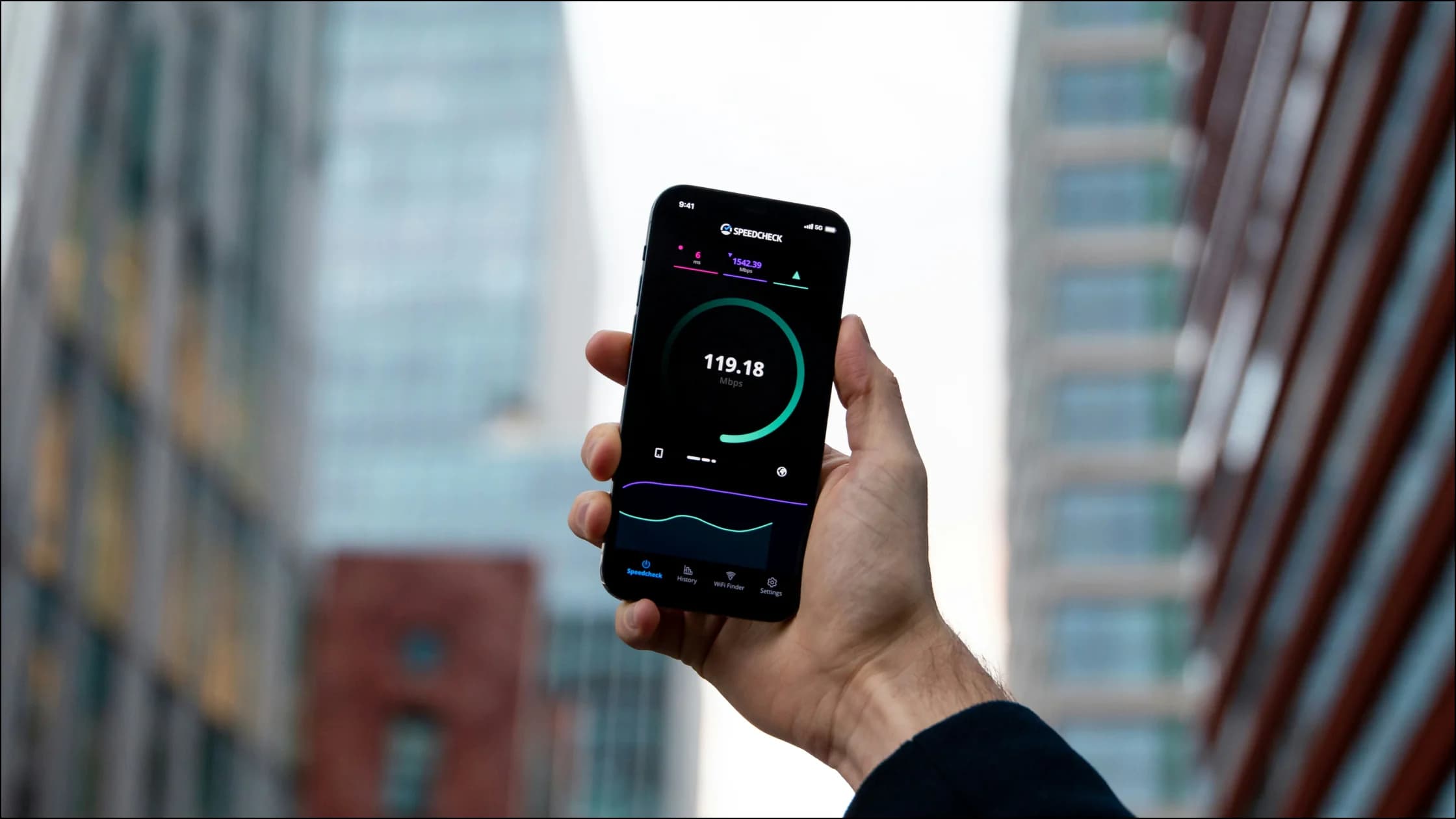
about:config, search for media.peerconnection.enabled, and set it to false.Speed drops are the most common VPN complaint, but slower does not always mean broken. Encryption and longer routing add overhead. The question is whether the overhead is reasonable.
Steps:
How to read the result:
| Speed loss | Rating | Likely cause |
|---|---|---|
| 10%-30% | Normal | Encryption overhead and extra routing hops |
| 30%-50% | Acceptable but worth optimizing | Distant server or peak congestion |
| Over 50% | Troubleshoot | Wrong protocol, overloaded server, or ISP throttling |
Common fixes:
This test checks the VPN software itself, not the connection. VPN installers downloaded from unofficial sites may include ad injectors, keyloggers, or ransomware.
Steps:
How to read the result:
If all engines mark the file clean, the installer is probably safe. If several well-known engines such as Kaspersky, Bitdefender, or ESET warn at the same time, stop and choose another provider.
VirusTotal only detects known malicious signatures. A clean installer does not prove the VPN provider avoids logging on the backend. Independent security audits are still the stronger trust signal.[4]
If any test fails, do not uninstall the VPN immediately. Most failures can be fixed with basic system and app adjustments.
If the basics do not help:
If IP, DNS, or WebRTC tests keep failing after all protections are enabled, the problem may be the VPN service itself. A reliable VPN should pass these five tests on default settings without asking users to patch protocol-level weaknesses manually.
A normal home test is useful, but it is not the whole travel check. Before you leave, repeat the basic IP, DNS, and speed checks on a second connection, such as cellular data or a trusted hotspot. This helps you distinguish a client problem from a hotel, airport, or carrier network problem.
Use a short pre-trip sequence:
If one server fails while another works, record that result rather than repeatedly changing unrelated settings. The VPN for international travel guide covers the wider preparation checklist, while the captive-portal troubleshooting guide covers the most common airport and hotel exception.
Open an IP test site such as BrowserLeaks or IPLeak.net before and after connecting. If the IP address and ISP name change, the basic tunnel works. For better assurance, also run DNS and WebRTC tests.
Run the full five-test routine at least once a month. If you often use public Wi-Fi in cafes or hotels, run a quick check after each new network. Retest after VPN app or operating system updates too.
Yes. BrowserLeaks, DNSLeakTest.com, IPLeak.net, VirusTotal, and Speedtest by Ookla are free and require no account. A browser is enough for the full routine.
Some speed loss is normal. Encryption uses computing resources, and traffic takes extra routing hops through the VPN server. WireGuard, nearby servers, and avoiding peak times usually keep the loss around 10%-30%.
Yes. Some antivirus and firewall products intercept or inspect encrypted traffic, which can prevent a VPN tunnel from forming correctly and cause IP or DNS test failures. If you test with security software disabled, turn it back on immediately afterward.
Use the same method as on desktop. Open BrowserLeaks or DNSLeakTest.com in your mobile browser, record baseline data with the VPN off, then connect the VPN and test again. iOS and Android both support these web tools, though WebRTC behavior varies by browser.
No. These tests confirm there are no obvious transport-layer leaks, but they cannot prove whether the VPN provider logs connection data on the backend. Full security also requires an audited provider with a strict no-logs policy.
Disclaimer: This article is for general informational purposes only and does not constitute legal, technical, or other professional advice. We make no guarantees regarding the accuracy, completeness, or timeliness of the content. When using AethoVPN, please follow your local laws and our terms of service.
Sources:
Sources checked 8 May 2026.
Related Articles:
Sign up to experience all premium features at no cost.
*Available only to new users. Each user is limited to one trial.