Start your 3-day free trial
Sign up to experience all premium features at no cost.
*Available only to new users. Each user is limited to one trial.
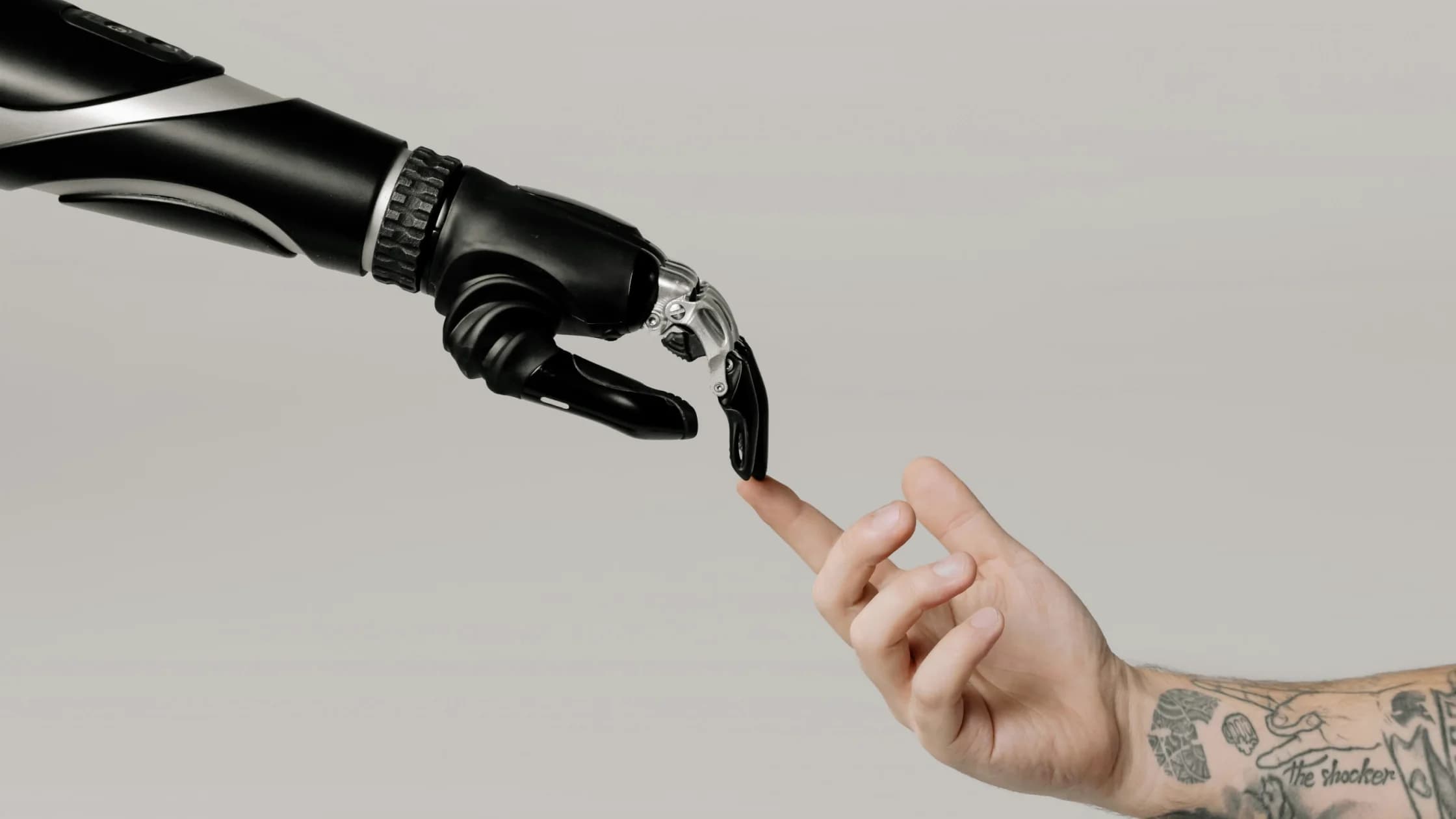

Will AI replace humans? If you mean “will AI take over the world tomorrow and push humans out completely,” the answer is clear: no. What is happening today is more practical and more immediate: AI is rapidly reshaping many tasks and jobs, but it is still far from true general intelligence, fully autonomous decision-making, or total replacement.[1][2][3]
For most people, the bigger near-term concern is not “robots waking up.” It is job tasks being rearranged, low-skill work being repriced, and the data you hand to AI tools becoming a new privacy exposure.
If you care more about real usage boundaries than science-fiction endings, start with Is Your Data Safe When Using AI Tools? Privacy Guide. It covers the data, permissions, and retention choices you actually control.
For a general task and review workflow, see How to Use AI: A Beginner’s Guide to Useful Results.
Key Takeaways
- Today’s AI is powerful, but it is still mostly a set of task-specialized systems, not human-level general intelligence.[2][3]
- The WEF 2025 report estimates that by 2030, 170 million jobs will be created and 92 million displaced, for a net gain of 78 million jobs.[1]
- AI is more likely to restructure work than erase all work at once.[1]
- For individuals, privacy, data boundaries, and learning how to collaborate with AI are more immediate than a doomsday takeover scenario.[3]
Many arguments about AI are not really about disagreement. They are about people using the same phrase to mean different things.
There are at least three layers:
The first two are happening now. The third remains a long-term, highly uncertain question without consensus.
If you want to focus on changes that already affect work and access, read Cursor / GitHub Copilot region restriction fixes.
Stanford HAI’s 2025 AI Index Report highlights continued AI progress on difficult benchmarks.[2] That is why AI feels dramatically stronger than it did a few years ago in areas such as:
These abilities are already enough to change how many jobs are done. But “can perform many tasks” is not the same as “has stable world understanding, long-term goal management, and common-sense judgment.”
Even strong large language models are still best understood as compressed pattern systems. They can look like they “understand” in many tasks, but that does not mean they have stable, autonomous, cross-context human understanding.
The training objectives, tool permissions, runtime environments, and deployment boundaries of mainstream AI are still decided by humans. Current systems do not independently form long-term social goals outside those frameworks.
NIST’s Generative AI Profile places strong emphasis on risk management, trustworthiness, and organizational usage boundaries.[3] That tells us the industry’s priority is not “AI is already unstoppable.” It is “AI is still not safe enough to use without guardrails.”
The World Economic Forum’s Future of Jobs Report 2025, published on 7 January 2025, gives a useful anchor: by 2030, it expects 170 million jobs to be created and 92 million displaced, for a net gain of 78 million.[1]
That does not mean “everyone is safe.” It means:
The more realistic risk is not everyone losing work at the same time. It is people who cannot use AI struggling to compete with people who can.
Jobs are usually more exposed when they involve:
That is why administrative support, basic copywriting, junior data cleanup, and some visual production roles are often discussed. WEF also notes that AI and information-processing technologies will grow some roles while reducing others.[1]
AI is still much weaker at replacing:
That is why “AI will replace all humans” is usually too blunt. A more accurate version is: AI will first change the structure of many jobs.
When AI can quickly produce drafts, plans, and answers, people can slowly turn an assistant into a default decision-maker. The real skill loss is often review ability and context judgment.
AI makes tasks that once required more baseline skill easier to start. That is good for productivity, but it can also make some roles more competitive.
This is the part I would worry about first. Many people fear AI takeover while pasting contracts, code, customer data, and private text into public models. Compared with distant robot-rule scenarios, this risk is already here.
If you often use chat-based AI tools, pair the practical privacy advice in the AI tools privacy guide with Is ChatGPT Safe? Privacy Risks and Safe Use Guide.
Not everyone needs to train models, but almost everyone needs to know how to use AI for productivity, editing, research, and organization.
The more you rely on AI, the more you need to practice reviewing, choosing, and taking responsibility.
Do not feed everything into public AI tools. Customer data, source code, quotes, contracts, and account information need stricter boundaries.
For concrete steps, read Is Your Data Safe When Using AI Tools? Privacy Guide.
The practical response to uncertainty is a reviewable plan, not a prediction about a single AGI date. Start by listing the tasks you do each week and divide them into four groups: tasks AI can draft, tasks AI can accelerate with evidence, tasks that still require human judgment, and tasks that should not be delegated because of privacy, safety, or accountability.
For each task you give to an AI tool, keep a small record:
This turns AI use into a controlled collaboration loop. It also makes the limits visible: a model can produce a plausible draft without owning the decision, the data, or the consequences.
Use low-risk examples to learn a tool before applying it to important work. Ask for assumptions, alternatives, and an uncertainty list. Open the original source for each consequential claim, run generated code in an isolated environment, and compare calculations with an independent method. Treat links, citations, dates, and tool actions as untrusted until checked.
A faster draft is useful only if someone can explain why it is correct and what was rejected. Define an approval point for customer communication, employment decisions, financial actions, medical or legal material, production changes, and any request involving another person's private data. If no one can take responsibility for the result, do not automate the step.
Classify prompts and files before sending them. Remove passwords, API keys, identity documents, private customer data, unpublished code, and unnecessary personal details. Check the provider's retention and training controls, the workspace policy, and the browser or connector permissions. A VPN can protect a network path, but it does not decide what the AI provider may process.
The goal is not to reject useful automation. It is to keep the tasks that AI handles legible, reversible, and subject to review. That approach remains useful whether models improve slowly, quickly, or in an unexpected direction.
Will AI replace humans? The short answer is neither “never” nor “immediately.” AI is already strongly reshaping tasks and job structures.[1][2][3]No. So far, there is no reliable evidence that AI is close to that level of fully autonomous control.
It will displace some work and create new work. A better framing is that AI will reshape many jobs rather than only destroy them.[1]
There is no consensus. Expert forecasts range from “within a few years” to “possibly not for a very long time.”
Both matter. For many everyday users, privacy and uncontrolled data input are the more immediate risks.
No. The earlier you treat AI as a collaboration tool rather than a mystery box, the easier it is to build an advantage at work.
Beyond account and regional availability, pay attention to upload boundaries, browser permissions, chat history, and network privacy basics.
Disclaimer
This article is for general discussion of technology trends and risks. It does not constitute investment, career, legal, or compliance advice. Assessments about AGI, job changes, and policy regulation may change as research, markets, and laws evolve.
AethoVPN publishes “Will AI Replace Humans Evidence, Limits, and Real Risks”; a VPN cannot replace its checks.
Sources:
Sources checked 22 August 2026; recheck fast-changing facts before relying on them.
Related Articles:
Sign up to experience all premium features at no cost.
*Available only to new users. Each user is limited to one trial.