Start your 3-day free trial
Sign up to experience all premium features at no cost.
*Available only to new users. Each user is limited to one trial.
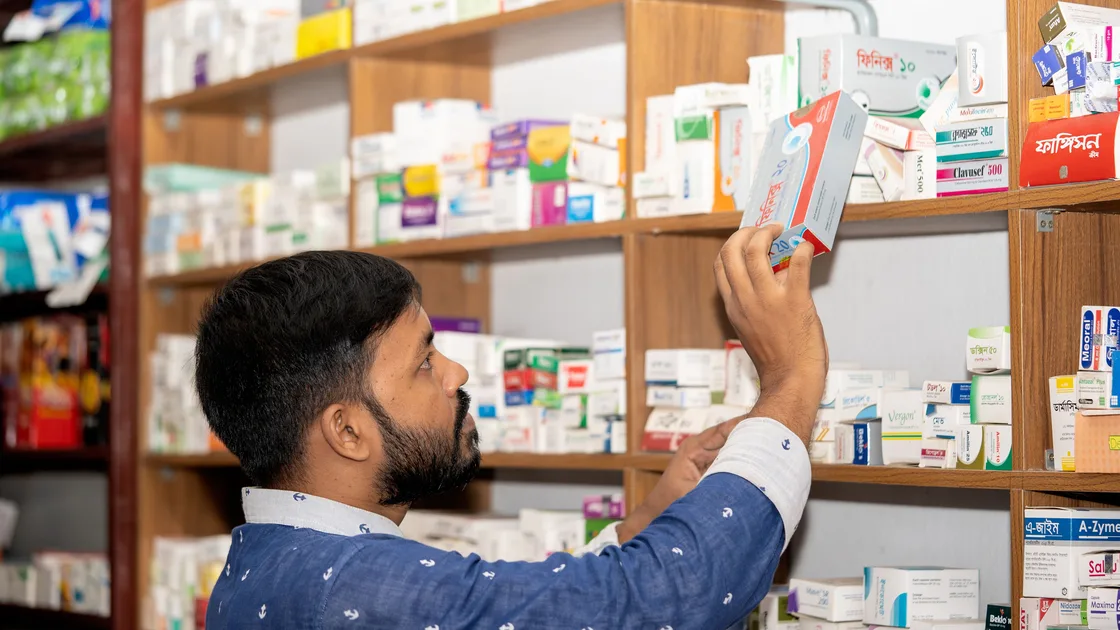

To buy over-the-counter medicine in China, use a licensed pharmacy, describe the symptom and relevant safety information to the pharmacist, and compare the active ingredient, strength, dosage form, OTC mark, leaflet, and expiry date before paying. Do not assume that a familiar foreign brand name has the same formula, and seek medical care instead of self-treating severe, unusual, or worsening symptoms.
Key Takeaways:
- Decide first whether the symptom is suitable for self-care.
- Prescription medicine and OTC medicine follow different purchase rules.[1]
- Tell the pharmacist about allergies, pregnancy, chronic conditions, and current medicines.
- Match active ingredients and strength; do not rely on package color or brand similarity.
- Read the current label and leaflet, keep the package, and stop if a serious reaction occurs.
Call 120 or seek urgent professional care for severe breathing difficulty, loss of consciousness, major bleeding, signs of stroke, a serious allergic reaction, poisoning, or rapidly worsening illness. Infants, pregnancy, complex chronic disease, and symptoms after a significant injury also deserve a lower threshold for professional assessment.
For stable, minor symptoms, a pharmacist can help you identify whether an OTC option exists. This guide does not diagnose the symptom or tell you which drug or dose to use. The hospital and clinic guide explains how to route care when self-care is not appropriate.
| Situation | Best first route | Why |
|---|---|---|
| Severe or rapidly worsening symptom | Emergency or hospital | Self-care could delay needed assessment |
| Stable minor symptom | Licensed pharmacy and pharmacist | OTC suitability can be checked |
| Medicine normally requires a prescription | Clinician and valid prescription | Do not try to bypass the classification |
| Unclear active ingredient or interaction | Pharmacist or clinician | Similar names do not prove equivalence |
| Suspected adverse reaction | Stop self-management and seek help | The reaction needs professional review |
China distinguishes prescription medicines from non-prescription medicines. The National Health Commission explains that prescription medicines require a prescription, while OTC medicines can be purchased without one but still require attention to indications, contraindications, and the instructions.[1] An online listing or a friend's prior purchase does not change a product's current classification.
OTC packaging may identify a product as over the counter, but you must still verify the exact package. A medicine family can contain different active ingredients, strengths, or formulations. Never use antibiotics, sedatives, steroids, or another prescription category merely because a seller offers it without a proper clinical route.
Compare medicines field by field. Start with the active ingredient, then check strength, dosage form, whether it contains one or several ingredients, and whether it is made for adults or children. Extended-release, dissolving, topical, and oral products are not interchangeable merely because the main ingredient name looks familiar.
Bring the original package or a clear photo of the front, ingredient panel, and leaflet from the medicine you already use. Hide the patient label and prescription number before showing it. The purpose is to identify the product for the pharmacist, not to ask for automatic substitution or to transfer another person's prescription.
Choose a pharmacy with a clear business identity and medicine-retail authorization, organized original packaging, and a pharmacist or qualified staff member available for questions. Government visitor guidance in Shanghai describes both physical and online purchase routes, but inventory, identity checks, delivery coverage, and interfaces remain provider-specific.[2]
For an online pharmacy, verify the operator and medicine seller inside the current official channel. Do not follow an unsolicited payment link or send a prescription, passport, or health history to an unverified chat contact. A changing app menu is not a reliable nationwide instruction.
At a physical pharmacy, look for intact manufacturer packaging, a clear seller identity, normal storage conditions, and a way to consult the pharmacist. If staff cannot identify the active ingredient or explain whether the exact box is OTC, do not treat a low price or familiar color as reassurance. Ask for another qualified staff member or use a different verified pharmacy.
Prepare a short note before you go:
You can show a photo of your own medicine package, but do not ask for “the same box” by color alone. Ask: “有效成分是什么?” (What is the active ingredient?) and “这是非处方药吗?” (Is this an OTC medicine?).
Read the product name, active ingredient, strength, dosage form, OTC classification, indications, contraindications, warnings, storage instructions, batch information, and expiry date. Beijing's medicine-safety guidance stresses reading the label and leaflet and using OTC products within their stated conditions.[3]
If you cannot understand the leaflet, ask the pharmacist to explain the sections that apply to you. Translation can help you locate a heading, but it cannot decide whether the medicine is safe for your medical history. Do not combine products until you have checked for duplicate active ingredients.
Ask practical questions without requesting a diagnosis: what active ingredients are in this exact product, whether any duplicate your current medicines, which leaflet sections describe contraindications and urgent reactions, and how the package should be stored. Repeat the answer back using the ingredient name rather than the brand. If the answer depends on your diagnosis, pregnancy, age, or chronic condition, ask whether a clinician should assess you first.
Before paying, compare the outer box and inner package for the same product name, strength, batch, and expiry information. Do not accept loose tablets or a package whose seal, leaflet, or identifying details are missing. Keep the receipt tied to the exact package in case the pharmacist, clinician, regulator, or insurer later needs to identify what was supplied.
The fapiao and receipt guide covers how to preserve purchase evidence. The payment guide covers payment preparation separately.
| Problem | Check | Safe next action |
|---|---|---|
| Product has a similar foreign name | Ingredient, strength, formulation | Ask the pharmacist; do not assume equivalence |
| Pharmacy says a prescription is needed | Current classification | See a clinician; do not shop for a bypass |
| Leaflet is unclear | Warning and contraindication sections | Ask the pharmacist or clinician before use |
| Package is open or damaged | Seal and batch details | Do not buy it; request intact stock |
| Symptoms persist or worsen | Duration and warning signs | Stop self-care and seek medical assessment |
| Suspected adverse reaction | Product and time taken | Stop using it and seek urgent advice when indicated |
Yes, products classified as OTC can be sold without a prescription, but the exact product and safe-use conditions still need checking.[1]
Do not treat antibiotics as an OTC shortcut. If a medicine requires a prescription, use a clinician and lawful prescription route.
Not necessarily. Compare the active ingredient, strength, formulation, and leaflet rather than the brand alone.
A pharmacist can support medicine selection and referral, but this guide does not turn a pharmacy conversation into a medical diagnosis.
They may be, but operators, inventory, delivery, identity checks, and interfaces change. Verify the current licensed seller and official channel.[2]
Yes. The box and leaflet identify the exact product, warnings, batch, and expiry and are useful if you need professional help.
Stop self-treatment and seek professional help. Breathing trouble or another severe reaction is an emergency.
No. Use the exact product instructions and advice from a pharmacist or clinician; this guide deliberately gives no dose or treatment course.
Disclaimer: This guide is for general navigation only and is not medical advice, diagnosis, prescribing, or dosage guidance. Medicine classification, suitability, stock, and warnings depend on the exact product and person. Seek professional care when symptoms are severe, unusual, persistent, or worsening.
Sources checked 29 August 2026.
Sign up to experience all premium features at no cost.
*Available only to new users. Each user is limited to one trial.