Start your 3-day free trial
Sign up to experience all premium features at no cost.
*Available only to new users. Each user is limited to one trial.
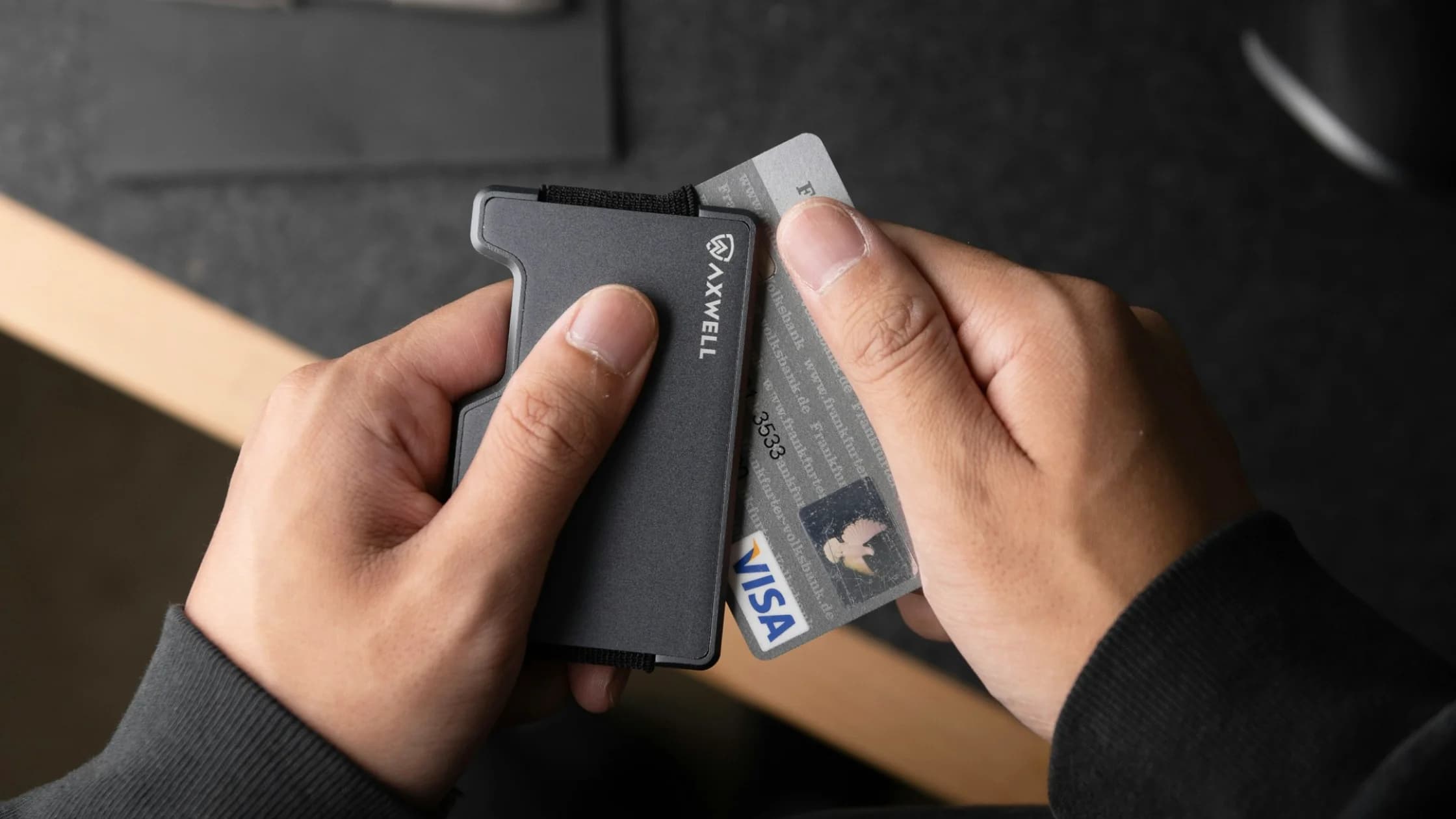

Short answer: RFID blocking means using a wallet, sleeve, or bag layer made with shielding material to reduce the chance that an RFID signal can be read. Its main purpose is to limit exposure in some close-range wireless reading situations.[1][2]
But if you treat RFID blocking as "protection from all card fraud," you will overestimate it. Many real losses do not come from long-range wireless skimming. They come from magnetic-stripe skimmers, phishing, account takeover, fake support calls, and stolen devices.[3]
Use the digital privacy guide as the wider checklist: it connects this issue to accounts, devices, identifiers, and data-broker exposure.
RFID stands for Radio Frequency Identification. In plain terms, it lets a reader exchange information wirelessly with a chipped card or tag over a very short distance.[1][2]
Common examples include:
RFID-blocking products usually place your card inside a material layer designed to weaken or block certain wireless signals. The goal is to make it harder for an outside reader to read the card without your knowledge.
Think of it as physical exposure reduction:
"Wireless reading" sounds scary. In reality, actual financial loss depends on more than a signal being read. It also depends on what data is available, whether that data can complete a transaction, and what verification or fraud controls apply.
Visa says contactless transactions use the same level of security protection as chip cards.[1]Mastercard also emphasizes encryption, liability protection, and the need to be close to the reader.[2]
That does not mean zero risk. It does mean the common panic story, where someone waves a device from afar and empties your card, is not a realistic summary of how contactless payments work.
This table is the practical version.
| Situation | Does RFID blocking help? | Why |
|---|---|---|
| Your card is in your bag and you worry about close-range reading | Somewhat | This is the use case it was designed for |
| Multiple contactless cards are stacked together | Somewhat | It may reduce accidental reads or card clash |
| You travel or commute and want less wireless exposure | Somewhat | It is an extra physical protection layer |
| You encounter a magnetic-stripe skimmer | Almost no help | Skimmers read the stripe or inserted-card path[3][4] |
| You face phishing, fake support, or verification-code scams | No help | These are not wireless-reading problems |
| Your card is lost and used directly | Limited help | The core issue is loss and transaction controls |
FTC alerts about gas pumps and SNAP benefit cards both explain that illegal skimmers usually steal magnetic-stripe data and may be combined with hidden cameras, PIN theft, or phishing.[3][4]That is a different risk layer from RFID blocking.
Scammers do not need to get near your wallet if they can trick you into giving away a verification code, card details, or login password.
If your banking app, email account, or SMS verification channel is compromised, the physical card layer cannot save the account layer.
My advice: treat it as optional, not essential.
This is the fastest way to notice abnormal spending.
Many fraud attempts begin with tiny test transactions.
Whether you can do this depends on your card issuer.
The FTC's advice for skimmers is direct: look for devices that are loose, crooked, damaged, or different from nearby machines.[3]
Many real losses happen right at this step.
This matters more than the wallet you buy.
Think of it this way:
RFID blocking is not useless. Its priority is usually lower than people assume.
Yes, but only within a limited scope. They mainly reduce exposure in some close-range wireless reading scenarios.[1][2]
No. Many fraud cases involve skimmers, phishing, account takeover, or stolen credentials rather than RFID.[3][4]
Overall, they include multiple safety mechanisms. Visa and Mastercard both emphasize their security design and liability protections.[1][2]
Usually no. Mobile wallets use a different security model based more on device authentication, tokenization, and operating-system permissions.
It can be useful if you carry many cards and worry about physical exposure. Higher-priority travel habits are still transaction alerts, phone protection, and scam awareness.
No. RFID blocking protects against close-range wireless exposure of physical cards. A VPN protects network traffic in transit. They solve different problems.
Disclaimer
This article is for general digital security and payment security education only. It does not constitute financial, card-issuer, or legal advice. Security mechanisms may differ by card network, issuer, and payment terminal environment.
The AethoVPN editorial team covers RFID blocking here; a VPN is not a substitute for the relevant checks.
Sources
Sources checked 8 May 2026.
Related Articles:
Sign up to experience all premium features at no cost.
*Available only to new users. Each user is limited to one trial.