Start your 3-day free trial
Sign up to experience all premium features at no cost.
*Available only to new users. Each user is limited to one trial.


If an airline bumped you from a confirmed flight, document the reservation, your timely arrival, the exact boarding decision, and every replacement or expense before details disappear. First establish whether you volunteered or were denied boarding against your will, because a voucher, operational refusal, document problem, and oversale do not create the same claim.
Key Takeaways:
- Preserve proof that the reservation was confirmed and usable for the flight.
- Record when you checked in, reached the gate, and presented yourself to board.
- Ask whether the decision was voluntary, involuntary, operational, safety-related, or document-related.
- Obtain the written reason, passenger-rights notice, and replacement itinerary.
- Keep actual-arrival and reasonable-expense evidence until every claim is closed.
Add this evidence plan to your international travel preparation. The useful record is not a folder of unrelated screenshots; it is a timeline connecting a valid booking, your compliance, the carrier's decision, the remedy offered, and the loss that followed.
Save the e-ticket receipt, booking confirmation, passenger name, flight number, date, route, booking reference, ticket number, fare or cabin, and operating carrier. If a travel agency or marketing airline issued the ticket, also record which airline physically operated the flight. The codeshare responsibility guide helps separate the seller, ticket issuer, marketing carrier, and operating carrier.
Capture the reservation status before it changes. Useful screens show “confirmed,” the assigned segment, check-in status, and any seat or boarding group. A seat number helps, but a missing seat is not by itself proof that the booking was invalid. Keep the original itinerary as well as every later version.
Check whether the ticket contained multiple flights or a return. Record the status of all remaining coupons or segments and ask the airline to confirm in writing that they remain active. A rebooking that silently cancels the return can create a second problem after the airport incident.
If another person paid, keep the passenger's travel record and the purchaser's receipt without exposing unnecessary card details. If the airline says the ticket was not issued, the reservation was canceled, or a segment was marked unused, ask for the precise status and time of that change instead of describing every refusal as bumping.
Record when check-in opened, when you completed it, when you cleared any document check, when you reached the gate, and when boarding started. Save the boarding pass, bag-tag receipt, app confirmation, kiosk receipt, queue notification, and time-stamped messages. If the app later overwrites the boarding pass, a contemporaneous screenshot can preserve the earlier state.
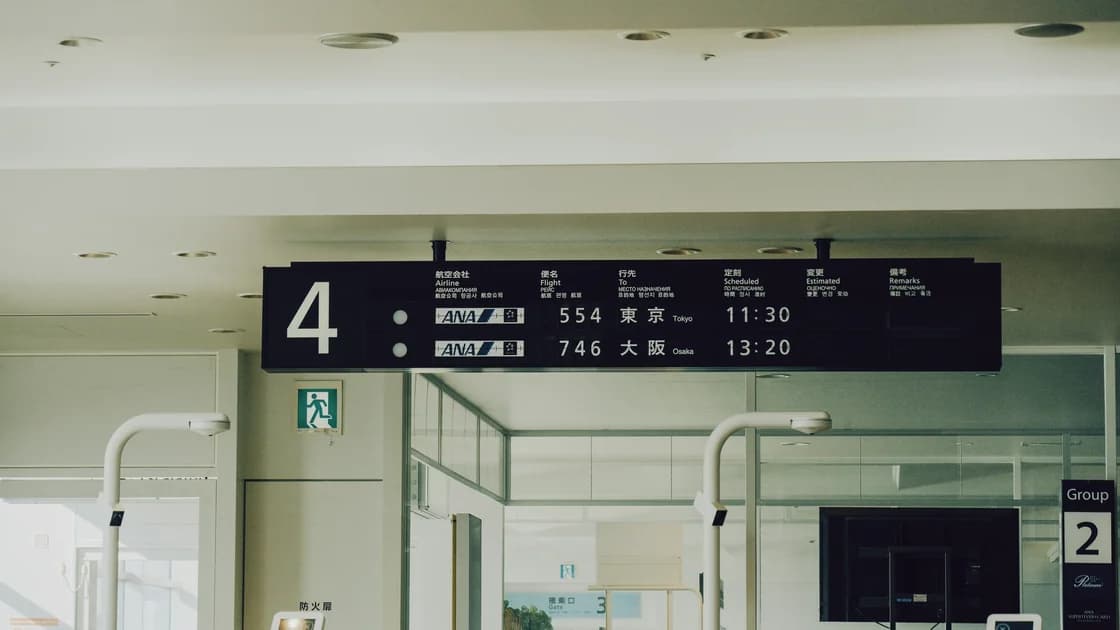
Write down the gate number and the clock source you used. Photograph a public departure display only if it can be done without capturing other travelers' personal information. Record announcements in your own notes rather than secretly recording staff where local law or airport rules may restrict audio.
US Department of Transportation guidance makes timely check-in and arrival at the gate part of eligibility for certain US oversales protections. It also distinguishes a flight that operates and leaves a passenger behind from a canceled or delayed flight.[1] The relevant deadline is the carrier's deadline for that airport and itinerary, not a universal number.
If a long security line, document review, gate change, or assistance handoff affected your arrival, record that separately. Evidence should show what happened, not conceal a missed deadline. If the dispute is actually a mistaken no-show status, preserve the scan and agent notes that show you presented yourself; that issue requires a different correction from involuntary oversales.
Ask one neutral question: “Are you asking for volunteers, or are you denying me boarding involuntarily?” Write down the answer, staff role, time, and stated reason. Do not rely on the word “bumped” alone.
| What happened | Evidence to request | Why it matters |
|---|---|---|
| You volunteered | Written benefits, confirmed replacement, restrictions, expiry, and what happens if the new trip fails | The agreement may replace an involuntary-denied-boarding claim |
| You were selected involuntarily | Written reason, selection basis, rights notice, and compensation decision | Oversales rules may apply only when defined conditions are met |
| Safety, security, health, conduct, or documents were cited | Specific rule, responsible authority, and written refusal | These reasons may sit outside ordinary oversales compensation |
| Aircraft or operational constraint was cited | Aircraft change, capacity, weight-and-balance, or other recorded reason | Different exceptions and remedies may apply |
Under US DOT guidance, airlines must first seek volunteers before involuntarily bumping passengers from an oversold flight, and an involuntarily bumped passenger must receive a written statement describing rights and boarding priority. The same guidance lists exceptions and limits its compensation rules to defined US situations.[1]
EU Regulation 261/2004 separately defines denied boarding and excludes reasonable refusals based on matters such as health, safety, security, or inadequate travel documents. When it applies, it distinguishes volunteers from passengers denied boarding against their will.[2] Do not combine the US and EU frameworks or assume either governs merely because the airline has offices there.
Before accepting a voucher, ask whether taking it changes any cash, refund, rerouting, care, insurance, or complaint rights. Save the full terms, not just the value displayed on a tablet. Never sign a blank form or confirm that you volunteered if that is not what happened.
Request a written denial or incident note containing the flight, date, passenger, operating airline, voluntary or involuntary classification, and reason. If staff cannot issue a letter, ask for a case number and the official channel that can provide the record. Photograph any paper before handing it back.
Obtain a replacement itinerary that is actually ticketed or otherwise confirmed. Check the operating carrier, airport, terminal, date, departure and arrival times, cabin, baggage routing, meal or hotel arrangements, and whether a connection remains realistic. A standby listing is not the same as a confirmed seat; label it accurately in your notes.
For EU-covered involuntary denied boarding, the regulation provides assistance and a choice framework involving reimbursement or rerouting.[2] Your Europe explains that the traveler should receive written information about compensation and assistance and that the scope depends on route and carrier.[3] Treat these as EU rules, not a worldwide script.
If the replacement downgrades your cabin, keep that as a separate issue and use the cabin downgrade evidence guide. If the original flight is canceled for everyone, use the delay and cancellation guide instead of forcing the event into an oversales claim.
Create one expense log with date, local time, currency, merchant, item, reason, amount, payment method, and receipt filename. Ask the airline what it will provide directly and what it expects you to purchase and claim. Keep spending reasonable for the disruption and preserve written refusals when essential care is unavailable.
Record the replacement flight's actual departure and arrival, when the aircraft door opened if relevant, when baggage became available, and when you reached the agreed destination. Compensation or insurance analysis may depend on actual delay, while food, accommodation, ground transport, or communication claims depend on what was reasonably necessary.
Do not surrender original receipts unless required; scan them first. Match each receipt to a line in the timeline and note any airline meal, hotel, transport, voucher, refund, or payment already received. This prevents duplicate claims and helps explain why a cost was not covered at the airport.
If the event causes a missed prepaid service, preserve the booking terms, cancellation request, supplier reply, and unrecoverable amount. The travel-insurance evidence guide explains how to separate proof of disruption from proof of financial loss. Do not assume insurance covers denied boarding or that an airline must repay every consequential cost.
Start with the operating carrier for the boarding decision, while keeping the ticket issuer involved when the ticket, refund, or remaining segments need repair. Use the airline's official complaint or passenger-rights channel and preserve the submission, attachments, case number, response deadline, and reply.
Structure the claim in five parts: confirmed reservation; timely compliance; classification and written reason; replacement and actual arrival; requested remedy with itemized evidence. State what you know and what remains disputed. Avoid accusing staff of fraud or discrimination without evidence; if you believe prohibited discrimination occurred, preserve the facts and use the competent authority's formal route.
Identify applicable law from the departure point, arrival point, operating carrier, and itinerary rather than citizenship alone. Escalation may go to an aviation regulator, alternative dispute body, consumer authority, card issuer, insurer, or court, but each has its own scope and deadline. Submit the same factual timeline while adapting the requested remedy to that forum.
Retain the complete file until payment is settled and all ticket segments, loyalty credits, refunds, insurance claims, and complaints are closed. Save final decisions as well as approvals. A partial voucher or rebooking does not necessarily prove that every other issue was resolved.
No. It proves an important starting fact, but the applicable rule may also examine ticket validity, check-in, gate arrival, documents, conduct, safety conditions, the operating reason, and whether you volunteered.
A volunteer agrees to surrender a reservation for negotiated benefits. Involuntary denied boarding means the carrier selects the passenger despite the passenger being ready and eligible to travel; the distinction can change available remedies.
Rules vary. US DOT guidance generally restricts removal after a passenger has been accepted to board, while preserving exceptions for safety, security, health, or unlawful and disruptive conduct. Record exactly when and why the decision occurred.[1]
Ask the airline to record your actual arrival and its deadline. Do not alter the timeline: late arrival may change oversales eligibility, but another ticketing, assistance, gate-change, or consumer issue may still need correction.
The operating carrier usually controls boarding and the airport decision. The ticket issuer or marketing carrier may still need to protect the ticket, refund, or remaining segments, so record each organization's action separately.
Only after reading the value, restrictions, expiry, transferability, replacement itinerary, and effect on other rights. Ask whether the offer assumes you are volunteering and preserve the full agreement before accepting.
A VPN may protect the network leg while you access an airline or insurer account on unfamiliar Wi-Fi. It cannot prove timely arrival, change the boarding decision, create legal eligibility, or determine compensation.
Sources checked 6 September 2026.
This article provides general record-keeping and passenger-rights information, not legal advice. Eligibility, deadlines, remedies, and responsible organizations depend on the itinerary, operating reason, contract, and jurisdiction.
Related reading:
Sign up to experience all premium features at no cost.
*Available only to new users. Each user is limited to one trial.