Start your 3-day free trial
Sign up to experience all premium features at no cost.
*Available only to new users. Each user is limited to one trial.


An Argentina digital travel guide should prepare you for getting online, paying with your foreign card, and recovering access when one connection fails. Arrange a permitted mobile option, retain your home-number verification route, and save essential records offline before departure. Local network registration and foreign-card settlement are separate processes.[1][2][3]
Key Takeaways:
- Confirm the tourist activation route rather than assuming a resident eSIM flow accepts your documents.
- Keep the original purchase currency and receipt for reconciliation.
- Public Wi-Fi needs authentic access and completed portal authentication.
- A VPN does not improve exchange rates, approve payments, or deliver missing verification codes.
Decide which connection you will use immediately after landing and which will become your main local connection. The international travel preparation guide covers the general arrangements. For Argentina, the official visitor guide describes local SIM options and the distinction between tourist and resident activation processes.[1]
Save the hotel address, transfer instructions, booking references, and operator information on your device. Test that you can open these records with the network disabled. Keep only the personal documents you actually need, protect the device with a lock, and avoid putting complete passport scans in shared photo albums.
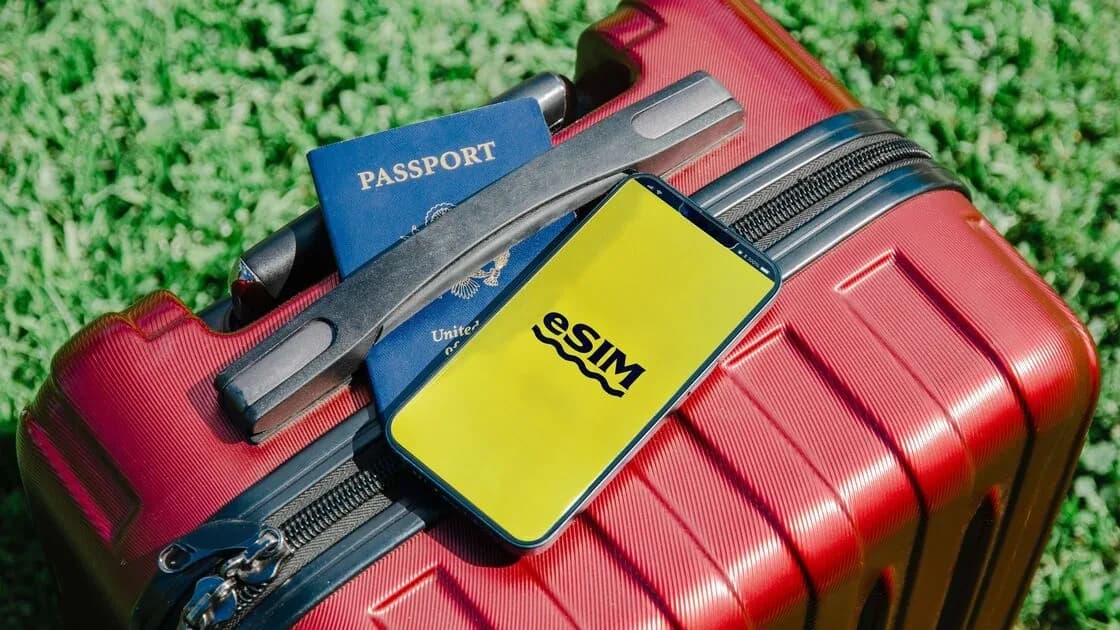
Check whether your phone is unlocked for another operator and whether its exact model supports the proposed eSIM. Having an eSIM menu does not establish that every provider's activation process accepts you. Ask about passport registration, the supported purchase channel, and the connection needed to install the profile before paying.
Keep your home line available if your bank sends codes there. Confirm roaming and incoming-message conditions with the home operator, including potential charges. A data-only travel plan supplies internet access but may not supply a phone number or receive verification messages intended for your existing number.
Claro's tourist page asks for your passport and line number to activate the SIM. The national visitor guide describes options from several local operators. Treat those as starting points, then verify the selected operator's current tourist instructions; package amounts, store arrangements, and eligibility can change.[1][2]
| Connection option | Check before purchase | Limitation to plan around |
|---|---|---|
| Home-operator roaming | Argentina coverage, activation, data and voice terms | A domestic allowance may not apply overseas |
| Local tourist SIM | Passport process, unlocked phone, validity and top-up | Registration must finish before you rely on it |
| Local eSIM | Exact device, visitor eligibility and installation channel | A resident workflow may require different identification |
| International travel eSIM | Underlying network, installation and roaming settings | Data access does not necessarily include calls or SMS |
| Public or accommodation Wi-Fi | Genuine network, permitted use and portal conditions | Availability does not guarantee trustworthy access |
Separate buying, registering, installing, and activating. An order confirmation is not evidence that the line is ready to use. Before leaving a service counter, open an ordinary webpage over mobile data and ask staff to confirm the registered line and how to contact support.
For an eSIM, retain the official installation instructions securely. Do not delete a working profile merely because a temporary connection fails; ask the provider how reinstallation works for that purchase. If you need a local number, confirm that the chosen plan supplies it rather than assuming every eSIM does.
The eSIM and VPN comparison explains why these tools solve different problems. Mobile data gives the device a connection; an encrypted tunnel uses a connection that already exists. Neither replaces the operator's identity checks, and a tunnel cannot create cellular coverage.
Visa describes a preferential conversion for eligible purchases in Argentina made with Visa cards issued abroad while its scheme remains in force. That is a card-settlement rule, not a rate obtained by choosing an internet exit. Its older numerical examples should not be treated as today's quote or extended automatically to every card network.[3]
Ask your issuer which transactions qualify and how pending and settled amounts appear. Keep the merchant receipt showing the purchase amount and currency. Compare it with the final posted record, not just an initial notification, and ask the issuer about fees or differences you cannot explain.
Visa's dynamic currency conversion guidance distinguishes accepting a merchant's conversion into your home currency from paying in the transaction's local currency. When conversion is offered, inspect the currencies, rate, and additional charges before deciding. The choice should be yours; if required information is missing or you feel pressured, Visa recommends rejecting that conversion and reporting the situation to your issuer.[4]
Do not turn a receipt-checking task into exchange-rate speculation. This guide does not recommend opening a local account, trading currencies, or expecting a fixed saving. Save the transaction reference and use the issuer's official support channel when a charge is disputed.
Before departure, prepare banking and payment access. Verify the bank's recovery method on your existing account and save its official contact information. An unfamiliar person offering to “unlock overseas payments” should not receive your password, card security code, or verification code.
Buenos Aires describes BA WiFi as a free municipal network in public locations, with sessions that require renewed acceptance of its terms. Its historical page also lists content filtering. Confirm the current conditions at the access point rather than assuming that every connection with a similar name is municipal or permits every route.[5]
Ask the venue or operator for the genuine network and portal. Complete normal authentication before trying account access. If a login page requests another service's password, an unexplained installation, or a certificate override, stop and seek the approved method instead of treating the request as routine.
A connection that opens a map may still lose its session before a bank page loads. Record whether an ordinary website works first, then note the account's exact error. This separates a portal problem, an internet problem, and an account problem without repeatedly submitting credentials.
For general public-network risks, limit automatic joining and avoid shared devices for private account access. When a genuine network is unusable or its rules do not permit your task, use your permitted mobile connection. Never treat encryption as an exception to the operator's rules.
A missing code and a missing internet connection need different evidence. Confirm which number or channel the account uses, whether your home line is enabled, and whether the issuer offers a previously configured alternative. Do not assume that replacing a local SIM will change where a bank sends its messages.
For a hotel connection that will not complete access, establish the portal's normal requirements with reception. Ask for a permitted alternative if the network cannot support the needed connection. Keep any workplace gateway requirement intact.
Avoid rapidly repeating payment attempts when the result is unclear. Inspect the issuer's transaction record and merchant receipt first, then ask the merchant or issuer through known channels. A connection failure after submission does not itself tell you whether the transaction was accepted.
Keep an offline way to show your reservation or destination address. That lets you finish a transfer or speak to reception while the account issue is resolved. Do not store passwords or full recovery secrets in the same unprotected document as your itinerary.
A specific travel task is checking the issuer's account against a receipt after paying locally. If your own mobile connection is not ready, permitted BA WiFi or accommodation access may be the available transport; authenticating that network is a prerequisite, not part of the card-conversion scheme. The local dependency is access to your existing account while you reconcile an Argentine purchase.[3][5]
Where that network permits a personal encrypted connection, AethoVPN can carry the account-access traffic with global mode enabled. Keep one currently available location fixed, check the public exit IP, and compare the issuer's posted amount with the saved receipt. On iPhone, iPad, or Mac, its configuration requires Pro or Premium. This protects the chosen transmission path; it does not change settlement, reverse a decline, establish account ownership, or promise an Argentine location.
Stop if the issuer rejects the route and use its approved access or recovery method. An encrypted session should not be used to manufacture banking eligibility or evade a network restriction. If you want to assess this permitted account-access setup, start the three-day free Pro trial, available once per user.
The Argentina legal boundaries distinguish ordinary personal use, provider licensing, unlawful acts, and judicial orders. Argentina Digital also requires users to respect applicable legal and contractual obligations. Network access and transaction entitlement remain separate checks throughout the trip.[6]
Prepare an immediate connection and offline copies of the records needed to reach your accommodation. Then verify a local mobile option and preserve your bank's existing verification route. Do not wait until an urgent payment to discover that recovery depends on an inactive home line.
Claro's tourist instructions request a passport and line number. Use the selected operator's current visitor process and confirm activation before relying on the line. A resident registration flow may require other identification.[2]
No. Check the plan's actual data, calling, and SMS features. A data-only profile does not automatically receive codes sent to your home number, and having eSIM-capable hardware does not establish visitor eligibility for every local product.
No. Visa's scheme concerns eligible foreign-issued card purchases and settlement conditions. A network exit cannot alter those requirements or guarantee a quoted saving; ask your issuer about the final record.[3]
Read the disclosed currencies, conversion rate, and fees before deciding. Visa says the choice belongs to the cardholder and recommends rejecting an inadequately disclosed or pressured conversion. Keep the receipt for later reconciliation.[4]
No. The municipal page describes access conditions and filtering. Confirm the genuine network and current terms, finish authentication, and use another permitted connection if the proposed task is unsupported or disallowed.[5]
Check the verification channel and your home line, then use the bank's official recovery options. A local data plan or VPN does not redirect verification messages or replace the issuer's identity checks.
Disclaimer: VPN regulations vary by country and region and are subject to change. This article does not constitute legal advice. Please review and comply with your local laws before using a VPN.
Sources:
Sources checked 5 October 2026.
Sign up to experience all premium features at no cost.
*Available only to new users. Each user is limited to one trial.