Start your 3-day free trial
Sign up to experience all premium features at no cost.
*Available only to new users. Each user is limited to one trial.


Prepare a confirmed mobile plan, a usable rail ticket, and an offline arrival record before traveling in Switzerland. This Switzerland digital travel guide separates roaming coverage, SIM/eSIM access, station Wi-Fi, train connectivity, and payment. Switzerland's position outside the EU/EEA roaming area makes checking your own package especially useful; a label such as “Europe” is not enough.[1]
Key Takeaways:
- Ask whether your specific roaming package includes Switzerland.
- SBB station Wi-Fi and SBB FreeSurf on trains are different services.
- Purchase a valid ticket before the scheduled departure, even if an app fails.
- Keep a payment backup and arrival details accessible without a fresh login.
The international travel preparation framework covers the common checklist. For the separate legal-use question, read the Swiss VPN and privacy boundaries. This guide concentrates on getting through the next practical travel task.
Organize preparation around your first transfer rather than around a list of popular apps. Record the arrival station, accommodation address, booking reference, expected connection, and a person or service you can contact. Save a local copy that remains readable with mobile data disabled.
| Travel need | Confirm before departure | Keep as a fallback |
|---|---|---|
| Mobile internet | Switzerland coverage, allowance, and activation | A verified local plan or authorized Wi-Fi |
| Incoming codes | Home number can receive required messages | Account recovery method prepared in advance |
| Rail journey | Valid ticket and correct itinerary | Accessible ticket and service-desk details |
| Accommodation | Address, check-in terms, contact | Local copy and agreed meeting point |
| Payment | Accepted method and issuer permissions | Physical card and suitable cash reserve |
| Device access | Charge, lock, and essential credentials | Charger and secure recovery information |
A card charge does not prove a ticket has been issued. An eSIM purchase does not prove that its profile is installed or that the plan has begun. Open the actual confirmation for each service and identify the reference used by the responsible provider.
Keep passports, payment information, and QR codes out of public travel chats. When asking accommodation staff for directions, send only the details needed to locate the property. A useful preparation folder is small enough to use quickly and specific enough to identify which service has failed.
EU/EEA roaming rules should not be assumed to include Switzerland. The Swiss regulator describes the EU/EEA roaming framework separately from Swiss roaming arrangements and recommends checking packages and alternatives. A home operator may voluntarily include Switzerland, so the correct answer is in your plan terms rather than in the country name alone.[1]
Ask which line provides data, when a package starts, what happens after its allowance, and whether hotspot sharing is permitted. Compare those conditions before looking at price. Do not activate an unfamiliar add-on simply because the phone automatically joined a network after landing.
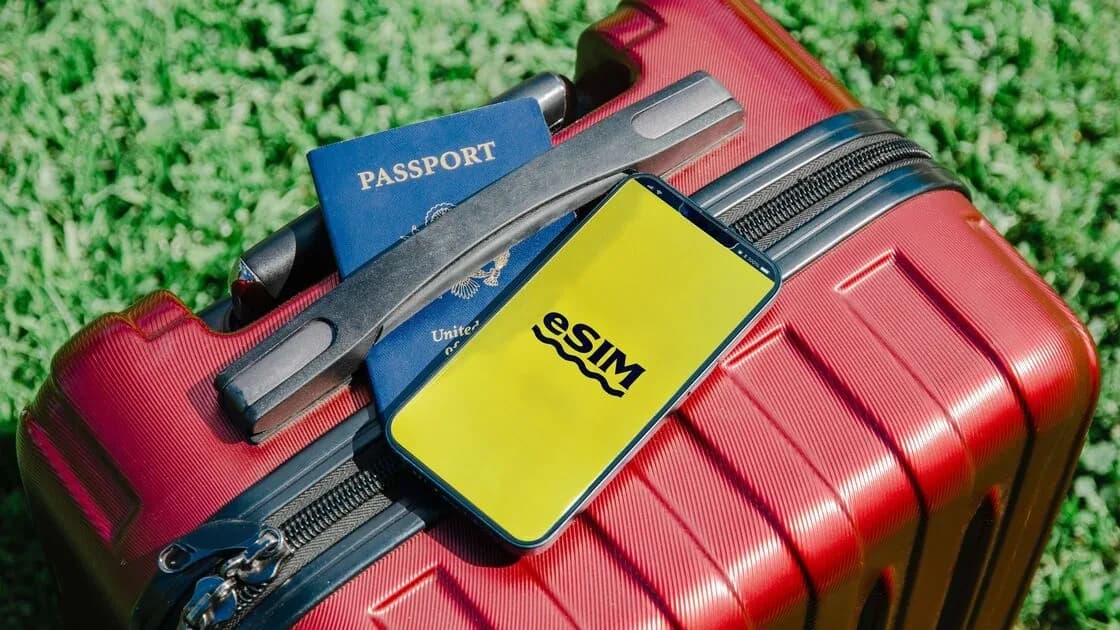
A travel eSIM may provide data without a local telephone number or ordinary SMS. Check its actual specification. If you need a message sent to your home number, retain that line under conditions you understand; receiving a message and using it for data can have different charging rules.
Confirm device compatibility and carrier-lock status before buying. Install only through the provider's instructions, and keep the order reference. When a profile fails, avoid deleting it casually: reinstallation rights depend on that provider, and deletion is not the same as canceling the paid plan.
The eSIM and VPN role comparison explains why an access subscription and a protected tunnel are separate layers. Buying one does not eliminate the need to verify the other when your task calls for it.
SBB station Wi-Fi connects over a hotspot; FreeSurf uses mobile connectivity and a supported subscription on eligible trains. SBB's current FreeSurf page identifies participating Swiss subscriptions and directs visitors to suitable Swiss SIM/eSIM options. A generic roaming package or an arbitrary travel eSIM is not automatically eligible.[2]
Before boarding, look at the service available for your particular journey. Do not assume every train has the same onboard connection. A service name shown in a timetable is a condition to check, not a promise that your device and plan are already ready.
SBB's Wi-Fi instructions identify the SBB-FREE network and describe SwissPass or SMS-code access. The SwissPass option requires the account to be linked to a SwissPass card. Having created an online account alone is therefore not the same as satisfying that option.[3]
If your data-only plan cannot receive the required code and you do not meet the SwissPass condition, choose a different permitted connection or ask staff about available assistance. Do not enter another person's number or install a certificate offered by an unexpected page.
Check the current provider eligibility, supported train, app registration, and requested device settings in SBB's instructions. Do not switch off a working mobile line expecting FreeSurf to replace the cellular path. VPN software cannot enroll an unsupported subscription in the service or change the operator's charging decision.[2]
Keep the next ticket and accommodation directions available before depending on onboard internet. That makes a temporary loss of signal inconvenient instead of journey-ending. Avoid making an essential booking during the final moments before arrival.
SBB says passengers remain responsible for holding a valid ticket before the scheduled departure when a digital sales channel fails. Use another approved sales channel or obtain the operator's instructions rather than boarding on the assumption that an app error permits free travel.[4]
Open the issued ticket and verify its date, route, traveler conditions, and any restriction to a particular service. Retain the usable ticket in the form the operator accepts, not just a payment screenshot. A duplicate charge or uncertain checkout should be resolved with the seller rather than followed by repeated blind purchases.
Payment failures can involve card authorization, authentication, or the seller. A different network route is not a universal fix. The travel banking and payment preparation guide helps arrange issuer contact and recovery methods before the trip.
Keep a physical payment alternative and enough flexibility to use a staffed channel. Do not assume every local wallet or app-based payment service accepts your account. Ask about eligibility and accepted methods without sharing a verification code with someone offering to complete the checkout for you.
Classify the symptom before changing settings. No mobile data, a repeating hotspot portal, and a signed-in account rejection belong to different layers. Test a harmless ordinary page and record whether the failure occurs before or after authentication.
| Symptom | Likely area to investigate | Safe fallback |
|---|---|---|
| No data after installing eSIM | Profile, activation, or package conditions | Provider assistance and an authorized connection |
| Wi-Fi portal repeats | Access session or unsupported sign-in method | Network staff or another permitted network |
| FreeSurf cannot start | Subscription or journey eligibility | Your confirmed mobile plan |
| Ticket purchase has no confirmation | Sales or payment result | Official alternative sales channel |
| Account requests extra verification | Account security or eligibility | Normal recovery method and provider support |
For a hotel hotspot, the portal and VPN troubleshooting guide offers a focused comparison. Avoid changing several controls at once, which makes it harder to identify what restored the connection.
If your roaming plan excludes Switzerland, you may use station Wi-Fi to retrieve an onward ticket or accommodation email. That task first needs the station's access session; start the VPN only after the genuine portal has completed. Keep the ticket locally accessible before leaving the hotspot.
AethoVPN can then encrypt that established connection while you open the confirmation, using a currently available position in the app. For an iPhone or Mac, obtain the configuration through the website setup guide and use Pro or Premium. The tunnel does not reduce roaming charges, provide cellular data, or create FreeSurf or SwissPass eligibility. You can create your account with an email code for the once-per-user 3-day Pro trial.
Swiss constitutional privacy protection coexists with statutory surveillance powers; do not treat an encrypted connection as legal immunity.[5]
No. Switzerland is outside the EU/EEA roaming area, although individual operators may include it voluntarily. Check the specific package's country list and conditions before enabling data.[1]
No. FreeSurf relies on mobile connectivity and supported subscriptions on eligible trains, while station Wi-Fi is a hotspot service with its own access process.[2][3]
Do not assume so. Compare the subscription with SBB's current eligibility conditions; the presence of mobile data by itself does not establish participation in FreeSurf.[2]
SBB's instructions make the linked-card condition specific to SwissPass sign-in and also describe SMS-code access. Check which method you can actually complete on your device.[3]
An app fault does not remove the ticket requirement. SBB instructs passengers to obtain a valid ticket through another channel and addresses exceptional failures separately.[4]
No. Charging depends on the mobile plan and access network. A tunnel can protect an established connection, but its traffic still uses that connection's data allowance.
Keep an accepted ticket, the accommodation address, booking reference, and contact details locally readable. Verify the copies before leaving reliable connectivity rather than discovering that they require another login.
Disclaimer: Travel, carrier, transport, and VPN rules may change. This guide is general information, not legal advice; check current official requirements and comply with local laws and service terms.
Sources:
BAKOM — Roaming: https://www.bakom.admin.ch/en/roaming-en
SBB — Free internet with SBB FreeSurf: https://www.sbb.ch/en/travel-information/apps/freesurf.html
SBB — Instructions for SBB WiFi: https://www.sbb.ch/content/dam/internet/sbb/downloads/en/reiseinformationen/bahnhoefe/anleitung-sbbwifi.pdf.sbbdownload.pdf
SBB — Help with issues buying tickets: https://www.sbb.ch/en/help-and-contact/products-services/issues-buying-tickets.html
FDPIC — Telecommunications confidentiality and surveillance of telecommunications: https://www.edoeb.admin.ch/en/telecommunications-confidentiality-and-surveillance-of-telecommunications
Sources checked 5 October 2026.
Sign up to experience all premium features at no cost.
*Available only to new users. Each user is limited to one trial.