Start your 3-day free trial
Sign up to experience all premium features at no cost.
*Available only to new users. Each user is limited to one trial.
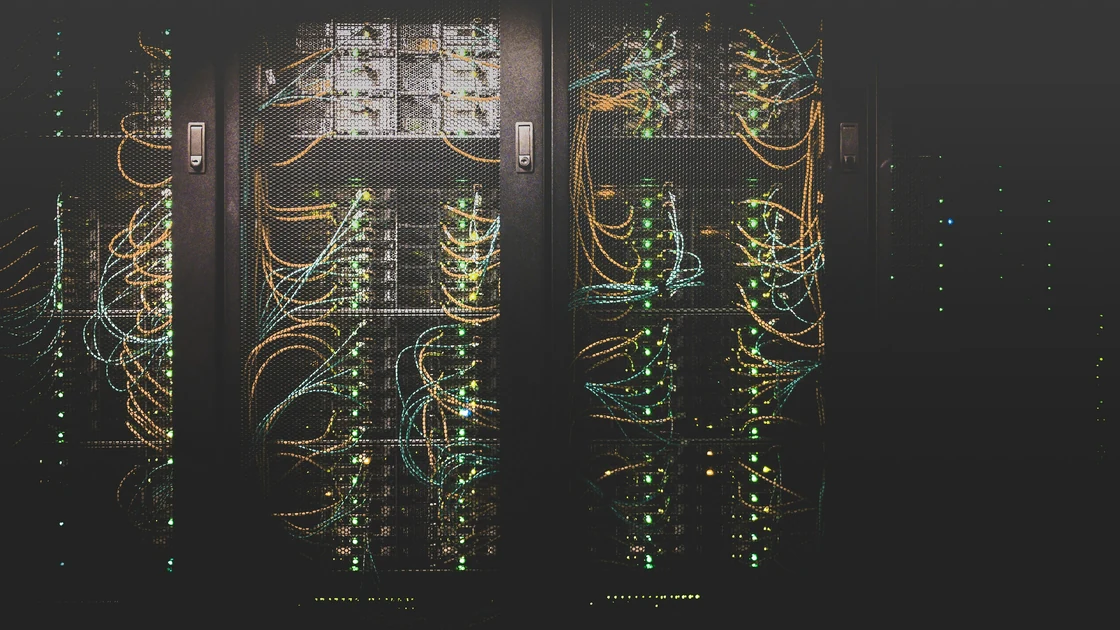

Virtual VPN locations describe a location offered by a provider; they do not, by themselves, establish where the equipment handling your traffic sits. Before buying, separate the location label, the physical infrastructure, and the evidence you can actually observe. Choose a service that meets your lawful task and disclosure needs rather than treating a country flag as a facility certificate.
Key Takeaways:
- A location label, an IP database result, and a physical server address answer different questions.
- A provider's explanation is needed when physical hosting matters to your decision.
- Measure the connection to your actual destination; geography alone cannot predict usability.
- Keep unknown infrastructure details unknown, and stop if your requirement depends on them.
In this comparison, a virtual location means a provider offers an exit associated with one location while the infrastructure may be hosted elsewhere. A physical-location claim instead says the relevant equipment is in the advertised place. These are descriptions of deployment, not two levels of encryption or two grades of service. Ask a supplier which definition it uses before comparing its labels with another supplier's terminology.
IP geolocation is a separate data layer. IPinfo publishes country, region, and related location fields, with different fields available in different products. Such an output describes an address in that database; it is not a facility inspection report. It also does not place the person behind a VPN at the exit's location.[1]
A geofeed is another input, not a universal verdict. RFC 8805 describes operators publishing coarse location information for address prefixes, which consumers can combine with other evidence. It asks consumers to verify authority and accuracy; publication alone does not establish that a particular service accepted or independently verified the information.[2]
| Evidence | What you can learn | What still needs another answer |
|---|---|---|
| App location label | The location the provider offers for selection | What that label promises about hosting |
| Provider deployment disclosure | Its stated physical or virtual arrangement | Whether it applies to the exact route you use |
| IP database result | A named database's location assessment | The precise equipment location or your eligibility |
| Your task measurement | Usability from your network at that time | General performance or legal guarantees |
The diagram separates three evidence layers; it does not identify a real facility or a measured route.
Our explanation of VPN server roles provides the connection basics. Here the purchasing question is narrower: which location property must be documented, and which property can you evaluate yourself? Keeping those questions distinct avoids spending money on a label that never promised the thing you needed.
Write the requirement before looking at a location list. Ordinary browsing may need an acceptable route and a usable device client, without a precise hosting address. An organization's approved service may instead require documented infrastructure arrangements. A service account may have eligibility conditions that neither kind of VPN location changes.
A hypothetical traveler checking an authorized work dashboard might care about reliable access and response time. Another reader comparing supplier disclosures might care about where traffic is processed. Those readers should not use the same purchase checklist even if they select the same flag. The first can assess task usability; the second needs an authoritative deployment answer.
| Requirement | Question to ask | Appropriate stopping point |
|---|---|---|
| Ordinary connection usability | Does the intended task work consistently? | Retain direct access if it already meets the need |
| Selected exit country | What does the offered label mean, and what does the destination see? | Stop if the required location is absent |
| Physical hosting requirement | What infrastructure location is documented for this route? | Do not buy on a database guess |
| Organizational compliance | Does the administrator approve this service and arrangement? | Follow the approved gateway if required |
| Account or content eligibility | Do the service's terms allow the actual user and location? | Use its account process, not a routing workaround |
A country label is not proof of residency, licensing rights, or payment eligibility. Likewise, a documented facility location is not enough to decide which laws apply to a provider, its operator, or a particular user. If a legal or contractual requirement governs the purchase, take the supplier's documentation to the responsible professional or administrator rather than turning a ping into legal advice.
For choosing a practical route while away from home, use the travel location selection checklist. It complements this buying decision without converting every journey into a requirement for physical hosting in a particular place.
For a supported Windows computer, AethoVPN can be evaluated through its official Windows installer and current app location list. Pro permits two desktop and two mobile connections; Standard's single mobile allowance is not the Windows option. Start with a location appropriate for your permitted task, note its displayed load, and keep the same destination and local network for the comparison. The location list does not publicly establish a physical facility classification, so do not fill that gap with an assumption. Compare the current plans for your device and location needs.
A new user's three-day free Pro trial starts at registration and is available once per user. Check the app's actual available positions before making a paid commitment that depends on a particular exit. If your task requires proof of physical hosting, request that disclosure first; a successful trial cannot replace it. This is a method for evaluating your own connection, not a published benchmark.
Use the current-language IP checker to note the observed address and country label after connecting. Record whether the observation is IPv4 or IPv6 when available. That confirms what this check observed, rather than establishing the route used by every application or proving physical equipment location.
Do not reconnect between observations you intend to compare. A new exit address turns the second record into a different case. If the address changed but a country label disagrees with your expectation, follow the fixed-address geolocation investigation instead of repeating its database-correction workflow here.
Choose one ordinary action, such as opening an authorized dashboard and completing a harmless navigation request. Compare direct access, the selected route, and direct access again in a similar time window, with private tasks closed during disconnection. If a managed policy requires a continuous tunnel, ask IT for an approved comparison; do not disable it to obtain a baseline.
Record the time zone, chosen position, target, completion outcome, and response observations. If the target offers its own timing display, identify that measurement. If you use a permitted diagnostic that reports round-trip time, label its endpoint separately from the application destination. A ping to a nearby test server is not the application's response time, and a blocked ping is not proof that the application route is broken.
No deployment label guarantees a shorter or less congested end-to-end path. A route can have several relevant legs: your network to the VPN entry, processing within the service, and onward access to the destination. The purchasing implication is to test the complete task rather than selecting solely by distance on a map. This is a reasoning framework, not a numerical prediction for any service.
A virtual location need not be unsuitable merely because the label and equipment differ. A physical location need not be suitable merely because they match. What matters is whether the arrangement meets your requirement and whether the provider explains it clearly enough to evaluate. If two options perform similarly for your task, disclosure, device support, and operating conditions can become the deciding factors.
| Route observation | Keep constant | Record | Interpretation limit |
|---|---|---|---|
| Direct baseline | Device, local network, destination | Time and task outcome | One observation is not a permanent baseline |
| Selected VPN route | Same task and destination | App label, exit, time, task outcome | Label does not identify the facility |
| Direct repeat | Similar conditions | Whether the symptom remains | Changing conditions can invalidate comparison |
| Alternate offered location | Same task, one route change | Why it was chosen and the observed outcome | Do not report only the best moment |
The worksheet contains no measurements. Populate it with your own observations and retain failures as well as successes. If household traffic, destination maintenance, or a different account state changed between runs, mark the comparison inconclusive. A repeatable method is useful precisely because it lets you say that the evidence is insufficient.
Ask whether the selected location refers to physical hosting, a logical exit designation, or another documented routing arrangement. Ask whether that statement applies to the actual service route and address family you use, and how customers learn when the arrangement changes. The answer should identify the property being promised without requiring you to guess from a flag or an unrelated marketing page.
Also ask which details the provider does not publish. A supplier may decline to publish a street address for operational reasons; that does not automatically establish deception. It does mean that a requirement for independently documented physical placement remains unmet. Make that purchasing consequence explicit instead of substituting speculation for a missing answer.
Address persistence is different from deployment location. A changing or stable address can exist under different infrastructure arrangements; the static and dynamic IP comparison explains that separate axis. An address appearing residential is another question, covered by the comparison of residential exits and ordinary VPN service.
Your device's location is also separate. Browser permissions, GPS, and account information can remain relevant even when the exit changes; see the different signals behind Google's location estimate. Those mechanisms are not evidence that a provider's physical hosting statement is wrong, because they describe a different subject.
Do not add every unanswered question to a vague privacy score. Maintain a short requirement record with the claim, its source, its date, and its relevance to your task. This makes a provider's eventual answer actionable: it either satisfies the requirement, leaves a known gap, or changes the comparison you should make.
Choose by documented requirements and repeatable task results. An offered virtual location can be a reasonable option when the logical exit and actual connection meet your needs. Prefer documented physical placement when that is an explicit requirement, and postpone the purchase if the required evidence is unavailable. Neither category deserves an automatic performance or privacy ranking.
A flag usually identifies an offered position or label. Physical placement needs a provider's specific disclosure; an IP lookup alone does not supply that evidence.
There is no automatic result from the label alone. Compare the complete route to your intended destination under similar conditions and keep inconclusive outcomes visible.
Registration and timing observations answer narrower questions. Neither alone establishes a facility address or the legal arrangements governing the service.
A geofeed supplies location information that consumers may evaluate and merge. It is not a requirement that every database immediately return the same answer.[2]
Service rights depend on the platform's conditions and your actual eligibility. A physical or logical exit choice is not permission to bypass those requirements.
Keep them marked unknown and ask for the disclosure your task requires. If it remains unavailable, do not purchase on a promise the evidence does not establish.
The result describes the request that reached the checker. Other applications and address families need their own relevant observations before you generalize coverage.
Disclaimer: This comparison uses the public sources listed and includes no measured product benchmark. Plans, platforms, and policies may change; follow local law and the rules of the service and network you use.
Sources:
Sources checked 7 October 2026.
Related Articles:
Sign up to experience all premium features at no cost.
*Available only to new users. Each user is limited to one trial.