Start your 3-day free trial
Sign up to experience all premium features at no cost.
*Available only to new users. Each user is limited to one trial.
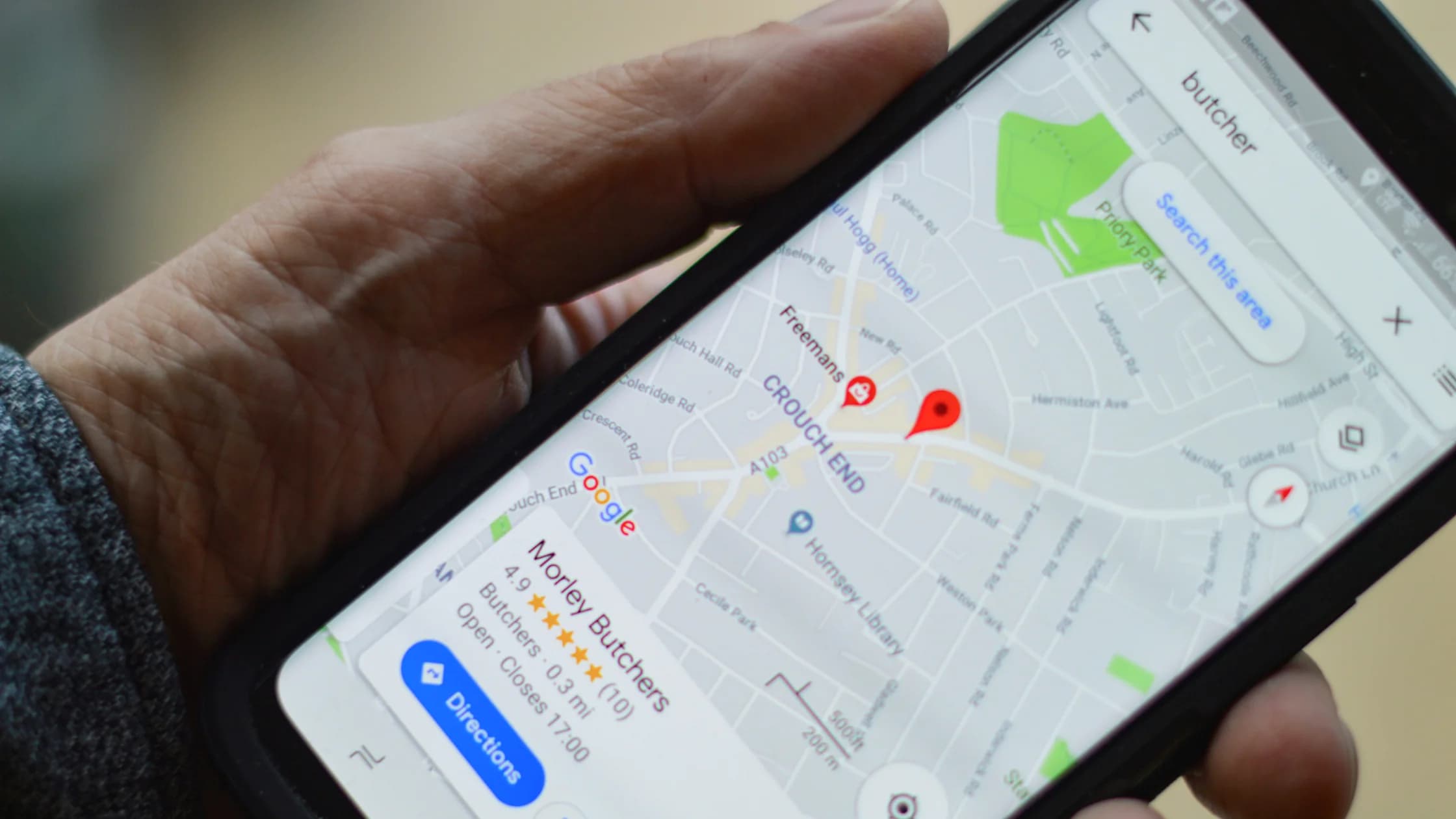

Many people turn on a VPN for the first time and wonder: if my IP address changed, why do Google, Google Maps, weather apps, nearby recommendations, and some other apps still know roughly where I am? When Google knows your location, it often does not mean the VPN failed. It usually means location does not come from IP alone.[1][2]
The short answer is this: a VPN mainly changes your network exit IP. Google may also combine GPS, Wi‑Fi, cellular towers, sensors, device permissions, location history, and account state to infer location. Turning on a VPN is not the same as turning off every location signal.
This distinction is the key to the whole issue.
A VPN directly changes your IP location. Websites see the public IP address of the VPN server, not the exit address assigned by your home broadband or mobile network.
But many Google services, especially on phones, may also use device location. That device location can come from GPS, Wi‑Fi, cellular towers, and sensors, so it can be much more accurate than IP alone.[1]
If you are not sure what VPNs can hide at the IP layer, start with What Is a VPN? A Complete Beginner’s Guide and What Does a VPN Hide? What It Can and Cannot Hide.
If your device or browser has precise location permission, GPS often has priority over IP.
That is why a map app may still show your local neighborhood even when you are connected to an overseas VPN node. It is not relying only on IP. It is using a stronger location source.
Google’s Android help documentation is direct: Location Accuracy uses Wi‑Fi access points, mobile networks, GPS, and device sensors to improve location accuracy.[1]
Google Maps Help also says Google uses publicly broadcast Wi‑Fi access point information, GPS, mobile towers, and sensor data to improve location services.[2]
In plain terms, the Wi‑Fi you connect to and the wireless signals around you can become location clues.
Indoors, near tunnels, or among tall city buildings, GPS may be unstable. The system may then rely more on cellular towers, accelerometers, gyroscopes, barometers, and similar inputs to estimate location.[1]
So if you turned off GPS but your device still has a rough idea where you are, that is not surprising.
Google’s documentation also mentions IP addresses among the data used by Location Accuracy.[1] This means a VPN still matters, but it affects only one input.
If the other signals remain available, Google can continue inferring location.
Google Ads documentation says location targeting can use physical location, past searches, past physical locations, and platform settings or behavior.[3] This does not always mean precise real-time tracking, but it can influence nearby businesses, language, regional content, and ad targeting.
Phones usually expose more location signals.
Desktop browsers often depend mainly on:
Phones often add:
That is why the same VPN node may change search results on your computer while your phone’s map still looks local.
If you want to separate account exposure from network exposure, read Does a VPN Make You Anonymous? Not Fully, but It Reduces Exposure.
| Reason | What happened |
|---|---|
| Location permission is still enabled | The app or browser can read device location directly |
| Location Accuracy is on | The system still uses Wi‑Fi, towers, and sensors to assist location[1] |
| Google account location settings are still active | History and personalized results are not fully separated |
| The VPN node is too close to your real region | The IP changed, but the visible difference is small |
This matters more than changing VPN nodes. If permission remains enabled, Google or a third-party app may read device location directly.
Android Help explains that when Location Accuracy is on, the system combines more signals to estimate location more accurately. When it is off, the device mainly relies on GPS and sensors, and wireless signal and sensor data are no longer sent to Google servers.[1]
That does not mean the device becomes impossible to locate. It means the accuracy and sources are narrowed.
Google Maps Help says publicly broadcast Wi‑Fi access points are part of the location services system.[2] For regular users, that means the Wi‑Fi environment around you can help a platform infer where you are.
Many people do not actually want to hide every location signal. They want to:
If that is your goal, changing IP with a VPN is often enough. If you want the blue dot on a map to move, a VPN alone is the wrong tool.
If your immediate concern is hiding your real IP, read How to Hide Your IP Address: VPN, Proxy, Tor, and Browser Settings.
Yes. The important part is understanding what it is useful for.
A VPN mainly helps you:
It is not virtual GPS, and it is not the master switch for device location. If you need to change the precise blue dot on a map, you are dealing with a different problem.
If you think “my VPN is on but I am still being located,” check in this order:
On a phone abroad, compare the signals instead of assuming that an unchanged map view proves the VPN failed. Check whether the browser or app has precise location permission, whether Wi-Fi is enabled, whether the device is using cellular positioning, and whether the account or location history is carrying an earlier pattern. A VPN changes the network exit IP; it does not change GPS coordinates or every account signal.[1][2]
If your goal is regional search or a website’s IP-based result, choose a suitable VPN server and test the browser session again. If your goal is accurate local navigation, keep the location tools you actually need and do not confuse a local map result with a VPN leak. Review one setting at a time so you know which signal changed.
The server-location guide for travelers covers the IP-side decision. The international travel guide puts it alongside cellular, Wi-Fi, and account preparation.
Google knows your location, it often does not mean the VPN is useless. It means location signals go beyond IP.[1][2]Not necessarily. The more common reason is that Maps has device location permission and is using GPS or system location services.
Not always. IP is only one signal Google may use, not the only signal.[1]
It may still estimate a rough location from IP or history, but it usually will not be as accurate as device-level precise location.
It combines Wi‑Fi, mobile networks, GPS, sensors, and IP information to estimate device location faster and more accurately.[1]
No. A VPN does not change the GPS coordinates on your device. It mainly changes your network exit IP.
Choose the right VPN node, then use private browsing or clear location and region-related permissions and cache. That is usually more effective than trying to change device location immediately.
Disclaimer
This article explains general networking and location principles. It is not advice for evading platform policies or regional rules. Actual results vary by device, operating system version, and app permission model.
In “Why Google Knows Your Location With a VPN”, treat AethoVPN as one VPN option rather than a guarantee of access, speed, compatibility, or results.
Sources:
Sources checked 8 May 2026.
Related Articles:
Sign up to experience all premium features at no cost.
*Available only to new users. Each user is limited to one trial.