Start your 3-day free trial
Sign up to experience all premium features at no cost.
*Available only to new users. Each user is limited to one trial.
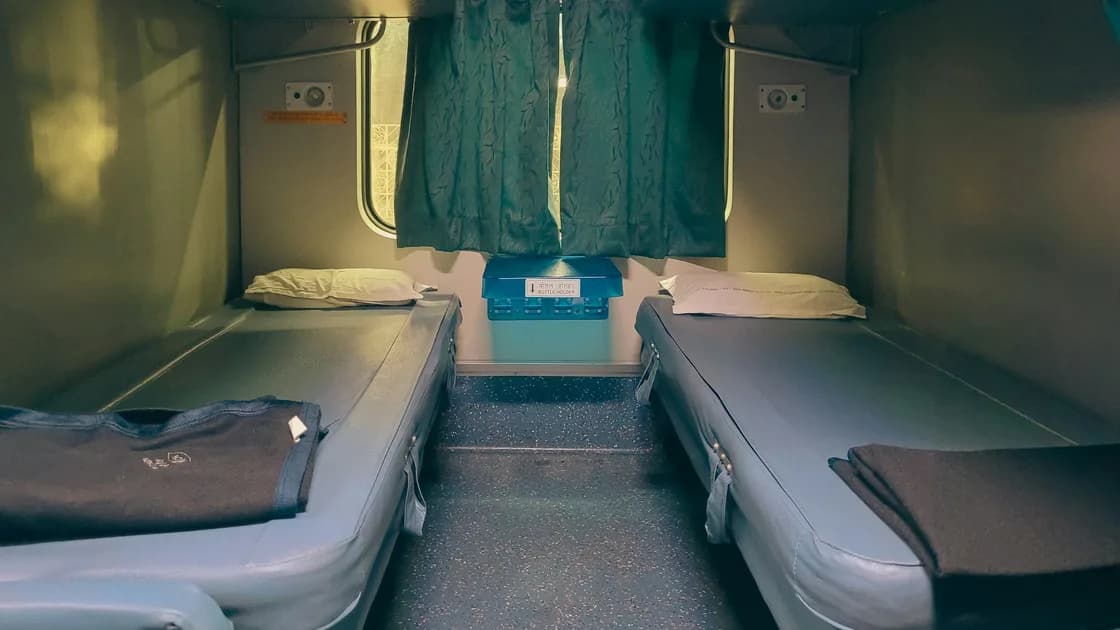

To use a sleeper train in China, buy the ticket with the same passport you will carry, read the exact train, station, carriage, and berth printed in the booking, and arrive early enough to complete the station's identity checks. Once aboard, place luggage securely, follow the attendant's instructions, and set an alarm before your stop.
Key Takeaways:
- Your original passport and the identity details in the booking must match.
- “Sleeper” is not one standard cabin: buy by the class and berth label shown for that train.
- The departure city may have several stations, so the station name matters as much as the train number.
- Keep valuables with you and prepare quietly before arrival.
China Railway's English FAQ says foreign passengers may use a valid foreign passport to buy tickets and that the original valid identification used for purchase is required for travel.[1] The government guide likewise explains identity verification and boarding for foreign visitors.[2] If you still need to set up an account or understand ticket collection, use the separate 12306 visitor guide.
| Booking label | What it tells you | What to verify |
|---|---|---|
| Train and date | The specific service | Date, direction, and departure time |
| Station | Where you enter and leave | Full station name, not only the city |
| Carriage | Which coach to board | Coach number on the platform and train |
| Berth | Your assigned sleeping place | Upper, middle, lower, or cabin label shown |
| Class | Layout and service category | Use the ticket's wording; layouts vary |
Check the whole itinerary before paying. Some overnight services arrive very early, leave from a distant station, or offer only certain sleeper classes on a particular date. Treat the live booking result as the authority rather than assuming every route has the same layout.
Lower berths are easier to reach and sit on, but they also become the most exposed part of a shared compartment. Upper berths provide more separation but require climbing and have less headroom. If mobility, pregnancy, injury, or traveling with a child affects the choice, ask the railway or booking channel what can be selected; do not rely on another passenger agreeing to swap.
Enter the name, passport number, nationality, and document type exactly as the booking channel requests. Before payment, compare the saved passenger record with the passport character by character. A shortened name, transposed number, or wrong document type can turn a valid payment into an identity-check problem.
Save the confirmation and ticket details offline. A screenshot of your itinerary is useful for finding the train, but it is not a substitute for the original passport. If the booking details are wrong, use the official correction, cancellation, or rebooking path; the railway change and refund guide covers that separate task.
Copy the full Chinese and English station name from the booking. Large cities have multiple railway stations whose names differ by a direction word, and traveling to the wrong one may leave no practical recovery time. Show the exact station name to a driver rather than saying only the city.
Allow time for the trip to the station, entry screening, identity verification, security, and the walk to the waiting area. Cut-off and boarding arrangements vary, so check the current official notice for your service. For general station navigation, see the high-speed rail station guide.
Keep your passport available from station entry through boarding. Follow the staffed lane if the automatic reader does not accept the document; do not repeatedly force the passport into an incompatible scanner. Show the booking screen and let staff direct you.
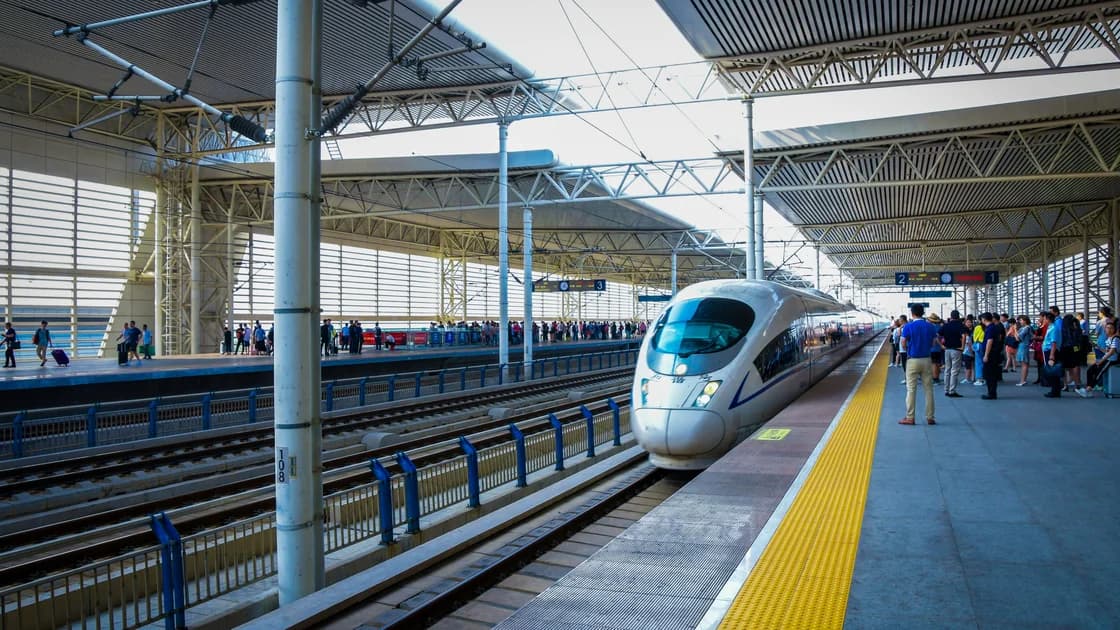
Inside, match the train number and departure time on the main board, then follow the gate and platform announcement. On the platform, carriage markers may be displayed on signs or screens. Board the numbered carriage on your ticket when possible, because moving through a long train with luggage is difficult.
Compare the carriage and berth labels with the ticket before unpacking. If another passenger occupies the berth, remain calm and ask the attendant to check both tickets. Do not treat an empty berth as a free upgrade; assignments and later boarding stops may not be visible to you.
Place large luggage only where it is stable and does not block the aisle, ladder, door, emergency equipment, or another passenger's space. Keep your passport, wallet, phone, medicines, and electronics in a closed bag within your control. Ask staff if an item does not fit rather than inventing a storage place.
Use headphones, lower screen brightness, silence alerts, and take calls in an appropriate common area. Avoid strong-smelling meals after others have settled. Wear footwear when walking through the carriage and keep the ladder and floor clear.
An attendant may inspect tickets or handle travel cards according to the service. Follow the current onboard procedure and keep the passport accessible, but do not hand valuables or identity documents to an unknown passenger. Note the location of toilets, hot-water points, exits, and the attendant before the lights dim.
Set two alarms and check the scheduled arrival against the next major stop. Delays can occur, so use onboard announcements, the carriage display, and the attendant rather than the timetable alone. If the stop is during the night, ask staff how arrival is announced.
Pack before the train reaches the station. Check the berth, bedding edge, wall pocket, table, charging area, and luggage rack. Put on shoes and outerwear without blocking the aisle, then leave through the instructed door with passport and all bags accounted for.
| Problem | Safe response |
|---|---|
| Passport will not scan | Use the staffed lane and show the original document and booking |
| Details do not match | Stop and ask official railway staff; do not alter an image of the ticket |
| Wrong station | Ask official staff about available options; do not assume the ticket works elsewhere |
| Berth is occupied | Ask the carriage attendant to compare assignments |
| Luggage will not fit | Request a safe storage instruction; never block an exit or ladder |
| You may miss the stop | Tell the attendant early and monitor announcements |
China Railway describes electronic-ticket travel with the valid identity document used for purchase.[1] Carry the original passport and follow any service-specific instruction; an itinerary screenshot is only a reference.
Do not plan on it. The official guidance calls for the original valid identification used to buy the ticket.[1] Ask railway staff about emergency document procedures if the passport is lost.
No. It is easier to access but less private in a shared space. Choose based on mobility, climbing ability, availability, and the exact layout shown for the service.
Only if the railway's current procedure and the attendant allow it. Never pressure another passenger, and have staff confirm any change so assignments remain clear.
Use the storage location provided in that carriage. It must not obstruct aisles, ladders, doors, or safety equipment; ask the attendant when unsure.
Practices vary. Set your own alarms, follow displays and announcements, and tell the attendant early if you are worried about a night-time stop.
Facilities and sales vary by train. Bring enough water and suitable food for the trip while respecting security rules and fellow passengers.
Follow official station and onboard information. Keep onward plans flexible and do not rely on the scheduled arrival alone.
Disclaimer: This article provides general travel information. Train layouts, document handling, boarding procedures, facilities, and railway rules can change by service and station; follow China Railway and staff instructions for your journey.
The China VPN pillar covers the wider connectivity context.
Sources checked 6 September 2026.
Related articles:
Sign up to experience all premium features at no cost.
*Available only to new users. Each user is limited to one trial.