Start your 3-day free trial
Sign up to experience all premium features at no cost.
*Available only to new users. Each user is limited to one trial.
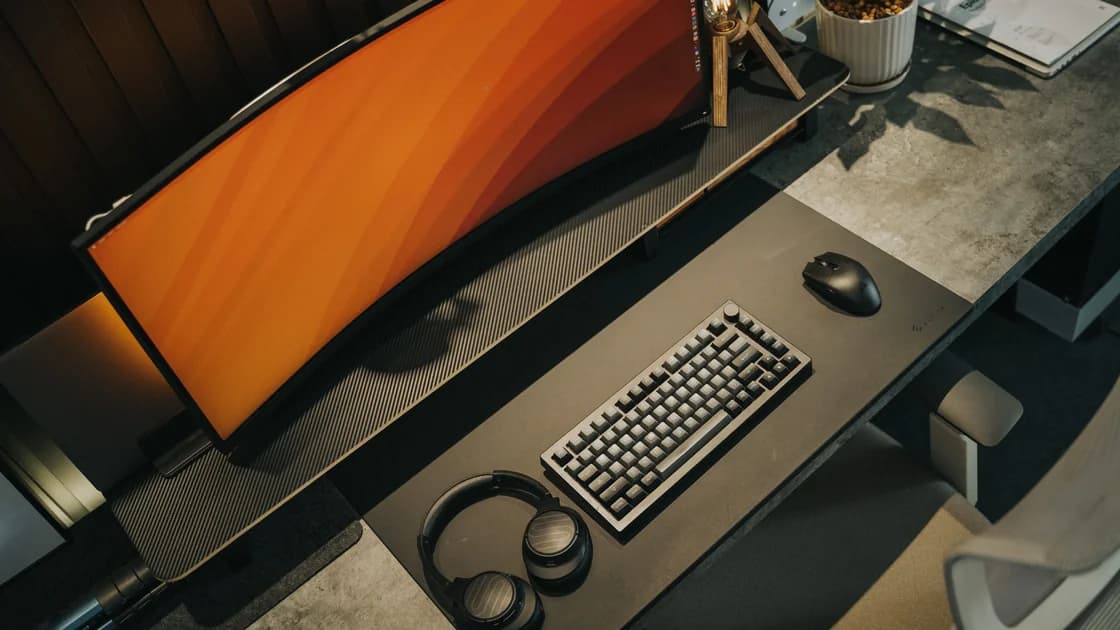

When a monitor refresh rate is stuck at 60 Hz even though the screen is visible, first confirm that you are changing the setting for the correct display and at a resolution the monitor supports at a higher rate. Then trace the complete signal path—computer output, cable, adapter or dock, monitor input, and graphics limits—because the weakest link determines which modes appear.
Key Takeaways
- Select the actual external monitor before changing its refresh rate.
- Treat resolution and refresh rate as one display mode, not independent promises.
- Verify the exact cable, port, adapter, dock, and monitor input specifications.
- Enable a monitor's high-refresh mode only through its documented on-screen controls.
- Use a direct, known-good connection to separate bandwidth limits from software state.
The broader device and app troubleshooting guide explains how to change one variable at a time. This guide assumes the monitor is already detected and showing a picture; a blank or missing display belongs in the external-monitor detection guide.
Start by recording the monitor model, selected input, current resolution, and reported refresh rate. Do not rely only on how smooth the pointer looks: animation, frame pacing, duplicated frames, or an application cap can make a high-refresh desktop look slower. A monitor may also show its current signal information in its on-screen display.
Refresh rate is how often the display can refresh an image. Frame rate is how many frames an application or GPU produces, and response time describes how quickly pixels change. A game running at 60 frames per second does not prove the panel is configured for 60 Hz; likewise, selecting 144 Hz does not guarantee every application will render 144 frames per second.
On Windows, open the advanced display settings, choose the target display, and inspect the available refresh rates. Microsoft notes that the choices depend on the display and that changing resolution can change the available rates.[1] On macOS, select the external display in Displays settings and inspect the Refresh Rate menu when that control is available. Apple documents that display options vary with the connected display and Mac.[2]
If the operating system already reports the intended rate but one application does not, check that application's display mode, frame limiter, vertical synchronization, and selected monitor. If the operating system offers only 60 Hz, continue with the signal path.
With two or more screens attached, settings pages can default to the built-in panel or another external monitor. Use the identify control, compare the arrangement, or temporarily disconnect other displays. Confirm the model name where the system exposes it; generic names can indicate an adapter, KVM, or receiver is presenting incomplete display information.
Choose the monitor's native resolution first, then inspect the rate list. If the desired combination is absent, test one lower resolution without changing anything else. A higher rate appearing only at the lower resolution is strong evidence of a bandwidth, timing, or device-capability limit—not proof that the panel is defective.
Use a small evidence table while testing:
| Test | Result to record | What it isolates |
|---|---|---|
| Native resolution, current cable | Rates offered by the OS | Normal end-to-end mode list |
| Lower resolution, same path | Whether higher rates appear | Bandwidth or timing limit |
| External display only | Rate and stability | Multi-display resource limit |
| Direct cable, no dock or KVM | Rate and resolution | Intermediate device limit |
| Known-good computer or monitor | Same or different mode list | Which side of the link to investigate |
Do not create a custom timing merely to force a number. An unsupported timing can produce a black screen, repeated reconnects, or an unstable image. Use modes documented for the exact monitor, input, and computer.
An HDMI, DisplayPort, USB-C, or Thunderbolt label alone does not promise a particular resolution and rate. The computer port, cable version and quality, adapter, dock, KVM, receiver, and monitor input must all carry the required signal. Product pages often list different limits for different ports on the same device.
Trace the path physically. Note every model number and avoid assuming two similar-looking USB-C ports have identical display capabilities. Apple likewise directs users to check how many external displays a Mac model supports and what resolution and refresh-rate combinations are available.[3]
Use these controlled checks:
A cable that produces a picture at 60 Hz can still be inadequate for a higher-bandwidth mode. Replace it only with a cable whose certification and length suit the exact connection; price or connector appearance is not evidence. Passive and active adapters also have different limits, so read the adapter's specification rather than the upstream port's label.
Some monitors ship with a compatibility setting that limits an input until a documented enhanced, high-bandwidth, overclock, or DisplayPort-version mode is enabled. Open the monitor's physical on-screen controls and read the manual for the exact model. Similar names across brands do not mean the settings behave the same way.
Before changing the monitor menu, photograph or write down the current input and picture settings. Enable only the manufacturer's supported mode, then power-cycle or reconnect if the manual calls for it. An advertised maximum may apply only to one input, one resolution, a particular color format, or an optional panel overclock.
Factory reset is not a first step because it can erase calibrated color, input assignments, accessibility choices, and other working settings. If the monitor reports the incoming signal as 60 Hz after the computer was set higher, return to the cable and intermediate-device checks. If it reports the higher rate but motion still looks wrong, investigate the application and frame delivery.
Graphics hardware and drivers must support the complete mode. Install stable operating-system and graphics updates from the computer or GPU manufacturer, restart, and check again. Avoid third-party driver sites and automated “driver updater” tools; an exact vendor package or the system update channel preserves a clearer support path.
Temporarily test with one external monitor. Some computers share display bandwidth across ports or support fewer displays at the highest resolution and refresh rate. A dock may divide one upstream link among video, storage, Ethernet, and other outputs. Closing applications does not create link bandwidth, but disconnecting extra displays or bypassing the dock can reveal the constraint.
Color depth, HDR, chroma format, and compression can also affect which combinations fit. Do not degrade color settings blindly. Record the original values, consult the computer and monitor specifications, and change one setting for diagnosis. If colors—not refresh rate—are the symptom, use the color-accuracy checks for monitors.
Dynamic Refresh Rate, Adaptive Sync, variable refresh rate, and fixed refresh rate are related but not identical. Windows may offer Dynamic Refresh Rate only on supported hardware and may select a different effective rate depending on activity.[1] Apple documents Adaptive Sync behavior and compatibility separately from the ordinary Refresh Rate selection.[2] Disable a power-saving or variable-rate feature only for a short comparison, then restore it unless the evidence shows it is involved.
Build the simplest supported path: one computer, one known-good high-bandwidth output, one appropriate cable, and one monitor input. Select a documented resolution-rate combination, restart both endpoints if required, and compare the operating-system report with the monitor's signal-information page.
If that direct path works, add the dock, adapter, KVM, receiver, and other displays back one at a time. The first component that removes the mode is the likely compatibility boundary. Check its exact firmware, port mapping, and published limits before replacing it.
If the direct path still offers only 60 Hz, test either the monitor on a known-compatible computer or the computer with a known-compatible monitor. Do not hot-plug equipment that its manual says must be powered down. Stop if a connector is loose, bent, unusually hot, smells burnt, or repeatedly sparks or disconnects.
Escalate with a precise record: computer and GPU model, operating-system version, monitor model and firmware, port names, cable and adapter models, resolution, rates offered, monitor-reported signal, and direct-test result. That evidence lets the manufacturer distinguish a documented limit, firmware issue, driver defect, damaged port, or monitor fault.
The selected resolution, computer output, cable, adapter, dock, monitor input, or multi-display limit may expose only 60 Hz. Confirm the correct display, then test a documented mode over a direct connection.
Some HDMI implementations can, but the connector name alone is insufficient. The HDMI capabilities at both endpoints, the cable, any intermediate device, and the requested resolution and color mode all matter.
That result usually indicates the original combination exceeded a bandwidth, timing, or device limit. It is useful diagnostic evidence, not a requirement to keep using the lower resolution.
No. Refresh rate describes the display cycle; frame rate describes content generated per second. Either can limit perceived motion, and response time is a separate pixel characteristic.
Not as a routine fix. Unsupported timings can be unstable or blank the screen. Prefer combinations documented by the monitor, computer, GPU, and adapter manufacturers.
Yes. Its upstream link, video chipset, port, connected displays, and other traffic can constrain modes. Bypass it for one test, then check its exact published display matrix.
Color depth, format, HDR, and link compression can change bandwidth needs. Record settings and consult exact specifications instead of disabling image features permanently without evidence.
Seek support when a mode documented for the exact monitor input fails across known-compatible cables and computers, or when the port is damaged, hot, unstable, or producing electrical symptoms.
Sources checked 6 September 2026.
Sign up to experience all premium features at no cost.
*Available only to new users. Each user is limited to one trial.