Start your 3-day free trial
Sign up to experience all premium features at no cost.
*Available only to new users. Each user is limited to one trial.


Direct answer: is incognito mode really private? Only partly. Its real job is to reduce what the browser saves locally, such as history, cookies, and form data. It does not make you invisible to websites, schools, workplace networks, or internet service providers.[1][2][3]
The trap is hearing “private” as “anonymous.” Incognito mode is useful, but it solves local device traces, not network-side identity exposure.
Key Takeaways
- Incognito mode mainly reduces browser records saved on your device. It does not make you anonymous online.[1][2][3]
- Websites, network administrators, schools, workplaces, and ISPs may still see your activity.[1][3]
- Downloaded files, saved bookmarks, and logged-in accounts do not disappear just because you used incognito.
- Chrome IP Protection is a limited extra mechanism, not a promise that incognito hides your IP everywhere.[4]
- If you want less network visibility, you need other layers such as VPNs, end-to-end encryption, and better account habits.
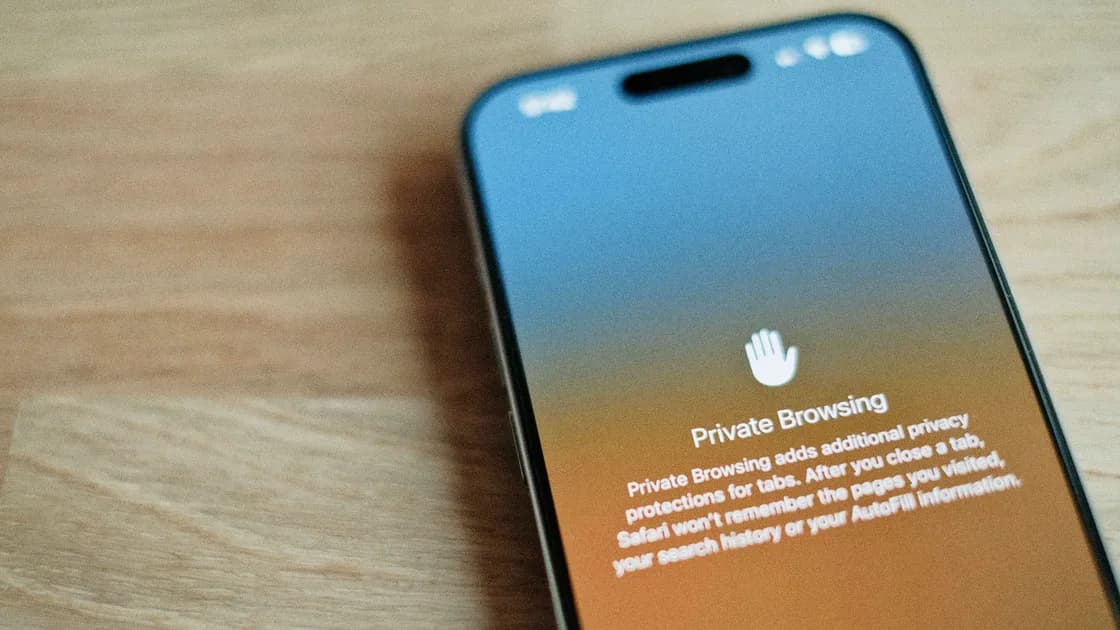
Google, Apple, and Mozilla describe private browsing in similar terms: after the session ends, the browser avoids keeping your browsing history, searches, some site data, and form information locally.[1][2][3]
That helps when:
For the larger privacy framework, see the complete digital privacy guide (2026). If your main question is IP visibility, read does incognito mode hide your IP address?.
This is the part that matters most.
When you visit a website, the site receives your request. If you log in, submit a form, or send a message, the site can still connect that activity to you.
Chrome and Firefox both state that schools, employers, and internet service providers may still see your activity.[1][3]
Files downloaded in an incognito window still remain on the device. Bookmarks you create do not disappear automatically either.[1][2]
If you log in to social media, email, or shopping accounts inside incognito mode, those platforms can still associate activity with your identity.
Somewhat, but the boundary is narrow.
Google’s Privacy Sandbox documentation says Chrome may use IP masking for certain third-party scenarios under specific conditions.[4] That does not apply to every website, request, or browsing session.
Think of it as:
It is best for four needs:
It is not a good substitute for:
If you care about what remains on the device, read how to delete incognito history.
It depends on who you are trying to limit.
| Your concern | More relevant approach |
|---|---|
| Someone using the same device sees history | Incognito mode, clear cache, delete downloaded files |
| Public Wi-Fi or ISP sees network paths | VPN, HTTPS, encrypted DNS |
| Platforms know who you are | Log in less, separate accounts, minimize permissions |
| Service providers read message content | Use end-to-end encrypted tools |
Privacy is not one feature. It is a stack of layers. If you want to know what a Wi-Fi owner can see, read can a Wi-Fi owner see what sites you visit?.
Is incognito mode really private? It offers limited privacy, not anonymity.Usually yes. Incognito mode does not automatically move your connection to another network exit.[1][3]
No. It means fewer local browser records, not full external anonymity.
Usually yes. Chrome and Firefox both warn that this visibility does not disappear in private browsing.[1][3]
No. It is an extra feature for limited scenarios, not full IP hiding.[4]
No. Incognito focuses on local traces. A VPN focuses on network transport and exit exposure.
It helps if you only want fewer local browsing records. It is not enough if your concern is what websites, network administrators, or ISPs can see.
Disclaimer: This article is for general digital privacy education only and does not constitute legal, forensic, or organizational network compliance advice.
AethoVPN cannot perform the account, device, or offline checks in “Is incognito mode really private”.
Sources:
Sources checked 8 May 2026.
Related Articles:
Sign up to experience all premium features at no cost.
*Available only to new users. Each user is limited to one trial.