Start your 3-day free trial
Sign up to experience all premium features at no cost.
*Available only to new users. Each user is limited to one trial.
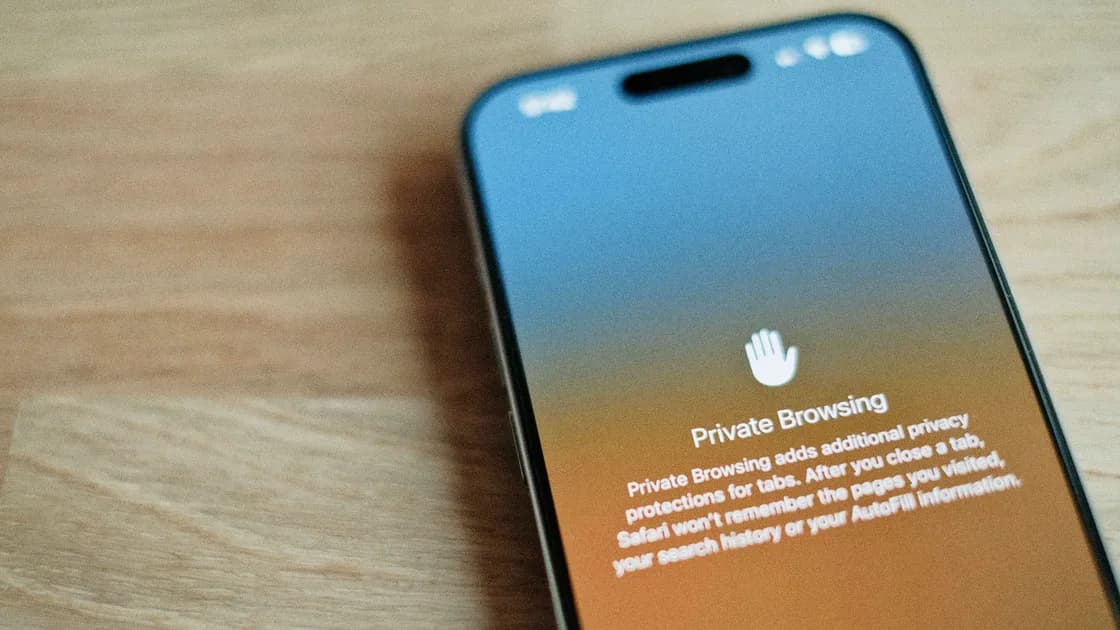

Quick answer: if you want iPhone private browsing, the most direct method is Safari’s Private tab. Apple’s official guide is clear: once private mode is on, Safari does not keep your visited page history, search history, or autofill data on the device.[1]
But that is not full anonymity. Private browsing is mainly about keeping traces off this device, not making the site, network, or logged-in services invisible to you. If you confuse “private browsing” with “Private Relay” or VPN, this article helps you separate the boundaries.[1][2][3]
Key Takeaways
- The private browsing entry on iPhone is the Private mode in Safari tabs.[1]
- Private mode mainly avoids local history and search traces, but it does not fully hide you from websites.[1][2]
- Apple’s iCloud Private Relay is not a full VPN; it is a Safari-focused privacy layer.[3]
- If you want stronger defaults, browsers such as Firefox Focus or Brave are good options.[4][5]
- If you want serious reduction in visibility, combine private mode, browser settings, permission controls, and network-layer tooling.
Apple’s iPhone guide is straightforward:
You will then see a UI change that indicates private context is active. Websites opened in this tab group are not retained in the same way as normal tabs for browser history and search history.
This is useful for temporary sessions on a borrowed device or when you do not want shared-device visibility into what you checked.
Apple’s statement is explicit: private mode is mainly about reducing local traces.[1]
It commonly:
This is especially useful if you:
If you are tightening browser-level privacy, you can also review How many browser types are there? Guide by engine and privacy use case.
This is the part people misunderstand most.
If you log in, submit email or phone details, or pass any identifying signal, websites can still recognize you. Private mode does not remove login identity.
Private browsing does not change the public exit IP the way a VPN can. Apple’s iCloud Private Relay docs also emphasize that it is a privacy enhancement for Safari browsing and not a replacement for full-device traffic protection.[3]
Private mode can reduce local traces, but cross-site tracking, browser fingerprinting, and permissions exposure do not end just because private mode is enabled. Mozilla repeatedly describes private browsing as non-anonymous by design.[4]
If you are hardening your threat model, read What is a tracker and how to turn it off and Will you still be tracked when using a VPN? together.
No. Many users mix them up.
Apple describes iCloud Private Relay as an iCloud+ feature that masks IP addresses and encrypts insecure traffic when using Safari, making it harder for network intermediaries and websites to see both identity and destination.[3]
Its goal and Private Browsing are different:
| Feature | Primary job |
|---|---|
| Safari Private Browsing | avoids storing page and search history on the device |
| iCloud Private Relay | reduces IP exposure and network visibility in Safari |
| VPN | provides broad encrypted network protection with route exit control |
So if you expect all network traces to vanish with private tabs, you are likely applying the wrong layer. For a deeper comparison of the two approaches, see iCloud Private Relay vs VPN: Why VPN is usually more practical (2026).
Mozilla positions Firefox Focus as a privacy-first mobile browser with default tracker blocking and fast session clearing.[4] If you prefer minimal setup, this is often the simplest option.
Brave emphasizes default blocking of trackers and intrusive ads out of the box.[5] For many iPhone users this is a good balance: less interruption than extreme privacy tools, but stricter default policies than standard browsers.
If you already use Safari heavily, the ecosystem value is real: sync, keychain, and system-level integration. With Private Browsing and Private Relay, many baseline privacy needs are already covered.[1][3]
Use this by scenario:
Quick lookup, no local history → use Safari Private Browsing.Reduce trackers and ads by default → try Firefox Focus or Brave.Lower IP visibility in Safari → evaluate iCloud Private Relay usage.[3]Reduce exposure across broader traffic → add a VPN beyond private browsing.If you are also reviewing mobile permissions, read What permissions are you giving your apps, and what they expose and How data sharing works and what you agree to by default.
The most common mistake is assuming private mode is active when you are still using regular tabs.
If your goal is IP/privacy from network observers, DNS path visibility, or ISP-level tracing, Private Browsing alone does not solve it.
If your account session is still active, websites still know who you are. Private mode does not anonymize authenticated sessions.
Apple provides steps to delete Safari history, cache, and cookies in standard tabs.[2] Any previous local traces there are not automatically cleaned by private mode.
Yes. Safari provides private tabs and Apple’s support docs include clear steps.[1]
No. It mainly prevents local history, search, and autofill traces, but does not erase account identity, network context, or device identifiers from a broader perspective.[1][3]
No. Private Relay is Safari-focused for traffic handling and IP obfuscation; it does not replace VPN protection for all apps. It is not a full-device privacy tunnel.[3]
That depends on your target: Firefox Focus emphasizes blocking defaults; Brave is more balanced for everyday use; Safari has strong system integration.[1][4][5]
Usually yes. If you submit forms, stay logged in, or expose other identity signals, websites can still track you.
No single browser mode can do this alone. Private mode mainly affects local storage, not network path encryption.
Disclaimer: This article is for general privacy configuration and browser selection guidance only and does not constitute legal, compliance, or Apple product support advice. Interface and options can vary by iOS version, so rely on what your device shows.
In “IPhone private browsing: 2026 Guide”, AethoVPN only covers the network path and cannot resolve the rest.
Sources:
Sources checked 8 May 2026.
Related Articles:
Sign up to experience all premium features at no cost.
*Available only to new users. Each user is limited to one trial.