Start your 3-day free trial
Sign up to experience all premium features at no cost.
*Available only to new users. Each user is limited to one trial.
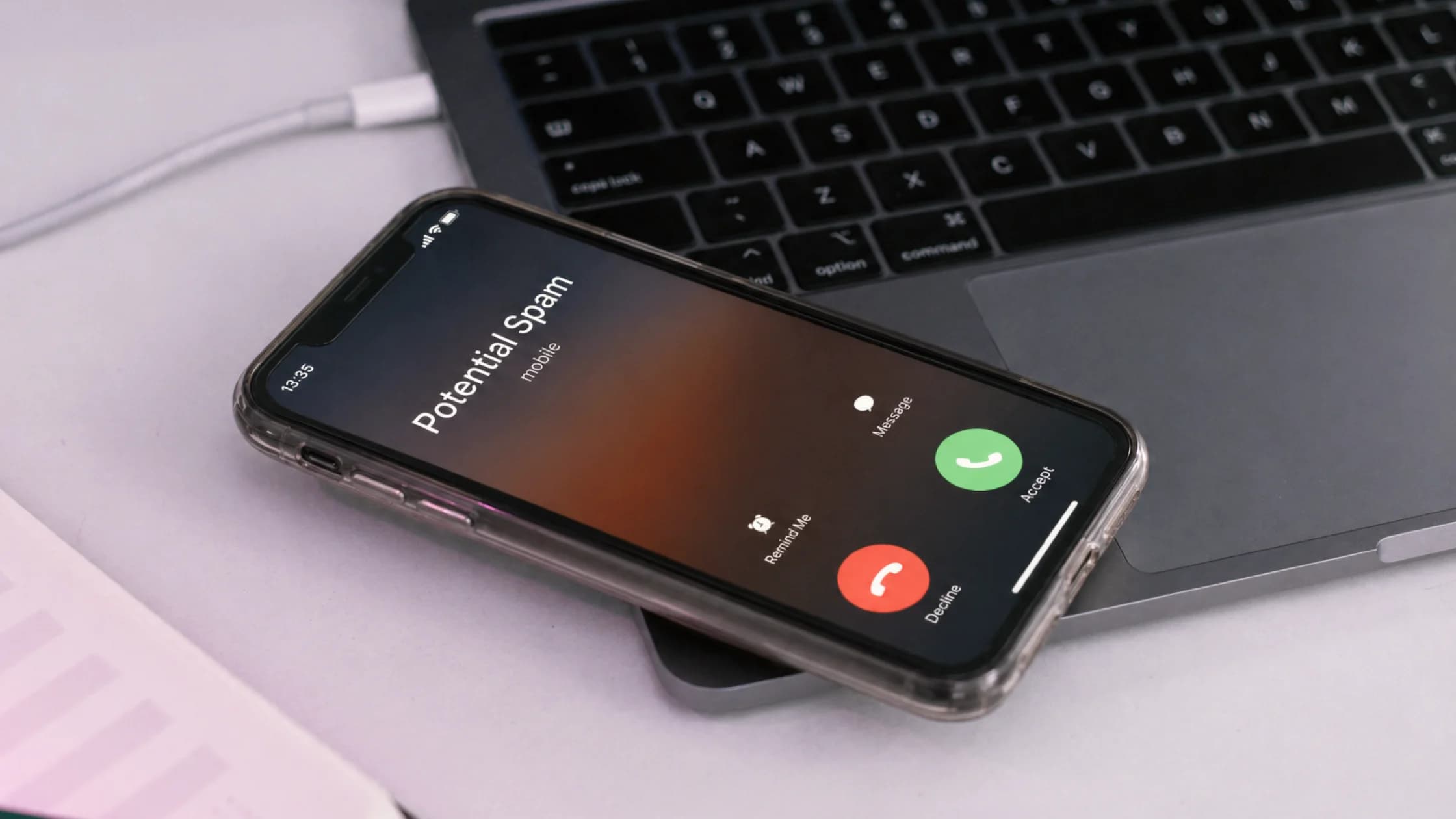

If your phone shows Potential Spam above an incoming call, it usually does not mean “this call has been confirmed as a scam.” It means the number or calling pattern has been judged suspicious by your phone system, carrier, or caller ID service. FTC guidance on unwanted calls and robocalls makes the same point: caller ID can give clues, but it is not absolute truth because caller ID can miss scams and can also be spoofed.[1][2]
The best way to read the label is not “case closed.” It is “raise your guard one level.”
Use the digital privacy guide as the wider checklist: it connects this issue to accounts, devices, identifiers, and data-broker exposure.
Key Takeaways
Potential Spamis a risk hint, not a final legal or factual finding.[1][2]- Unlabeled calls can still be scams, and labeled calls are not always malicious.
- The safer move is usually not to call back, not to share personal details on the call, and to verify through official channels.
- If these calls increase sharply, the issue may be your phone number exposure, not one single caller.
It usually does not mean the caller’s identity has been proven. It points to one or more risk signals:
In plain English: the system is telling you to treat the call with a higher standard.
In everyday use, these labels belong to the same family of risk warnings, but the exact wording and severity depend on the carrier, operating system, and caller ID service. The important point is not the wording. It is the shared rule:
FTC advice on robocalls and unwanted calls is direct: do not follow call prompts, and do not instinctively return missed calls.[1][2] One goal of many scammers is simply to confirm that your number is active.
Especially avoid sharing:
When a call shifts toward “verify your identity,” “transfer you to support,” or “just confirm this,” the risk rises quickly.
If the caller claims to be a bank, delivery company, carrier, tax office, school, or company support team, the safer move is always to find the contact method yourself on the official website, app, or bill. Do not continue along the path the caller gives you.
If you have recently received many of these calls, stop treating them as isolated judgments. Enable phone-level blocking, carrier filtering, and number blocking together. For setup details, read How to Stop Spam Calls: 7 Steps to Reduce Robocalls and Scam Calls (2026).
Common causes include:
If calls, texts, verification links, and unknown support messages all increase together, it looks more like an exposure problem than a single-number problem. Read How Do Scammers Get Your Information? 8 Common Paths and How to Reduce Them.
If you first want to understand why different random numbers keep calling, see Why Do Random Numbers Keep Calling Me? Common Causes and the Safer Response Order.
No. Legitimate organizations can be mislabeled because of number pools, outbound calling patterns, or complaint history. For regular users, though, the safest principle is not to defend the caller. It is to:
That is more reliable than trying to guess the truth in a 30-second conversation.
They overlap, but they are not the same:
Potential Spam is a risk label from a system or caller ID service;If your question is whether an unfamiliar area code is a scam, read Are Unknown Area Code Calls Scams? Look Beyond the Number and Check These 6 Signals (2026).
No, but it means the call should be handled as higher risk.[1][2]
If it is a legitimate important organization, it usually leaves a proper message, or you can check through official channels.
Usually no. The safer move is to find the real contact method through the official website or app.[1]
Caller labels are not perfect filters. Scammers change numbers, spoof caller ID, and adjust campaigns.
Not always, but if calls, texts, and unfamiliar verification attempts increase together, your exposure may be growing.[3]
Disclaimer: This article is for general digital safety and anti-scam education only. It is not legal advice, carrier support guidance, or individual recovery advice. Label names and detection logic vary by device, carrier, and region.
AethoVPN publishes this guide, but a VPN connection cannot resolve the issue discussed here: potential spam call.
Sources:
Sources checked 8 May 2026.
Related Articles:
Sign up to experience all premium features at no cost.
*Available only to new users. Each user is limited to one trial.