Start your 3-day free trial
Sign up to experience all premium features at no cost.
*Available only to new users. Each user is limited to one trial.

Precise Location on iPhone is a more detailed location permission setting from Apple. It decides whether an app can access a more exact location or only a less precise one. Apple's guidance is clear: you can control location access for each app and also decide whether that app can use Precise Location.[1][2]
So the real question is not whether to turn off all location access. It is: which apps truly need to know where you are within a few meters, and which ones do not.
If you often tap "Allow" on permission pop-ups without thinking, this guide helps you take that setting back.
Use the digital privacy guide as the wider checklist: it connects this issue to accounts, devices, identifiers, and data-broker exposure.
Key Takeaways
- Precise Location is not one global switch. It can be controlled separately for each app.[1][2]
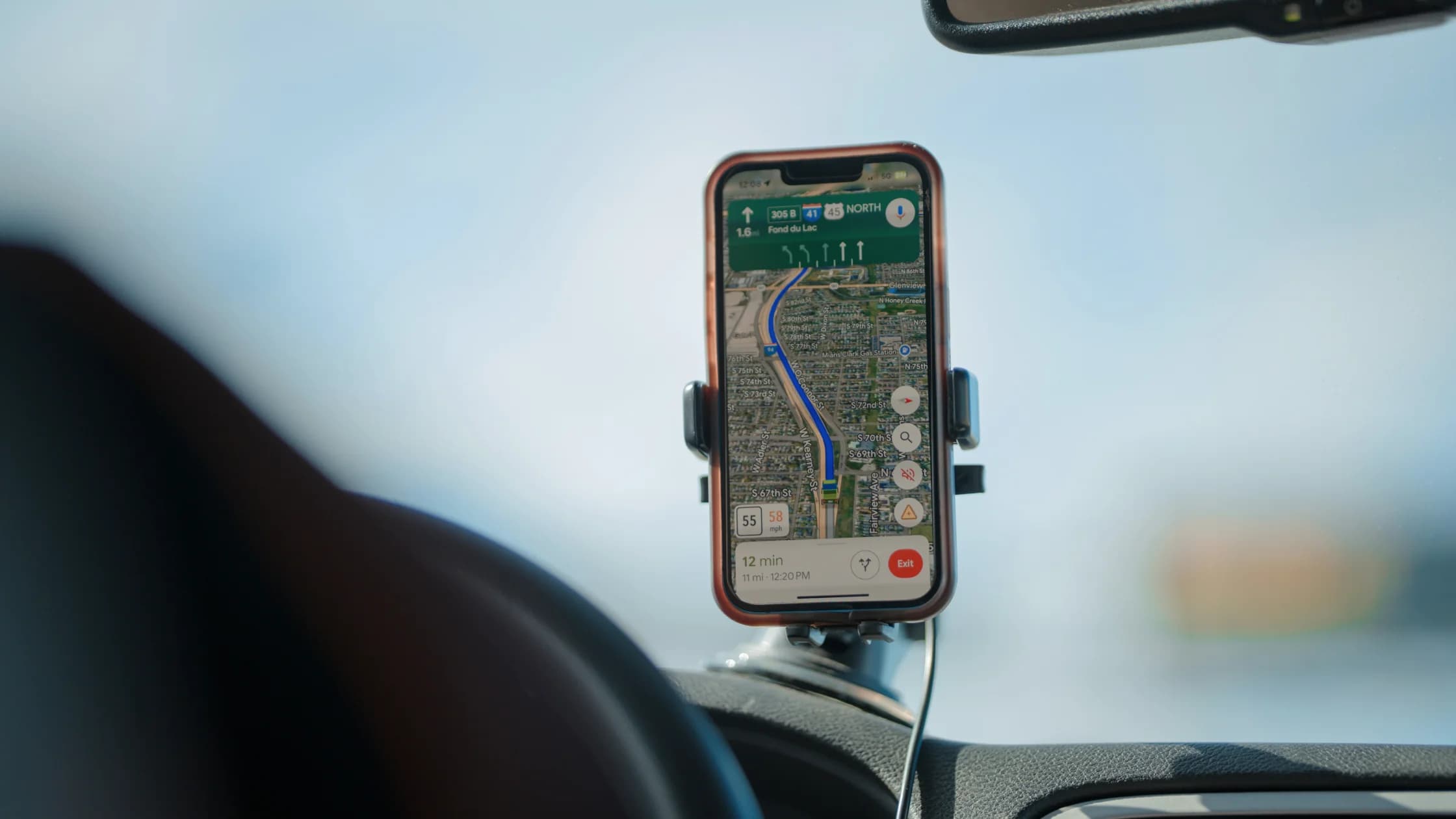
- Maps, ride-hailing, delivery, and Find My-style features usually rely more on precise location.
- Weather, shopping, news, and many social apps can often work without it.
- The safest approach is not to turn everything off, but to judge each app by what it actually does.
- If you already granted too much access, check "Always" location access and background location too.
Separate the two layers:
That means you can let an app keep using location without giving it the most precise version.
This is more practical than all-on or all-off because many services only need a general area, not the exact building you are near.
| Scenario | Usually needs Precise Location? | Why |
|---|---|---|
| Maps and navigation | Usually yes | Turns, walking routes, and live position need accuracy |
| Ride-hailing / delivery | Usually yes | Drivers and couriers need to find you precisely |
| Find devices / safety location sharing | Usually yes | Large location drift can break the feature |
| Weather apps | Not usually | A general area is often enough |
| Shopping / news / utility apps | Usually no | The core function often does not need exact coordinates |
If an app with nothing to do with navigation or delivery insists on precise location, ask what it really needs that data for.
The steps are simple:
Settings;Privacy & Security;Location Services;Precise Location.[1][2]Always access?If you already care about permission boundaries, continue with what app permissions can expose.
I do not recommend turning off Precise Location for every app at once, for practical reasons:
A better rule is: keep Precise Location for apps that truly need it, and move the rest to approximate location or disable location entirely.
The main tradeoff is less convenience, not a broken app.
For example:
From a privacy perspective, that tradeoff is often worth it.
Start with:
By the third group, you will usually find permissions that are broader than they need to be.
If you are also cleaning up private browsing, permissions, and tracking exposure on iPhone, read how to open private browsing on iPhone in 3 steps (2026).
Often yes. They may still know your general area, just not as precisely.[1][2][3]
No. Navigation, ride-hailing, and Find My-style features often need it.
Usually not. A general location is often enough.
No. Precise Location controls detail. "Always" controls timing and scope of access.
They may use it for ads, recommendations, nearby features, or analytics. In those cases, turn it off first and see whether the app still works well.
Start with apps you rarely use, shopping and utility apps, and anything set to "Always."
Disclaimer
This article is general privacy and device-settings guidance. Interface labels and options may vary by iOS version, app design, and regional settings.
For “Precise Location on iPhone: 2026 Guide”, AethoVPN cannot replace checks beyond the network path.
Sources
Sources checked 8 May 2026.
Related Articles:
Sign up to experience all premium features at no cost.
*Available only to new users. Each user is limited to one trial.