Start your 3-day free trial
Sign up to experience all premium features at no cost.
*Available only to new users. Each user is limited to one trial.

If you are asking what does private browsing do, the most useful answer is this: it mainly helps stop the next person using this device from seeing your local browsing traces. It does not make the whole internet unable to see you. Google, Apple, and Mozilla describe the same boundary: private browsing reduces locally saved history, cookies, site data, and form traces, but it does not blind websites, internet providers, schools, or company networks.[1][2][3]
That means private browsing is useful, but often overrated. Many people actually want anonymity, IP masking, anti-tracking, or lower network visibility. Private browsing does not directly solve all of those.
Use the digital privacy guide as the wider checklist: it connects this issue to accounts, devices, identifiers, and data-broker exposure.
Key Takeaways
- Private browsing mainly reduces what the browser stores on the local device.[1][2][3]
- It usually does not hide your IP address or stop websites, ISPs, schools, or workplaces from seeing activity.[1][3]
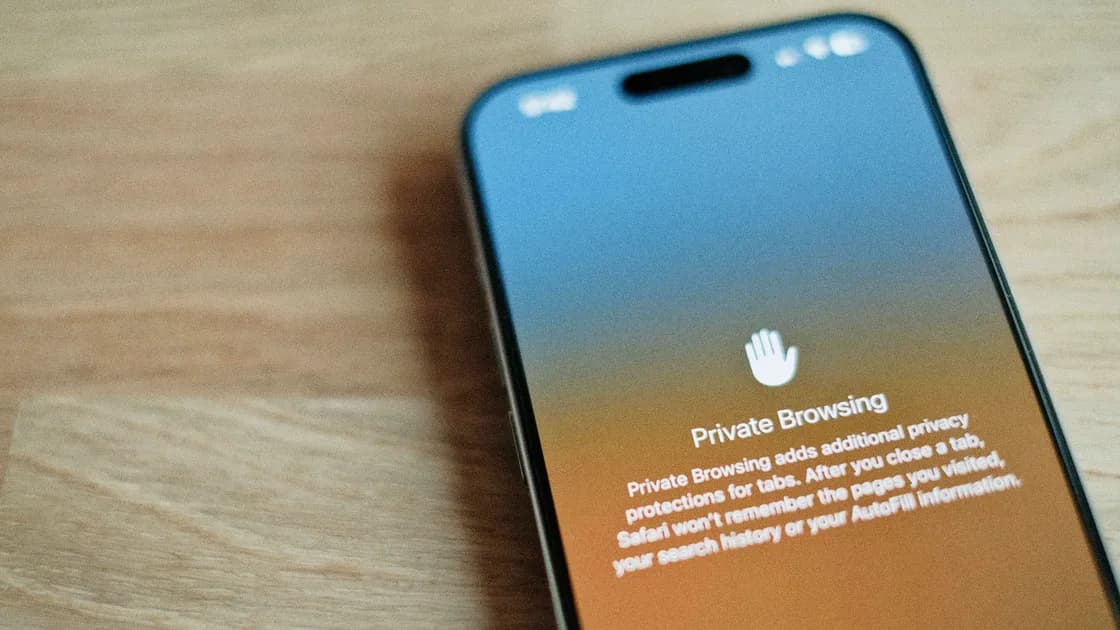
- Safari private browsing now includes stronger tracking and fingerprinting protections, but that is not the same as full anonymity.[2][4]
- Bookmarks, downloaded files, and activity inside accounts you log in to usually do not disappear just because you used a private window.[1][2][3]
- Local traces, website identification, and network visibility are three different problems.
Google describes Incognito plainly: after you close all Incognito windows, Chrome does not save that session's browsing history, cookies and site data, or information entered in forms on the device.[1]
Apple and Firefox describe similar behavior:
In practice, private browsing is good for:
This is the part worth understanding first.
For a focused explanation, read Does Incognito hide your IP address? No, it mainly handles local records.
If you sign in inside a private window, the website still knows who you are. Google also states that Incognito cannot stop you from telling a website your identity.[1]
Chrome and Firefox both warn that this layer may still observe your activity.[1][3]
If you want to separate that issue, read Can a Wi-Fi owner see what sites you visit? What they can actually see.
Downloaded files remain on your device, and bookmarks usually remain as well.[1][2][3]
Broadly, yes, but the details differ.
| Browser | Common name | Core idea |
|---|---|---|
| Chrome | Incognito | Reduce local storage and session residue |
| Safari | Private Browsing | Reduce local traces and add more tracking protections |
| Firefox | Private Browsing | Reduce saved history and emphasize tracking protection |
| Edge | InPrivate | Similar logic to the others |
The difference is less about whether history is removed and more about:
Apple's current Safari private browsing documentation is no longer just about not saving history. It also mentions:
That makes Safari private browsing more than a simple local-history cleanup mode. But it still does not mean you are fully anonymous.
If you mainly use an iPhone, see How to open private browsing on iPhone: 3 steps for Safari Incognito mode (2026).
The difference is timing.
Both are still device-side actions. If you care about what remains on the device and how to clean it more thoroughly, read Is Incognito history really deleted? How to remove leftover private browsing traces.
It helps keep the next user from immediately seeing your history or logged-in state.
For example, you can sign in to work and personal accounts separately, or help someone use a service once.
It is especially useful for developers, marketers, and anyone troubleshooting page behavior.
Private browsing is not anonymity.
It does not change your IP address.
Safari and Firefox add extra protections, but website identity, login state, and network visibility remain separate layers.[2][3][4]
I would not call private browsing useless. For shared devices, temporary sessions, and reducing local traces, it is genuinely practical.
I would also not call it enough privacy protection. The problem you want to solve may not be in the browser's local storage layer at all.
No. It mainly handles local traces, not complete anonymity.[1][2][3]
Yes, especially after you sign in to an account.[1]
Usually no. It is not a tool for changing your network exit point.[1][3]
No. Downloaded files usually remain on the device.[1][2]
Apple's current public documentation does show more tracking and fingerprinting protections, but boundaries still remain.[2][4]
Yes. Private browsing does not cancel the risks created by extensions, login state, or unsafe clicks.
Disclaimer
This article is for general digital security education only and does not constitute browser security auditing, forensic, or legal advice. Private browsing behavior changes across browser and operating system versions.
For “What does private browsing do”, AethoVPN cannot replace checks beyond the network path.
Sources
Sources checked 8 May 2026.
Related Articles:
Sign up to experience all premium features at no cost.
*Available only to new users. Each user is limited to one trial.