Start your 3-day free trial
Sign up to experience all premium features at no cost.
*Available only to new users. Each user is limited to one trial.

To access home-country apps abroad, find the one signal behind the failure first: when an app stops working abroad, the cause usually sits in the network, IP, GPS, SIM, store region, account or payment, or the service’s own rules. A VPN may change the public IP seen by a service, but it cannot change GPS, SIM registration, an App Store or Google Play profile, billing country, account history, or the service’s terms. A layered diagnosis is safer than repeatedly changing VPN servers.[1][2]
Key Takeaways
- First check whether the app is down, unsupported in the destination, or showing an account-security challenge.
- Diagnose seven layers separately: network, IP, GPS, SIM, store region, account or payment, and service policy.
- Use a VPN only when the evidence points to an IP-based network path, and do not treat it as a guaranteed unlock.
- Banking, government, medical, and work apps deserve a lower-risk fallback and an official support path.
- Do not change an account country or payment profile casually; platform rules can affect existing content and subscriptions.
A VPN can send traffic through a selected VPN gateway. That may change the public IP address and the coarse network location a service sees. It does not rewrite every signal that an app or platform may use.
| Diagnostic layer | What to check | Can a VPN solve it? |
|---|---|---|
| Network | Does the connection work without the app? | Sometimes, if the path is the actual issue |
| IP | Does the service reject or label the current exit IP? | Possibly; results depend on the service and its rules |
| GPS | Does the app have device location permission? | No |
| SIM | Is the phone using a home or travel carrier profile? | No |
| Store region | Is the app listed in the current store country? | No; follow the platform’s rules |
| Account or payment | What country, billing profile, history, or MFA state is attached? | No |
| Service policy | Does the provider permit access from this location? | No; read the terms and ask support |
The distinction matters because a service can use more than one signal. Apple says Location Services may combine cellular, Wi-Fi, GPS, and Bluetooth data when an app has permission.[1] Apple also documents that media and app availability can vary by country or region.[2]
If the issue is a normal travel network rather than an app-region rule, VPN for international travel: a practical trip guide gives the connection sequence. If the failure is specific to Chinese apps, compare the broader account and platform checks in accessing Chinese apps abroad.
Open the provider’s status page, official support page, or a known-good official website. Check whether the app works on another permitted network and whether other users are reporting an outage. Update the app and operating system only through the official store or vendor channel.
If the app shows an unfamiliar login warning, a payment error, or an MFA challenge, do not keep rotating IP addresses. Save the message and use the provider’s support path. Rapid location changes can make a legitimate account look unusual.
Try the app on a trusted connection, such as mobile data or a verified residence network. Then try the venue Wi-Fi if it is permitted. If only one network fails, the problem may be DNS, captive-portal access, filtering, or connectivity rather than the app’s home-country policy.
Complete a captive portal before connecting a VPN. Check the tunnel status after switching between Wi-Fi and cellular. How to choose a VPN server location while traveling explains why a distant or congested gateway can add another failure point.
On iPhone or iPad, review Settings > Privacy & Security > Location Services and the app’s permission. Apple notes that apps do not use Location Services until they request access and you grant it, and that the setting can be changed per app.[1] Android users should use the equivalent app-permission and location controls for their device version.
Do not disable location services merely to force a result. Some apps need location for safety, delivery, fraud prevention, or local features. If the service requires a location that you cannot legitimately provide, stop at this layer and ask support.
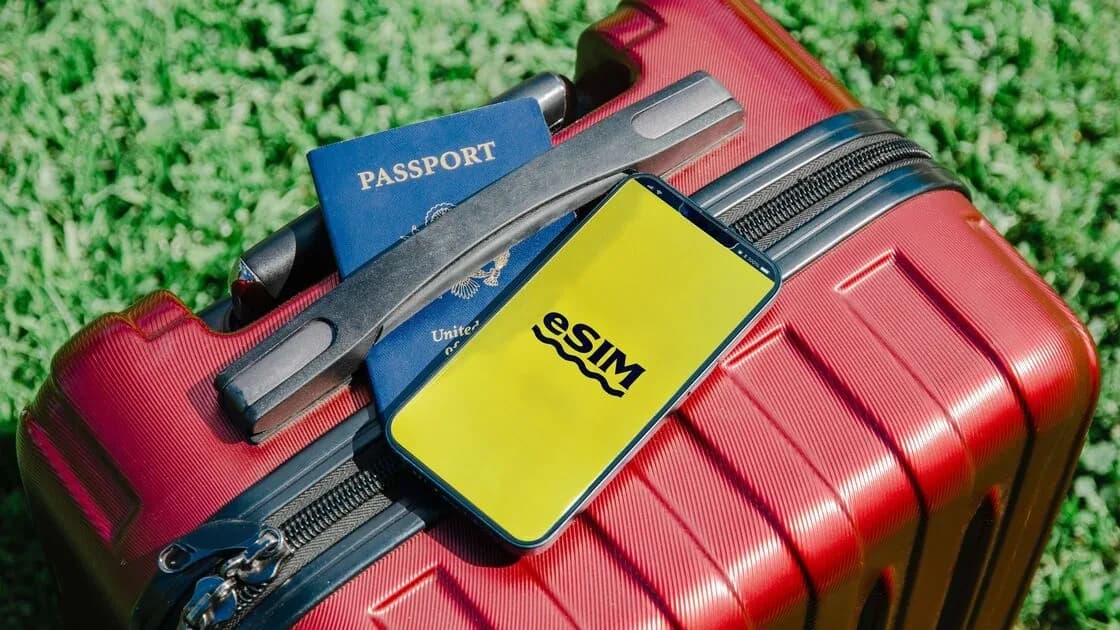
Record whether the phone is using a home SIM, a local SIM, roaming, or an eSIM. A VPN does not change the carrier identity or the phone number used for SMS recovery. If the app depends on a local number, a one-time code may fail even when the network is healthy.
If you are deciding between mobile data, roaming, an eSIM, and a VPN, the travel eSIM versus VPN comparison separates the connection choices from location and account signals.
Next check the store listing and account region. Google says the Play country or region determines what content appears in the store and in apps, and changing it can affect access to existing content; the change has location and payment requirements, and Google makes you wait at least 90 days before the next change.[3] Apple similarly warns that some media and app features vary by country or region.[2]
Do not change a store country as a quick experiment. Read the platform’s prerequisites, consider subscriptions and payment methods, and preserve access to the account you actually use. A new profile can create a different problem without solving the original one.
First confirm the evidence. The strongest signal is a service message or official support response that specifically identifies IP-based availability, not merely a page that fails to load. A browser location result or one “access denied” screen is not enough to prove the layer.
If IP is genuinely relevant and the service permits your use, choose one stable VPN location that matches the legitimate task. A nearby or familiar region may be less disruptive than repeated long-distance switching. Check the app again after the tunnel connects, then stop if the service requests identity verification or reports a policy restriction.
If an app fails abroad because of IP location, AethoVPN lets you connect to a home-country location when its in-app list offers one, although the VPN cannot change the account's registered country, payment eligibility, or the app's content rights. Start the 3-day free trial to see whether that location clears the app's IP check.
Do not treat a technical response as permission. A bank, government service, employer, medical provider, or subscription platform may restrict access for legal, fraud, licensing, or safety reasons. Read the current terms and contact the service through a verified channel.
For financial accounts, use the official app or saved website, keep your normal recovery method available, and consider a trusted connection rather than a data-center IP. VPN safety for online banking covers the additional checks without promising that a VPN will improve every login.
For some lawfully provided online content services, EU Regulation 2017/1128 establishes a cross-border portability framework: a subscriber who is temporarily present in another EU Member State may be able to use the service when the residence and subscription conditions are met. This is not a general right to use every home-country app abroad. It does not cover every service, change GPS, SIM, store, account, payment, or security signals, or override provider terms. Check the service’s official guidance and applicable local rules before troubleshooting with a VPN.[4]
Stop self-testing and collect evidence when any of these conditions appears:
Record the device model, app version, country you are physically in, network type, exact error text, time, and steps already tried. Do not send passwords, full payment details, or recovery codes in a support ticket. This record gives the official support team useful context without turning the troubleshooting process into more account risk.
No. A VPN may change an IP-based signal, but apps can also use GPS, SIM, store region, account history, payment, MFA, and service policy. The provider may still refuse access.
The app may have access to GPS, Wi-Fi, cellular, Bluetooth, cookies, account data, or another device signal. A VPN does not replace those sources of location information.
Open an IP check with the VPN off, then again after it connects, and compare the country shown. That result covers only the IP layer; GPS, SIM, store region, and account country can still point elsewhere, so a matching IP country does not guarantee the app will open.
Only after reading the platform’s current requirements and understanding the effect on content, subscriptions, and payment. Do not change it simply to test whether one app will appear.
Repeated switching can cause slower connections and additional account checks. If an app mentions fraud, identity, payment, or unusual activity, stop switching and contact official support.
No. A VPN does not change the carrier profile, phone number, roaming state, or SMS delivery path. Check the service’s supported recovery and travel options.
Use the official app support path, a trusted connection, and your normal recovery method. Do not keep guessing with new IPs or enter credentials into an unofficial page.
No. You remain responsible for following local law, platform rules, contracts, and account policies. Technical reachability is not permission.
Disclaimer: This article is for general informational purposes only and does not constitute legal, financial, technical, or other professional advice. Platform availability, service policies, and local rules can change.
Sources:
Related Articles:
Sign up to experience all premium features at no cost.
*Available only to new users. Each user is limited to one trial.