Start your 3-day free trial
Sign up to experience all premium features at no cost.
*Available only to new users. Each user is limited to one trial.

After a rental car accident abroad, protect people first, call the local emergency service when required, and remain at the scene unless safety or an official instruction requires movement. Notify the rental company promptly, exchange accurate details, document the scene and witnesses, and submit consistent reports under the rental and insurance rules without guessing about fault.
Key Takeaways:
- Move people away from immediate danger and obtain emergency help before collecting evidence.
- Follow local duties about stopping, warning other traffic, police reporting, and moving vehicles.
- Contact the rental company's accident line before arranging towing or repairs.
- Exchange identity, vehicle, insurer, and contact details without admitting liability.
- Preserve an objective scene record and keep every report factually consistent.
Prepare these contacts as part of your international travel safety plan. This is a response sequence, not a substitute for local legal advice or an assessment of who caused the collision.
Stop as soon as it is safe. Check yourself, passengers, occupants of other vehicles, cyclists, and pedestrians for injury. Call the local emergency number if anyone may be hurt, there is fire or leaking fuel, traffic is endangered, public property is damaged, an animal is involved, the other driver leaves, or local rules require police attendance.
Do not move an injured person unless immediate danger or emergency instructions make movement necessary. Switch off engines when safe, use hazard lights, and place warning equipment only if local rules require it and you can do so without entering live traffic. Know the emergency number and basic medical information before driving; the travel emergency-contact guide helps prepare that record.
Your Europe advises calling emergency services, not leaving the scene, and completing an accident statement after a road collision abroad.[1] The exact duties and numbers vary, so follow police, emergency, motorway, tunnel, or rental-facility directions at the location.
If remaining beside the vehicles creates danger, move to a protected position while staying available to authorities. Move a vehicle only when the law, police, road operator, or immediate safety requires it; first record its position if it is safe to do so.
Find the accident or roadside number in the agreement, key tag, app, or vehicle pack. Tell the operator where you are, whether anyone is injured, which authorities are attending, whether the vehicle blocks traffic, and whether it can be driven. Ask for a case number and written instructions.
Do not authorize a private tow, repair, tire replacement, storage arrangement, or vehicle disposal unless emergency officials require immediate action or the rental company approves it. An unauthorized provider may take the car to a facility outside the rental or insurance network. If authorities order a tow, record the agency, operator, destination, receipt, and legal reason.
Ask what accident form is required, its deadline, where to send it, and whether the branch, central claims team, insurer, or card-benefit administrator needs a separate report. Confirm what to do with keys, luggage, child seats, toll devices, and the rental paperwork. Your Europe also advises notifying the rental company and following its contract process.[3]
Mechanical failure without a collision follows a different path. If the car simply stops working, use the rental-car breakdown process rather than labeling it an accident.
Collect each driver's full name, address where required, telephone or email, driving-license details, insurer, policy or certificate number, registration plate, vehicle make and model, and owner information if different. Record the police unit, officer or incident number, and the other party's rental company when applicable.
Provide the information local law requires, but do not surrender your passport, original license, phone, or rental documents to another driver. Show an original to an authorized official when required and keep control of it. If language is a barrier, use an official interpreter or a careful written exchange rather than signing text you do not understand.
Do not apologize in a way that admits legal liability, promise payment, accept cash to end the matter, or accuse the other person. You can express concern and describe observable facts: direction of travel, lane, signal, point of contact, weather, and injuries reported. Leave fault decisions to the authorities, insurers, and applicable process.
If the other party refuses details or appears threatening, do not escalate. Move to safety, call police, and record only what can be observed lawfully, such as the plate, vehicle description, location, and direction of travel.
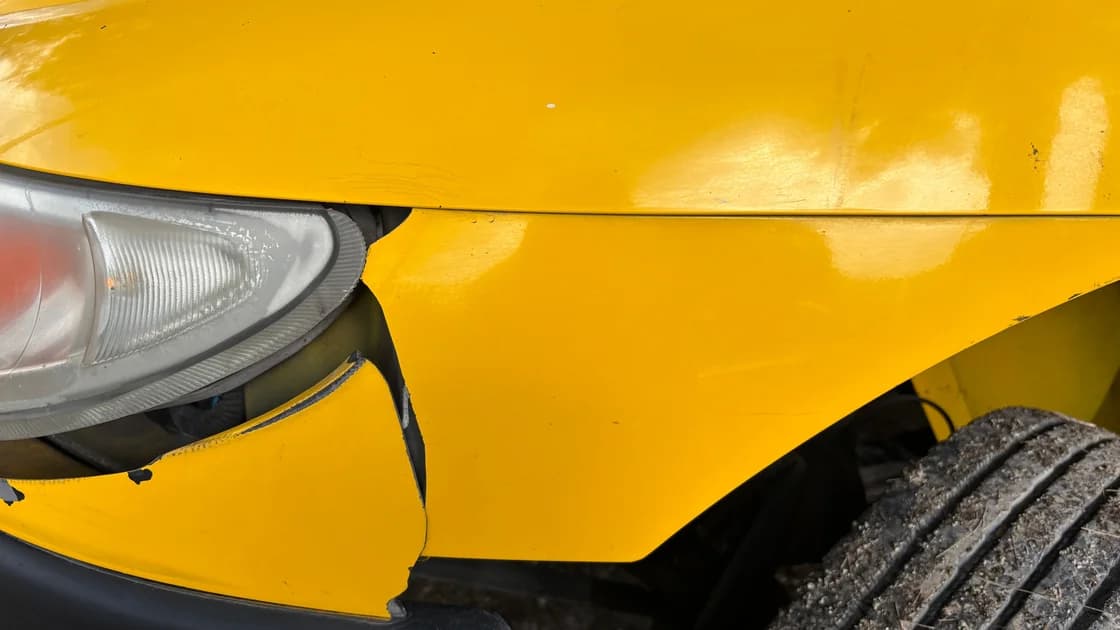
Evidence comes after safety. Take wide photographs from several safe positions showing the road layout, lanes, signs, signals, junction, vehicle positions, skid or debris areas, weather, lighting, and relevant obstruction. Then photograph all sides of every involved vehicle and close-ups of impact areas, keeping wider context for each detail.
Capture registration plates, rental-vehicle mileage, dashboard warnings, airbags, child seats, and property damage. Do not photograph injured people closely or publish identities. Preserve original files and note the local date, time, road name, nearest marker, travel direction, and coordinates if safely available.
Ask witnesses for their name and a reliable contact method. Record where they stood and what they say they directly saw, using their own words; do not coach them or merge several accounts. If they will not wait, ask whether police or the insurer may contact them later.
Draw a simple diagram before memory fades. Mark north or travel direction, lanes, signals, vehicle paths, final positions, impact point, and camera positions. Keep facts separate from inferences: “vehicle B was in the right lane” is different from “vehicle B caused the crash.”
Obtain the police report or incident reference and ask how to request the final record. Some jurisdictions require reporting even when officers do not attend. Follow the official deadline and keep proof of online submission, registered post, or in-person receipt.
Complete the rental company's form using the same factual timeline. Do not leave a required field blank without explaining that information is unknown, and do not guess speed, distance, injury, or fault. Attach a copy of the other driver's details, witness contacts, diagram, photos, tow record, and police reference as requested.
Notify every relevant insurer or benefit provider within its required time: the rental protection provider, personal motor or travel insurer, employer program, or card benefit. Explain that multiple reports refer to the same event. Your Europe notes that a standard European accident statement can help record facts and that signing it does not itself amount to an admission of liability.[1]
For cross-border claims in the EU, European Commission guidance explains that injured parties may have routes involving the liable vehicle's insurer, a claims representative, or national compensation bodies, depending on the circumstances.[2] Treat that as a regional framework and obtain advice for the countries involved.
Follow written directions for towing, replacement transport, return, or secure storage. Before leaving the car, photograph its location, condition, mileage, fuel, keys, and the person or facility receiving it. Remove personal items only when authorities and the rental company allow, and obtain an inventory or receipt for anything left behind.
Build one chronological file containing the agreement, initial condition report, contacts, emergency and police references, photographs, witness details, diagram, tow and storage records, medical documents, all forms, sent messages, and delivery receipts. A general travel-insurance evidence file can help organize originals without changing the facts.
Keep later charges separate from the accident report. Request an itemized claim, inspection material, repair evidence, loss-of-use basis, and the relevant contract terms before responding. Use the dedicated rental-car damage charge guide for that later billing stage rather than rewriting the scene account.
Correct a genuine error transparently. Send a dated amendment that identifies the original statement, the incorrect fact, the corrected fact, and why it changed. Never silently replace an old version; consistent does not mean repeating a mistake after discovering it.
Requirements vary by location, injury, damage, parties involved, and rental terms. Call emergency services for danger or injury and follow local official guidance. The rental company may also require a police reference even for apparently minor damage.
Move it only when immediate safety, local law, police, or the road operator requires it. If safe, record the original positions first. Never remain in a live lane simply to take photographs.
Do not sign a statement you cannot accurately understand. Ask for an interpreter, translated standard form, or time to review it, while still meeting lawful reporting duties. Keep a copy of anything you sign.
Describe facts honestly, but do not make a legal conclusion or promise payment at the scene. Fault can depend on evidence and local law and is assessed through the official and insurance processes.
Prioritize safety, call police, and record the plate, vehicle description, direction, time, location, witnesses, and any safe camera evidence. Do not pursue the vehicle.
Only if authorities and the rental company say it is lawful and safe. Damage to tires, steering, lights, airbags, fluids, glass, or structural parts can make continued driving dangerous even if the engine runs.
No. It preserves facts for the later assessment. The contract, inspections, repair evidence, insurance terms, official findings, and applicable law determine payment and responsibility.
Disclaimer: This guide provides general safety and documentation information, not legal, medical, insurance, or liability advice. Follow local authorities and emergency professionals, and obtain qualified advice for the countries and claims involved.
Sources checked 6 September 2026.
Related Reading:
Sign up to experience all premium features at no cost.
*Available only to new users. Each user is limited to one trial.