Start your 3-day free trial
Sign up to experience all premium features at no cost.
*Available only to new users. Each user is limited to one trial.
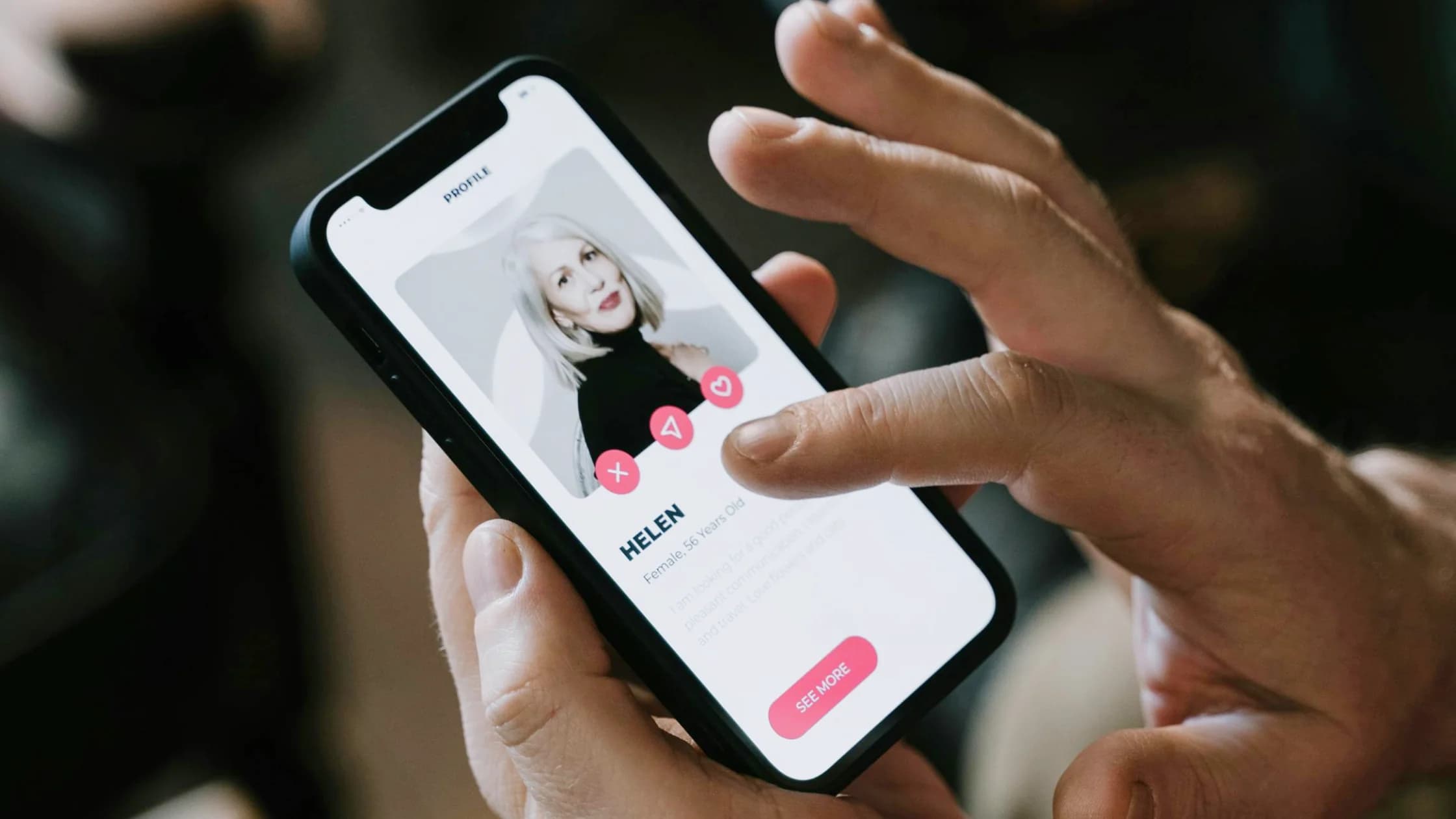

Yes—there is a gap, and it is not small. Using the current App Store privacy labels as a public sample, Tinder, Bumble, and Grindr all handle location, identifiers, or usage data, but they differ on where those data are used—especially for cross-app tracking and sensitive context. [1][2][3][4]
If you care about privacy, you should evaluate app choice beyond matching success: what data are collected, where those data flow, and how much exposure you can still reduce.
Key Takeaways
- The most common tracking in dating apps is not “listening to chat.” It is location, device identifiers, advertising IDs, behavior, and account context.[1][5]
- App Store privacy labels are a fast way to see whether an app tracks users across other apps.[1][2][3][4]
- In the current public sample, Bumble and Grindr have broader “used to track you” labels, and Grindr is in a higher-sensitivity context.[2][3][4][5]
- To reduce exposure, the key is not only adding a VPN, but controlling permissions, separating identities, and minimizing profile data.
Using App Store privacy labels as a practical starting point, you can quickly see which apps are more likely to use your data for cross-app tracking.
| App | “Used to track you” public label | High-risk areas |
|---|---|---|
| Tinder | Identifiers | Uses device ID for third-party advertising, indicating cross-product ad attribution capability.[2] |
| Bumble | Location, contact, identifiers, usage data | Broader tracking category; marketing usage includes location, contacts, and richer behavioral data.[3] |
| Grindr | Location, identifiers, usage data | Has location tracking and works in a more sensitive social context.[4][5] |
This table is not a precise ranking. Developer disclosures, product functions, and regional versions can change over time. But it does answer a practical user question: based on public labels, which products increase the chance of being tracked and profiled.
From Apple’s App Privacy categories, common data classes for dating apps include contact info, location, user content, identifiers, purchase history, usage data, and diagnostics. Patterns vary by app, but location + identifier + usage behavior appears especially common.[1]
You can think in three layers:
| Data layer | Typical data | Why it matters |
|---|---|---|
| Core account data | Email, phone number, nickname, birthday | Makes linking back to your real-world identity easier |
| Behavior and device data | Advertising ID, device ID, click logs, session length | Supports profiling and ad attribution |
| Sensitive context data | Precise or coarse location, orientation info, photos, chat preferences | If leaked, the impact is often greater than ordinary shopping history |
Many people forget one point: app value is not only “who you are,” but also “what you want right now, where you are, and whom you interact with.” That makes these apps more sensitive in practice.[5]
The issue is not only the volume of data, but how much identity can be derived when those data are combined.
First, location features mean the app often relies on geography. Even without continuous precision, coarse location can reveal your city and recurring active zones.[1]
Second, dating apps often include inferable sensitive attributes. Norway’s Data Protection Authority notes in the Grindr case that identifying a user as part of a specific intimacy-oriented social context, together with GPS, IP, and advertising IDs, significantly raises privacy risk.[5]
Third, these apps commonly store photos, chats, match preferences, and active times. Even without explicit identity, those fragments can still re-identify you.
The typical impact is not immediate crisis, but long-term profiling.
If an app uses identifiers and behavior data for tracking, ads on other apps and websites may become narrowly tailored around your age bracket, purchasing power, region, and interests.[1]
Location from dating apps is often more sensitive than ordinary social platforms because it can correlate with your real-time state. For many people, even city, frequent venues, and active hours can already be risky.
If a platform shares data with ad partners or suffers a breach, the impact is often not only one account. It can expose identity, social graph, and real-world safety. Datatilsynet notes that such data may be further transferred in the Grindr matter.[5]
Don’t register yet. Go through this checklist first.
| Quick check | Risk signal |
|---|---|
| App Store privacy labels | Explicitly states “Used to track you” |
| Permissions requested | Requests precise location, contacts, microphone on first launch |
| Signup method | Forced phone verification / social sign-in with no alternatives |
| Privacy policy | Vague language around third-party ads and measurement partners |
| Data profile design | Encourages overly specific job, address, or frequent-place inputs |
If you want a systemic approach to reducing tracking across sites and apps, read What Are Trackers and How to Turn Them Off. For a broader privacy checklist, follow Digital Privacy Guide (2026) and Personal Online Privacy Checklist (30 minutes).
It is not “never use these apps.” It is to minimize how often you hand over unnecessary data.
Use a non-primary email if possible. Don’t fill in company, school, or exact address unless needed. Avoid using the same photo you use across mainstream social channels.
Choose “While Using” instead of “Always,” and if the product offers manual city settings, avoid precise geolocation whenever possible.
Don’t share phone number, social IDs, frequent places, or commute routes too early. This is not a technical control, yet often stronger than changing protocols.
VPN does not stop app-side data collection, but it can reduce operator and public Wi‑Fi observers from directly reading your traffic. A practical model is: first secure the transport link, then tighten permissions and identity isolation. To build basics, read Can You Still Be Tracked With a VPN? The Real Privacy Shield Myth.
No. VPN mainly hides your public exit IP and encrypts traffic between you and your VPN server. It does not prevent platforms from collecting what you explicitly submit, or from retaining login, swipe, match, and chat behavior.
A more accurate view:
These three actions together create real protection.
Many do—at least they may request coarse or precise location for recommendations, sorting, or safety features. Whether tracking is continuous depends on specific permission design and privacy terms.[1]
Yes. Even without location, a platform may still build profiles from IP, device identifiers, profile data, and behavior.
Not fully. VPN can hide your exit IP, but if you register with a primary email, phone number, and standard photo, the platform can still link you to your identity.
Not always. But if a product is ad-driven and traffic-dependent, it is worth checking whether it uses your data for tracking, ads, and third-party sharing.
First read App Store labels, then check permissions, then verify whether privacy policies mention ad partners, analytics services, and data sharing.
Not necessarily. Many platforms retain data for compliance, fraud detection, and restoration windows. Review platform deletion notes and manually remove profile photos, bios, and binding options.
Disclaimer
This article is for general privacy and cybersecurity education only and does not provide legal advice. Data handling and privacy rights rules differ by country, so check local laws and each platform’s policies.
AethoVPN cannot perform the account, device, or offline checks in “Dating app tracking: 2026 Guide”.
Sources:
Sources checked 8 May 2026.
Related Articles:
Sign up to experience all premium features at no cost.
*Available only to new users. Each user is limited to one trial.