Start your 3-day free trial
Sign up to experience all premium features at no cost.
*Available only to new users. Each user is limited to one trial.

Short answer: is SHEIN safe? If you mean “can I place an order and receive items,” usually yes. If you mean “is there no concern around payments, privacy, product quality, or impersonation scams,” the answer is more complicated.[1][2]
The real risk with platforms like SHEIN is usually a stack of issues:
Use the digital privacy guide as the wider checklist: it connects this issue to accounts, devices, identifiers, and data-broker exposure.
This means browsing, ordering, paying, receiving items, and returning them. On this level, SHEIN is not an obviously fake shopping page.
SHEIN’s current U.S. privacy notice says it collects several categories of information related to your website and app use, purchases, and devices.[1] That does not automatically mean wrongdoing, but it does mean you should take permissions and data exposure seriously.
The FTC repeatedly warns about extremely cheap social media ads, fake brand pages, and phishing shopping sites.[3] In other words, the problem may not be SHEIN itself. It may be a scam pretending to be SHEIN.
For a related platform comparison, read is Temu safe?.
If you arrive through a social ad, text coupon, or unknown email, your risk goes up.
The FTC warns that social media ads with prices that look too good to be true may send you to fake sites designed to steal money or information.[3]
Not every problem is fraud. More common frustrations include items that do not match expectations, difficult return flows, or confusing order and billing support.
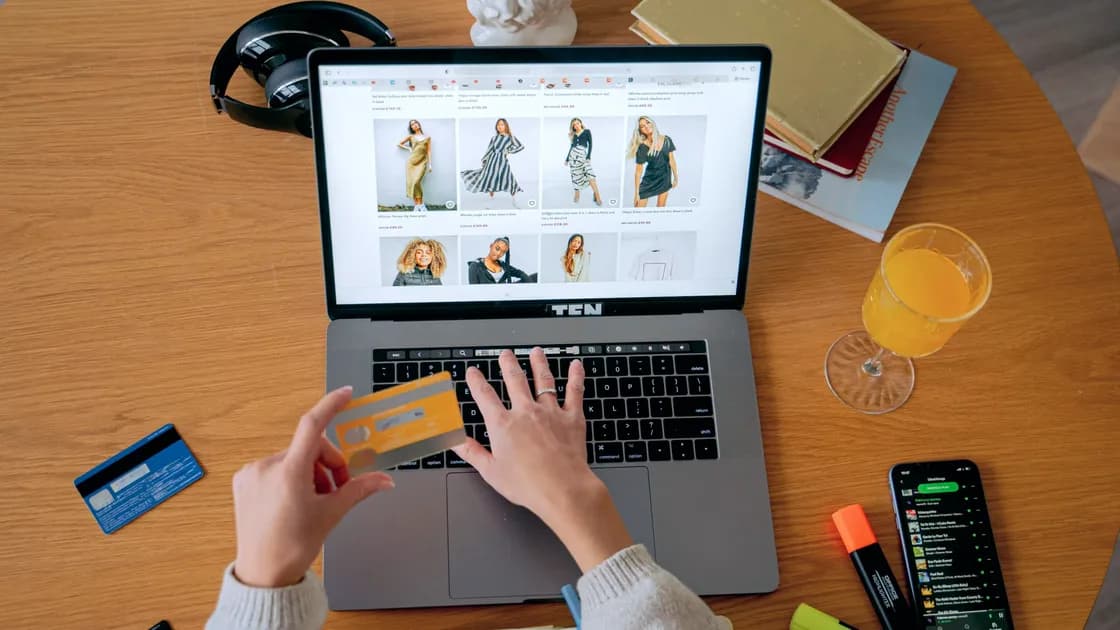
That is why the FTC recommends credit cards for online shopping: they usually offer stronger dispute protections if goods never arrive, arrive incorrectly, or are double charged.[2]
SHEIN’s privacy notice covers account, contact, purchase, device, and usage information.[1] If you also install the app and allow notifications, location, photos, or other unnecessary permissions, your exposure grows.
This is the same class of risk discussed in what app permissions expose.
The more recognizable a platform is, the more scammers borrow its name. Common scripts include:
The FTC is clear: when an item never arrives, arrives wrong, or is charged twice, credit card dispute protection is often more useful.[2][3]
Go directly to the official site or official app. Avoid links in unknown ads, texts, or emails.
Shopping apps do not need every permission. Be especially careful with location, contacts, and long-term photo access.
The FTC recommends saving the company name, website, order details, receipts, and communications.[2] Those records matter for returns, refunds, and disputes.
If you are ordering from an airport, cafe, or hotel Wi-Fi, do not ignore connection security. This issue applies to any shopping site, not just SHEIN.
For more detail, read should you use a VPN when shopping online? and is public Wi-Fi dangerous?.
This step matters.
Do not judge only by how the page looks. Check whether the URL is the official domain.
The FTC’s warning about fake shopping sites is direct: prices that are too low can be a risk signal.[3]
If the site only accepts gift cards, wire transfer, cryptocurrency, or other hard-to-recover methods, leave.[2]
The same logic applies to fake refunds, fake support, and package fee scams, and it matches the checks in our phishing protection guide.
That is not only a security question. It is a risk preference question.
If you care deeply about:
then price should not be your only factor. But if you shop occasionally and use payment protection, permission control, and anti-phishing habits, the risk can be reduced.
You can also compare it with is Temu safe?.
Usually no. But “not a scam website” does not mean “no privacy or shopping risk.”[1][2]
A safer option is to use a credit card or protected payment method, because online shopping disputes are easier to challenge that way.[2]
According to its current privacy notice, SHEIN collects several types of account, purchase, device, and service-use information. Check the official notice for the exact scope.[1]
It could be normal marketing, or it could be impersonation. Check whether you subscribed and whether links point to the official domain.
Be careful. The FTC warns that very low-price social ads can lead to fake sellers or fake sites.[3]
A VPN cannot tell whether a store is real, but it can encrypt your traffic on public networks. It helps with connection security, not platform reputation.
Disclaimer
This article is for general digital safety and online shopping risk education only. It is not legal, financial, or product-quality advice. Platform policies, payment rules, and privacy notices may change.
As the publisher, AethoVPN notes that is SHEIN safe remains outside what a VPN can fix.
Sources
Sources checked 8 May 2026.
Related Articles:
Sign up to experience all premium features at no cost.
*Available only to new users. Each user is limited to one trial.