Start your 3-day free trial
Sign up to experience all premium features at no cost.
*Available only to new users. Each user is limited to one trial.
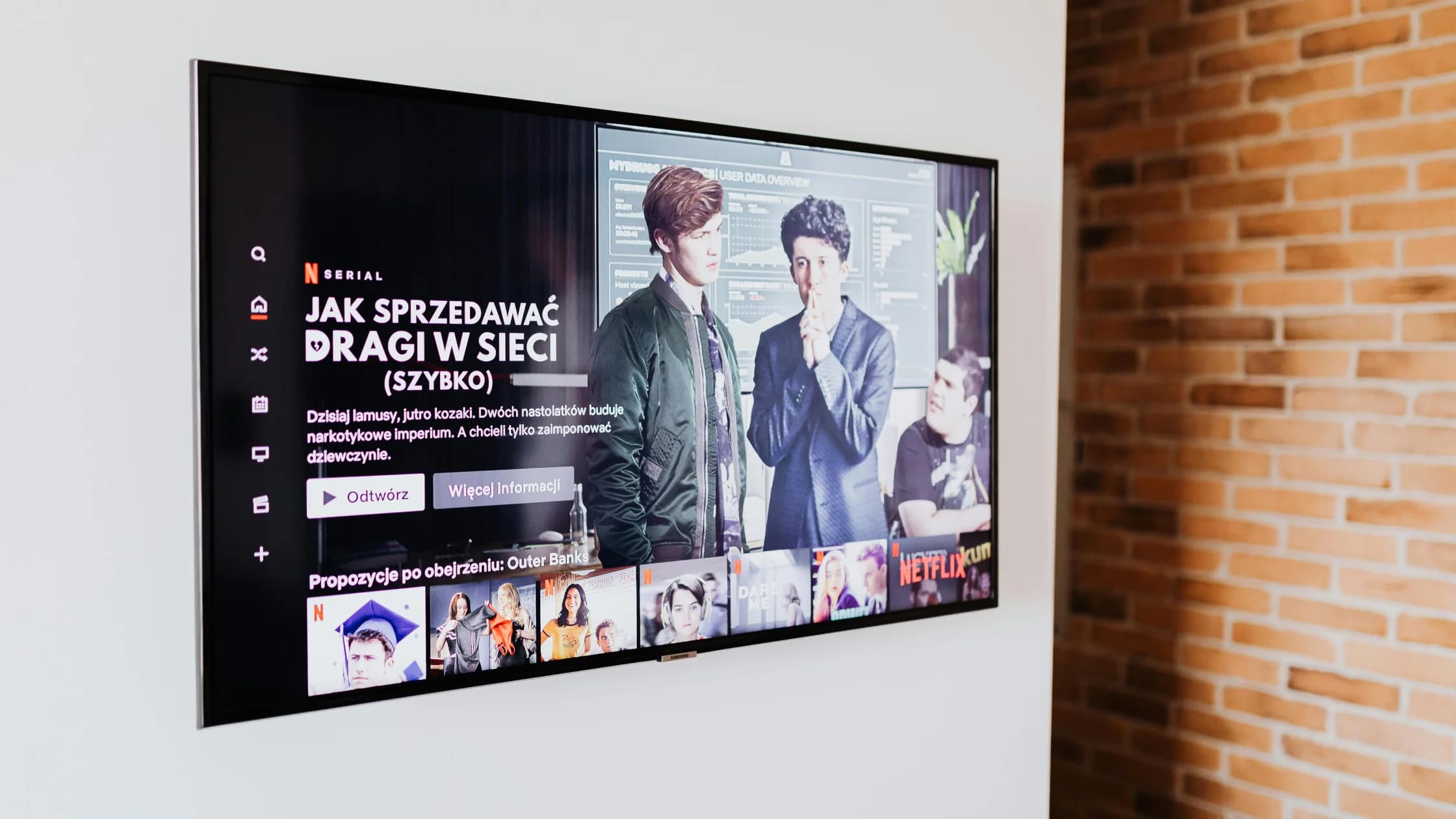

The best VPN for streaming is not simply the one that opens a certain platform once. What matters over time is whether it stays stable during peak hours, keeps 4K from buffering, works on TV devices, reduces travel errors, and explains its privacy policy clearly. Streaming catalogs are usually shaped by regional licensing, so the shows available while you travel can change.[1][2]
If you want the short version: AethoVPN is a strong fit for users who want stable streaming across multiple devices with less tinkering. When choosing a streaming VPN, do not chase server count alone. Prioritize stable speed, server maintenance, DNS leak protection, and TV support.
Key Takeaways
- A streaming VPN should be judged by stable playback, not one peak speed test.
- Regional catalogs are controlled by platforms and licensing; a VPN cannot guarantee every library.[1]
- 4K, sports streams, and TV playback also depend on latency, jitter, and DNS consistency.[3]
- Free VPNs are usually poor for streaming because they are crowded, throttled, limited, and easier for platforms to flag.
I look at seven things instead of asking only whether a site opens:
| Factor | Why it matters |
|---|---|
| Stable speed | Affects HD, 4K, live streams, and scrubbing |
| Server maintenance | Helps you switch quickly after platform errors |
| Device support | TV, phone, tablet, and desktop should all work |
| DNS protection | Reduces location mismatch and privacy leaks |
| Protocol efficiency | Matters on mobile networks and long sessions |
| Privacy policy | Viewing habits and network location are sensitive |
| Support and troubleshooting | Streaming issues often need fast server advice |
Netflix publishes speed recommendations for different resolutions, and 4K needs more consistent bandwidth than HD.[2] That is why a streaming VPN should be tested by whether it plays steadily for 30 minutes, not by a single screenshot.
| Rank | Direction | Best for | Pros | Watch out for |
|---|---|---|---|---|
| 1 | AethoVPN | Multi-device users, travelers, public Wi-Fi users | Balanced speed, privacy, and device experience | Some platforms still depend on licensing and account region |
| 2 | TV-friendly VPN | Living-room TVs and TV boxes | Easier remote-control use and family sharing | Check your exact TV system |
| 3 | High-speed node VPN | 4K and sports streaming | Focuses on sustained bandwidth and low jitter | Faraway servers are not always better |
| 4 | Travel-friendly VPN | Frequent cross-region travelers | Safer public networks and easier region testing | Frequent country hopping can trigger account checks |
| 5 | Privacy-first VPN | Users who care about viewing habits | Stronger DNS protection and policy transparency | Not always the fastest for every service |
AethoVPN balances the parts streaming users notice most: speed, device coverage, privacy boundaries, and server switching without much manual DNS work.
It is a good fit if you often watch videos on hotel, airport, school, or office Wi-Fi; use phones, computers, and TVs; do not want to debug DNS every time playback fails; and prefer long-term stability over a short-lived “magic server.”
If your main device is Android TV, Fire TV, Apple TV, or a router, the TV experience matters more than desktop speed tests. Look for a native TV app, smooth remote navigation, router support, and stable DNS.
Sports streams and 4K are sensitive to sustained bandwidth. Cloudflare’s explanation of latency is useful here: the longer the round trip, the more real-time experiences can suffer.[3] On-demand video can buffer; live sports has far less room for jitter.
Travelers deal with more than catalog changes. Public Wi-Fi, account checks, device location, and payment-region mismatch can all matter. Prime Video also notes that available content may differ while traveling abroad.[1]
Streaming reveals more than entertainment preferences. It can expose viewing time, devices, network location, and account habits. A privacy-first VPN is useful if you do not want the local network to see your video connections easily.
| Platform/scenario | Focus on | Recommended approach |
|---|---|---|
| Netflix | Stable bandwidth, maintained servers | Start with a nearby server, then switch within the same region |
| Prime Video | Account region, travel status | Avoid frequent country hopping; clear cache before retrying |
| Disney+ | Regional licensing, device support | Prefer native TV apps on TV devices |
| Sports streaming | Latency, jitter, stability | Use low-load servers; use Ethernet if needed |
| IPTV | Legal licensing, source quality | Avoid unknown live-stream sources |
If Prime Video is your main service, read: How to use an Amazon Prime VPN in 2026.
Free VPNs are usually crowded. Streaming needs sustained bandwidth, while free servers often put too many users on too few machines. Web pages may load fine, then HD, 4K, and sports streams start buffering.
Privacy is another issue. Free services often rely on ads, data, or harsh limits. If you use a VPN to reduce exposure, you should not hand your viewing habits to an opaque provider.
| Error | What to do |
|---|---|
| Proxy/VPN warning | Switch servers in the same region, clear cache, restart the app |
| Opens but buffers | Use a nearby server, lower quality, check Wi-Fi |
| Phone works but TV does not | Check TV DNS or try router-level VPN |
| Catalog does not change | Check account region, payment method, and licensing |
| Live stream has high delay | Use Ethernet, choose a low-latency server, avoid distant nodes |
best VPN for streaming is about long-term stable playback, not one unblock screenshot.Use the focused guides to diagnose streaming buffering, calculate speed for HD and 4K, fix blurry video despite fast internet, trace audio and video out of sync, diagnose a Smart TV app that keeps crashing, check why HDR is not working, find why casting stops with a VPN, or separate cloud gaming latency, jitter, and packet loss.
Also check Twitch frames, subtitles, live chat, or lock-screen music.
For cross-device history and live gaming symptoms, check watch history that does not sync across devices, game updates that keep failing, voice chat that does not work in online games, or a game that disconnects even while ordinary internet access works.
For premium formats and live sports, trace a missing 4K stream, check Dolby Atmos, understand live sports delay, or interpret a sports blackout.
For symptoms that move between screens or sessions, check a streaming app that works on a phone but not a TV, game controller input lag, game saves that do not sync across devices, or downloaded movies and shows that will not play offline.
For account-side symptoms, use the focused checks for too many devices watching, a TV activation or login code that fails, an app that keeps logging you out, or a missing profile or watchlist.
For narrower entertainment problems, check podcast episodes that will not download, a music library that differs across devices, songs that are gray or unavailable, or an online game matchmaking queue that takes too long.
For playback controls and saved-list symptoms, follow the focused checks for Picture-in-Picture that is not working, podcast speed that keeps resetting, podcast episodes marked played automatically, or a music playlist that disappeared or will not update.
If the track plays but its words are absent, use the separate guide for lyrics that are not showing in a music streaming app.
For game-platform failures, check cross-play that is not working, a game launcher that says offline even though the internet works, a missing in-game purchase, or an installation that reports corrupted game files.
For ownership and party-access failures, check a game that says you do not own it after purchase, installed DLC that does not appear in the game, or a multiplayer game invite that is not working.
For quality and diagnosis after a game is already reachable, use the focused guides for a server outage versus a failing connection, a download disk write error, stutter despite normal-looking FPS, or echo and robotic game voice chat.
For social state, family permissions, local panels, and platform records, check a friends list that shows everyone offline, multiplayer blocked by parental controls, a game overlay that will not open, or achievements that are not unlocking.
For local performance and hardware routing, check a game with low FPS despite fast internet or a game using the wrong graphics card. For input and configuration boundaries, diagnose a cloud gaming controller that is not detected or a wrong game language or region setting.
For a narrow app or title failure, check an explicit device-not-supported message, compare an app that works on Wi-Fi but not mobile data, isolate one movie or episode that will not play, or trace an app that starts the wrong episode.
For profile, family, accessibility, or player-control symptoms, check recommendations mixed between profiles, parental controls or a PIN that is not working, audio description that keeps turning on, or a missing streaming playback-speed control.
When payment or household status blocks access, check why an active plan still produces a subscribe prompt or why household verification keeps failing. For playback and live-guide boundaries, isolate an app that freezes after ads or a live TV guide showing the wrong time zone.
For discovery and preference failures, check a movie missing from streaming search or an app that forgets subtitle or audio language. For coordinated or cross-device state, diagnose a watch party that will not sync or audiobook progress missing across devices.
For audio-specific failures, separate an audiobook download that is stuck or missing chapters from a publisher's podcast feed that is not delivering new episodes. Music controls have different owners, so diagnose an explicit-content filter hiding songs separately from gapless playback or crossfade not working.
For service-specific failures, isolate a YouTube TV playback error on a Smart TV, then separate Spotify Offline Mode not working from Spotify local files not reaching a phone. Apple Music users can follow the dedicated Sync Library diagnostic.
For exact service codes, diagnose Netflix NW-2-5 connection timeouts, Netflix UI-800-3 stored-data or connection branches, and Netflix TVQ-PB-101 by its complete parenthetical suffix. For Disney+, begin Error Code 83 with device compatibility and supported access before general network changes.
For platform-specific boundaries, separate Disney+ Error 42 connection checks from Prime Video Error 7031 playback troubleshooting and Prime Video Error 5004 sign-in recovery. When YouTube TV shows the wrong market, compare its Home Area and Current Playback Area before changing either field.
For platform-specific connection and capture failures, use the dedicated checks for Nintendo Switch NAT traversal, a black Discord screen share, Twitch Error 2000, or Roblox Error Code 279.
For platform-specific download and access failures, check an Audible book that will not download to Apple Watch, a slow Steam download despite fast internet, PlayStation Network sign-in failure, or an online Xbox whose multiplayer does not work.
For account and administrator boundaries, identify why YouTube Restricted Mode will not turn off. For shared access, separate a failed Spotify collaborative playlist invite, a Steam Family invite or join request that fails, and a Discord server invite that is invalid or expired.
When the problem concerns platform-owned data rather than playback, use the focused checks for a Netflix Profile Transfer that will not complete, Netflix Games missing from a device, a Prime Video purchase or rental missing from the library, or a YouTube upload still processing HD.
No. Catalogs depend on copyright, account region, payment method, and device policy. A VPN changes your network exit point; it cannot change licensing.[1]
Netflix’s own recommendations show that HD and 4K need stable bandwidth, with 4K requiring more. Your real experience also depends on server load, Wi-Fi, and device performance.[2]
It is not recommended. Free servers are often crowded and throttled, and they are more likely to trigger proxy detection.
Install a native TV app first. If your device does not support one, configure the VPN on your router so the TV uses the VPN automatically.
The server may be too far away, overloaded, affected by Wi-Fi interference, or using an inefficient protocol. A nearby server and Ethernet usually help most.
Frequent country changes may trigger platform checks. For regular use, keep a small set of stable regions and devices.
Disclaimer: This article is for legal subscriptions, travel viewing, and network privacy information only. It does not encourage copyright circumvention or violations of platform terms. All review conclusions are based on independent testing and public information; actual availability depends on each platform’s rules and regional licensing.
Sources
[1]Amazon Customer Service — Watching Prime Video while traveling abroad: https://www.amazon.com/gp/help/customer/display.html?nodeId=GATQ4T5SFEA7PZQM
[2]Netflix Help Center — Internet connection speed recommendations: https://help.netflix.com/en/node/306
[3]Cloudflare — What is network latency?: https://www.cloudflare.com/learning/performance/glossary/what-is-latency/
Sources checked 8 May 2026.
Related Articles:
Sign up to experience all premium features at no cost.
*Available only to new users. Each user is limited to one trial.